Electric commuter bike guide for NZ: what matters and what it really costs
What actually matters on an electric commuter bike in New Zealand, from brakes and lights to security and wet-weather gear, plus a worked cost comparison against a car and the bus using current NZ fuel, electricity and fare figures.
Flux Motors team8 min read
An electric commuter bike is the cheapest way most New Zealanders can get to work without sitting in traffic. The best one for you has reliable brakes, bright lights, a battery big enough for your return trip with margin, and somewhere secure to lock it at the other end. Most of the decision comes down to those four things, plus how you'll cope with a wet Tuesday in July.
This guide covers what to look for and the gear and habits that make daily riding easy. It also works through the cost of commuting by e-bike against a car and the bus, using current New Zealand figures.
The short answer
For most NZ commutes, an e-bike costs cents a day in electricity, against tens of dollars a week in fuel and fares. According to Gen Less, the average one-way car trip to work is 10.7 km, and most people can cover that in about 25 minutes on an e-bike. Choose a bike for braking, lighting, battery capacity and security before you think about looks or top speed.
What matters on an electric commuter bike
Brakes you can trust in the wet
Commuting means stopping often, sometimes quickly, often on wet seal. Hydraulic disc brakes give strong, consistent stopping in the rain with light lever effort, and they need less fiddling than cable brakes. On an e-bike that carries extra weight, this matters more than almost any other spec.
Lights that let you be seen
From May to August many people ride both ways in the dark. You want a bright headlight that runs from the main battery, so it is never flat, plus a good rear light. Add reflective details on your bag or jacket. Being seen from the side at intersections is just as important as lighting the road ahead.
A battery sized for your real trip
Work out your return distance, then add a buffer for hills, headwinds, cold mornings and higher assist levels. Battery capacity is measured in watt-hours (Wh). A bigger battery means fewer charges per week, and a flat battery on the way home stops being a worry. Our guide to e-bike battery care and capacity explains how to read those numbers.
Comfort and tyres
NZ roads mix fresh asphalt with chip seal, potholes, tram-style tracks in some places and gravel shoulders. Wider tyres and a comfortable riding position make a 25-minute ride pleasant rather than something to endure. Fat tyres add grip and cushioning, and our piece on fat-tyre e-bikes covers the trade-offs.
Security
A commuter bike lives outside, parked in the same spot at the same time every day, so plan security from the start:
- Use a quality D-lock or chain lock through the frame to a fixed stand, plus a second lock if you leave it for long.
- Record your frame number and keep photos of the bike.
- Take the battery or display inside if your bike allows it.
- Check whether your contents insurance covers the bike away from home, or get dedicated cover.
- Use secure parking where it exists. Auckland Transport lists bike parking at many stations, and many workplaces now have locked cages.
Weather gear
Riding in the rain gets easier with the right kit: full mudguards, a waterproof jacket with a hood that fits under a helmet, overtrousers or a spare pair of trousers at work, and waterproof panniers or a dry bag. In windy cities, panniers are more stable than a tall backpack in gusts.
E-bike vs car vs bus: the commute cost maths
Here is a worked example using the Gen Less average commute of 10.7 km each way. That gives 21.4 km a day, 107 km a week, and about 4,920 km a year over 46 working weeks. The figures are illustrative, so swap in your own distances and prices.
The inputs:
- Petrol: 1News reported in October 2026 that the average litre of 91 had topped $3.50. We use $3.50 and a car using 8 litres per 100 km, an assumed figure for a typical small-to-medium petrol car.
- Full car running cost: Inland Revenue's kilometre rate for 2025–26 is $1.20 per km for petrol vehicles (Tier 1, the first 14,000 km). It includes fixed costs such as insurance, registration, depreciation and maintenance, not just fuel.
- Bus or train: Auckland Transport's weekly fare cap stays at $50 over seven days on AT HOP or contactless. We use the cap as an upper bound, and many commuters will pay less.
- Electricity: MBIE's Quarterly Survey of Domestic Electricity Prices puts the national average at 42.1 cents per kWh (including GST) at 15 August 2026.
- E-bike energy use: This varies with rider weight, hills, assist level and wind. We show three illustrative levels of 10, 15 and 20 Wh per km measured at the wall. These are assumptions, not figures for any specific bike.
| Option | Basis | Per week | Per year (46 weeks) |
|---|---|---|---|
| Petrol car, fuel only | 8 L/100 km at $3.50/L | $29.96 | $1,378 |
| Petrol car, full running cost | IRD $1.20/km | $128.40 | $5,906 |
| Auckland bus or train | $50 weekly cap (maximum) | up to $50.00 | up to $2,300 |
| E-bike, light use | 10 Wh/km at 42.1c/kWh | $0.45 | $21 |
| E-bike, moderate use | 15 Wh/km at 42.1c/kWh | $0.68 | $31 |
| E-bike, heavy use | 20 Wh/km at 42.1c/kWh | $0.90 | $41 |
Car figures above leave out parking. If you pay for city parking, add it on top. Even on fuel alone, the gap is more than $1,300 a year.
The e-bike line excludes servicing, tyres, brake pads and eventually a replacement battery, so budget for those as well. Even after you allow for them, the running-cost gap is wide. Upfront price matters too, and our guide to e-bike prices in NZ breaks down what you get at each level.
Making your workplace work for you
End-of-trip facilities
Ask your employer or building manager about:
- Secure, covered bike parking, ideally a locked cage or room
- Showers, lockers and somewhere to dry wet gear
- A power point near the bike parking for charging, if needed
- Whether they run or would join a bike-to-work scheme
If facilities are thin, many riders get by on an e-bike's lower effort. You can arrive without much sweat by using more assist on the way in and less on the way home.
Charging at work
Most commuters charge at home and never need to charge at work. If you do, use only the charger supplied for your battery. Fire and Emergency NZ stresses charging lithium-ion batteries with the charger they are designed to work with. Charge somewhere visible rather than under a desk among paper and bags, and check your workplace's rules first. Our e-bike charger guide covers safe habits in detail.
Daily habits that make it stick
- Ride the route on a weekend first. Find the quiet streets, shared paths and safe crossings, not just the fastest line on the map.
- Keep a kit at work. Spare socks, a towel and a shirt take the stress out of rainy days.
- Charge on a routine. Same evenings each week, so you never start a ride low.
- Check tyres and brakes weekly. A quick squeeze of the levers and a look at tyre pressure takes two minutes.
- Get it serviced. Commuter kilometres add up fast, and drivetrains and brake pads wear quicker on e-bikes.
Road rules for e-bikes in New Zealand, including helmets and where you can ride, are covered in our NZ e-bike laws guide.
Where Gurkha fits
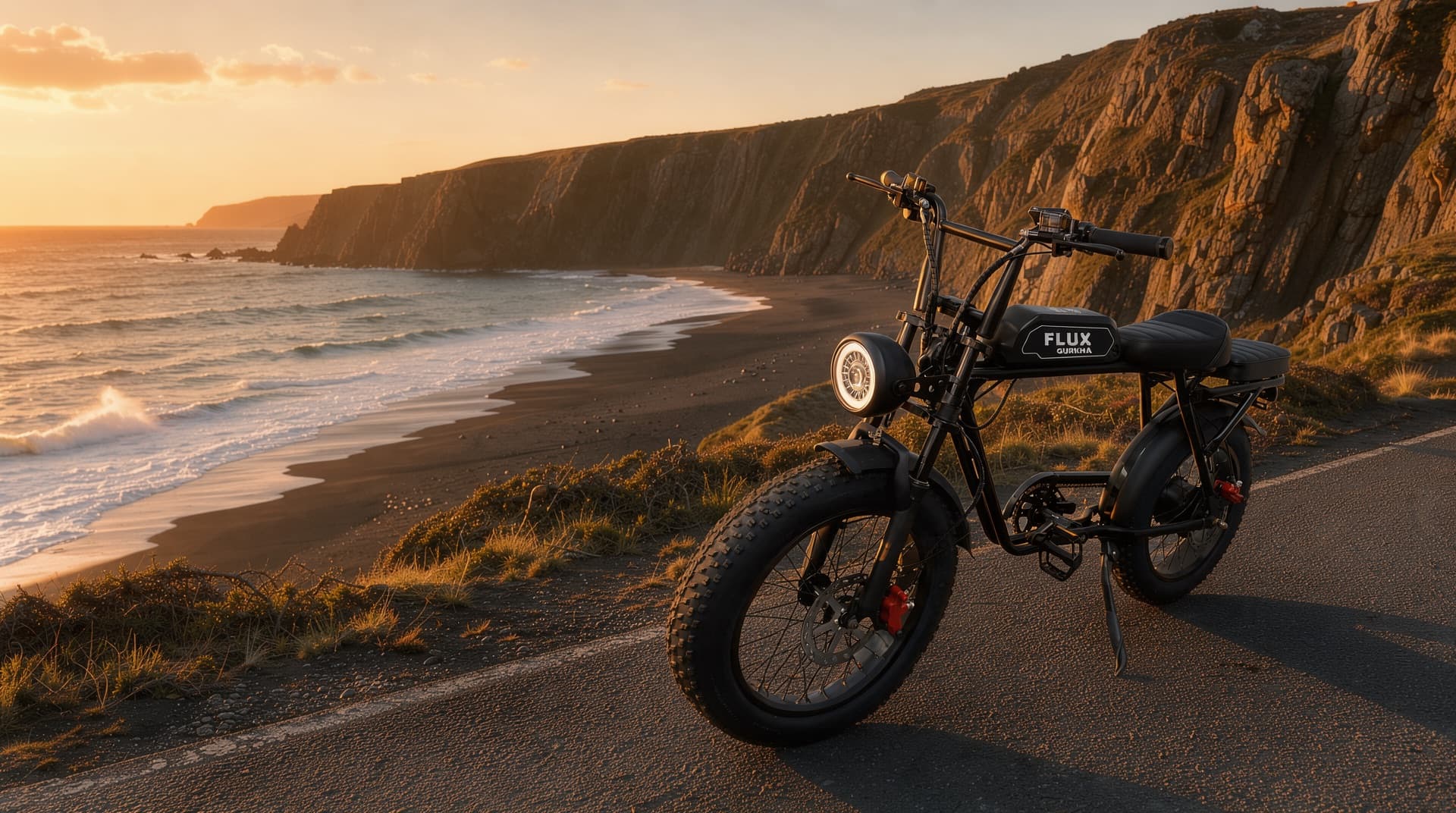
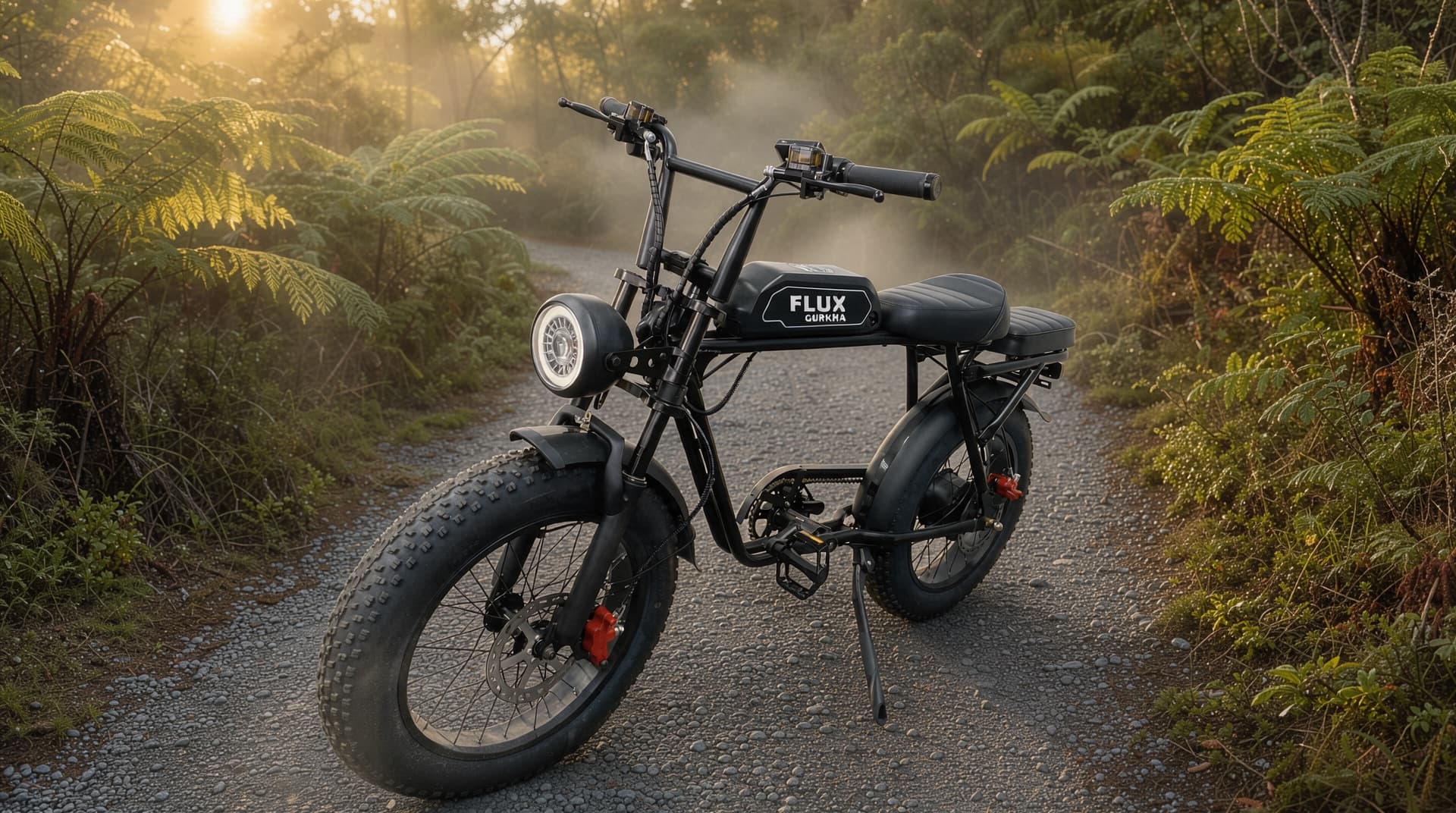
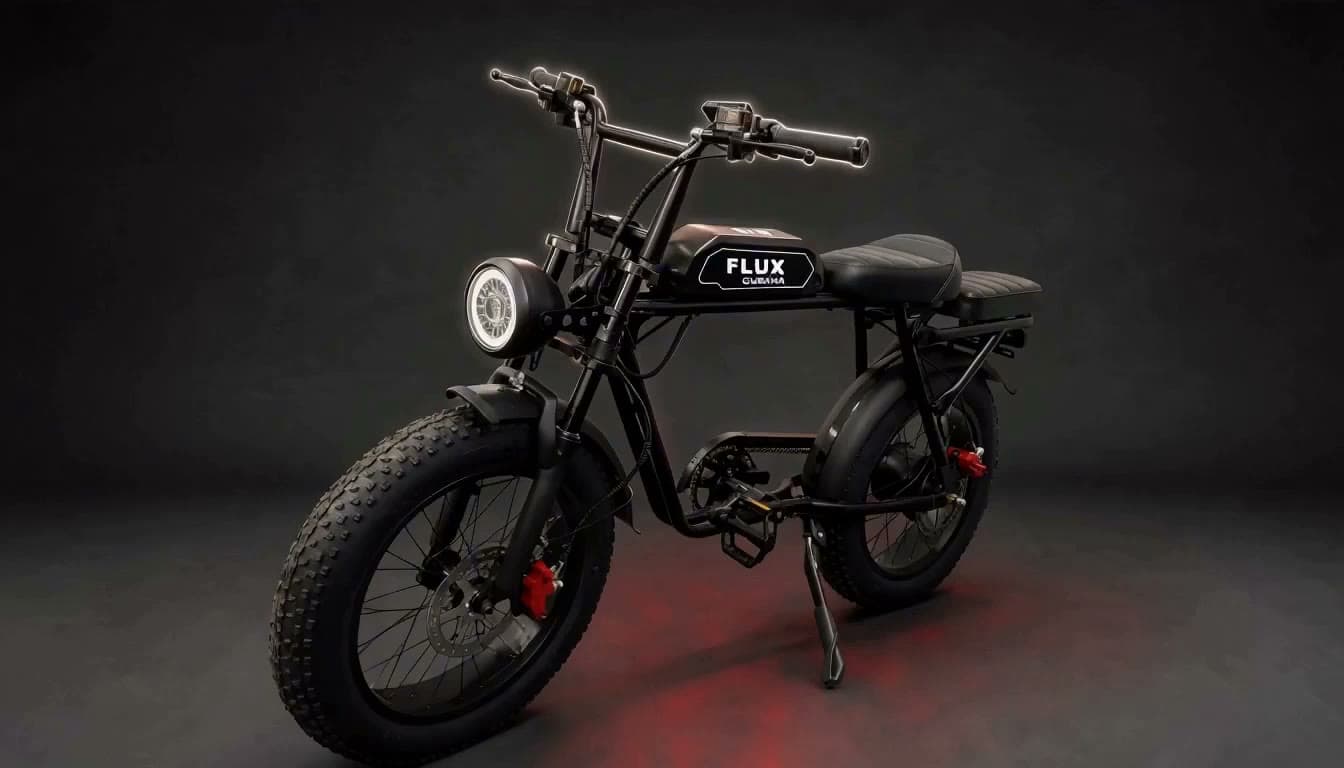
Gurkha is our smart fat-tyre, moto-inspired e-bike, designed in Aotearoa New Zealand. For commuting, the relevant parts are hydraulic disc brakes front and rear, a bright LED headlight, a 624Wh lithium-ion battery and 20×4-inch fat tyres for grip on mixed surfaces. The Flux app over Bluetooth lets you adjust settings, track rides and monitor the battery. Assisted top speed is 25 km/h. Flux will confirm full specifications, including range and charging time, before launch. See the Gurkha page for current details.
Gurkha isn't on sale yet, and pricing starts from NZ$4,499. If an electric commuter bike is on your list for the year ahead, join the waitlist to hear first when it's available.
Frequently asked questions
How far can I commute on an electric commuter bike?
That depends on the bike's battery capacity, your weight, hills, wind and assist level. Work out your return distance and choose a battery with a comfortable margin above it. The average one-way car commute in NZ is 10.7 km according to Gen Less, which most e-bikes handle easily.
Is an e-bike cheaper than driving to work in NZ?
Almost always. On the average commute, a petrol car uses about $30 a week in fuel at $3.50 a litre, while an e-bike uses well under a dollar of electricity a week at the August 2026 average price of 42.1 cents per kWh. That comparison leaves out parking, servicing and the bike's purchase price.
Can I ride an e-bike to work in the rain?
Yes. Hydraulic disc brakes, full mudguards, good lights, a waterproof jacket and waterproof bags make wet days manageable. Slow down on painted lines, metal covers and wet leaves.
Do I need to charge my e-bike at work?
Most commuters don't, because a full charge at home covers several return trips. If you do charge at work, use only the charger supplied with the battery, charge where you can see it, and follow your workplace's rules.
When can I buy a Gurkha?
Gurkha isn't on sale yet. Pricing starts from NZ$4,499, and you can join the waitlist at fluxmotors.co.nz/waitlist to hear when it launches.