Cheap E Bike NZ: An Honest Guide to Budget E-Bikes
A budget e-bike can be smart or a costly mistake. Learn what cheap e-bikes give up, the battery and legal red flags to avoid, when cheap makes sense, and use our 16-point value scorecard before you buy.
Flux Motors team8 min read
A cheap e bike NZ buyers can pick up for under $2,000 is tempting, especially when the same money barely covers a few months of car costs. Some budget bikes are great value. Others become expensive problems, or even fire risks. This guide explains what you give up at the lower end, the red flags to walk away from, and how to judge value properly.
Short answer: a cheap e-bike can make sense for short, flat, occasional riding, but check four things first: the battery's safety testing, that the motor is within New Zealand's 300 W limit for a power-assisted cycle, the brakes, and whether a local shop can service it and source parts. If any of those are unclear, spend a little more or buy a quality second-hand bike.
What counts as cheap in NZ?
Consumer NZ's guide to buying a cheap e-bike notes that the average price of the currently available e-bikes it has tested is $5,725, but that several models sit between $2,500 and $4,500, including some it recommends. Online, especially through marketplaces and overseas sellers, you will see bikes advertised for well under $2,000.
For this guide, we treat "cheap" as under about $2,500 new. For a fuller picture of price bands and running costs, see our e-bike NZ price breakdown.
What you usually give up on a budget e-bike
Every bike is a set of trade-offs. On cheaper models, the savings tend to come from the same places.
- Battery quality and size. Smaller capacity, unbranded cells, and limited information about testing. The battery is the most expensive part of an e-bike, so it is the first place costs get cut.
- Brakes. Mechanical disc or rim brakes instead of hydraulic discs. They work, but need more adjustment and give less consistent stopping on a heavy bike.
- Wheels and tyres. Consumer NZ reports that bike shops find lower-priced e-bikes hard to maintain, with problems such as frequent punctures, loose spokes and forks that seize up.
- Motor claims. Consumer NZ also found that some cheap bikes look strong on paper but their claimed motor power does not hold up in use.
- Weather sealing. Less protection for connectors and electronics in a New Zealand winter.
- Support. No NZ distributor, no spare parts, and a warranty that is hard to claim on if the seller is overseas.
Battery and safety red flags
Lithium-ion batteries store a lot of energy. Fire and Emergency New Zealand has run a public campaign on lithium-ion battery fires, with a focus on e-bikes, e-scooters and vapes, and on the dangers of charging them incorrectly. Most batteries are perfectly safe, but you improve your odds a lot by avoiding these warning signs.
- No traceable test certificate. A logo printed on the box is not proof. Ask which standard the battery was tested to and ask for the certificate. Common standards include EN 50604-1 (e-bike batteries), EN 15194 (e-bikes in Europe) and UL 2849 (the whole e-bike electrical system: drive, battery and charger together). We could not confirm a mandatory NZ-specific standard for e-bike batteries, so the onus is on you to ask.
- A charger that is not made for NZ. Avoid chargers fitted with an adapter or modified plug, and never use a damaged charger.
- Headline power above 300 W. If a listing boasts 750 W, 1000 W or more, it is not a power-assisted cycle under the NZ Transport Agency's 300 W definition. It may need registration and a licence to be ridden on the road.
- "Unlockable" speed. Bikes sold with the promise that they can be unrestricted are a legal and safety problem.
- No replacement battery available. If you cannot buy a spare battery in NZ, the bike may be scrap when the original wears out.
- A swollen, cracked or dented battery on a second-hand bike. Walk away.
Whatever you buy, charge on a hard surface, away from exits and flammable materials, with a working smoke alarm nearby, and use only the charger supplied for that battery. Our e-bike charger guide covers safe charging in more detail.
When a cheap e-bike makes sense
- Your trips are short (under about 5 km) and mostly flat.
- You ride occasionally, not daily.
- You want to try e-biking before spending more.
- You are comfortable doing basic maintenance yourself.
- You can buy from a seller with a physical presence in New Zealand.
It makes less sense if you commute every day, ride steep hills, carry a child or heavy loads, or ride off-road. In those cases, the extra stress on brakes, wheels and battery tends to show up quickly.
How to compare value, not just price
A lower price is not the same as better value. Use these measures to compare bikes fairly.
1. Price per watt-hour of battery
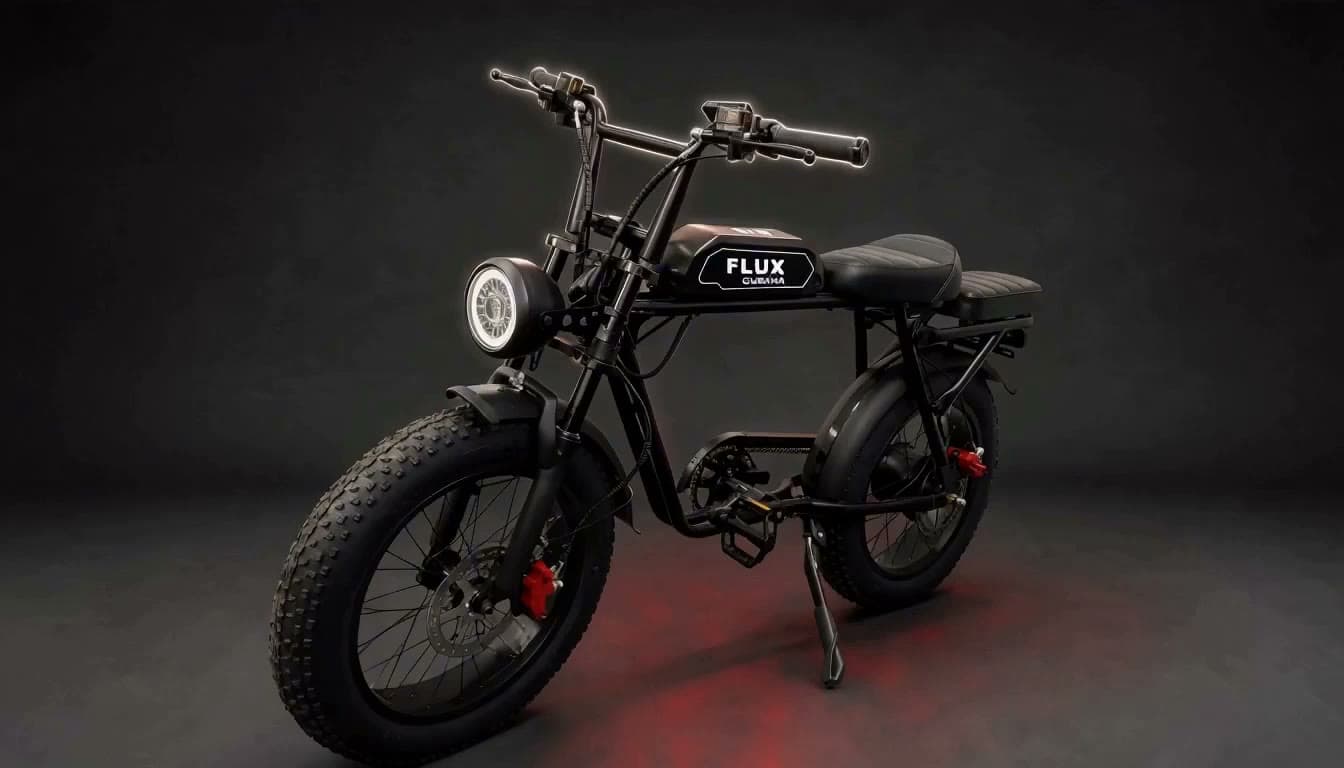
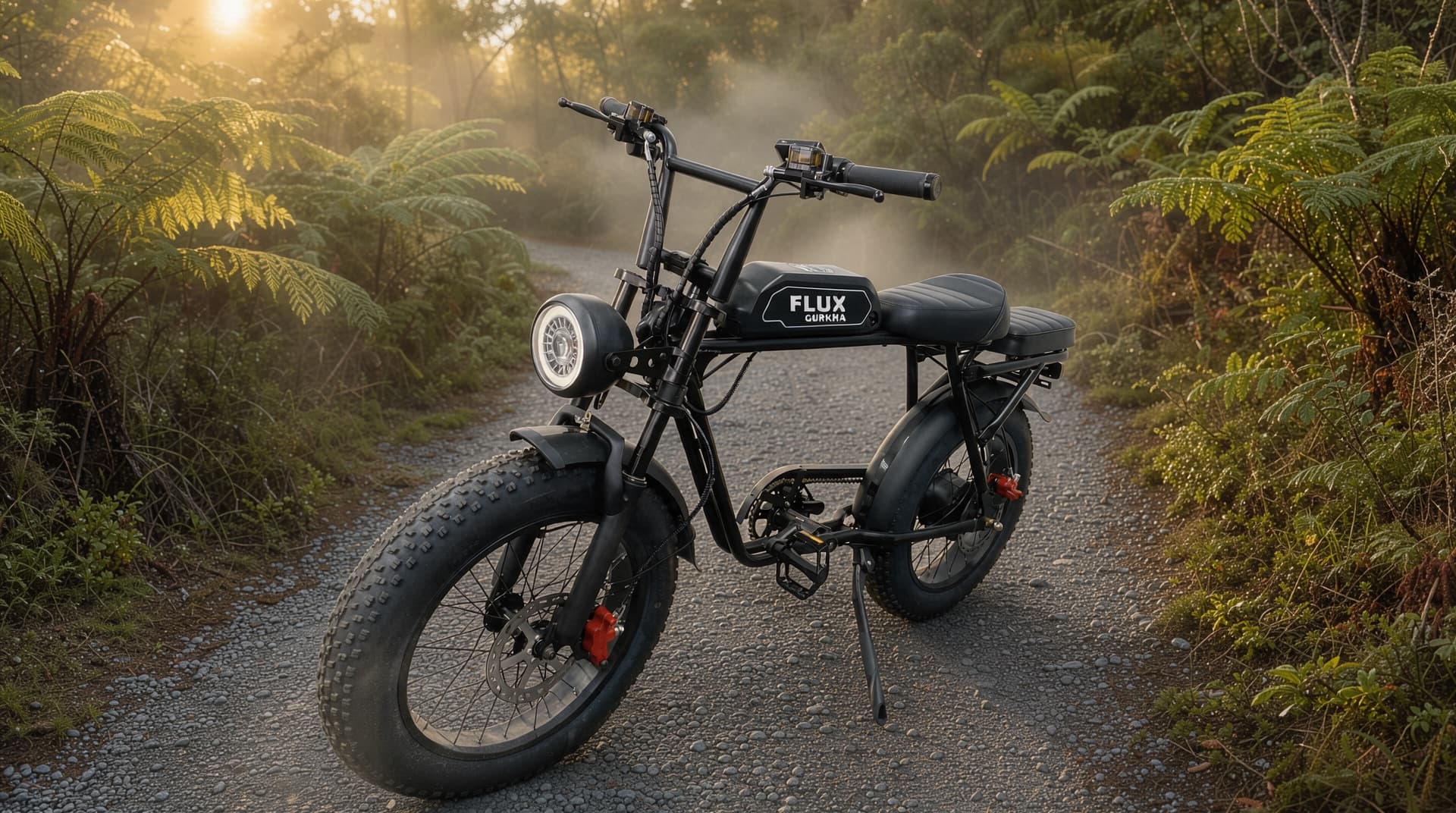
Divide the price by the battery capacity in Wh. It is a rough but useful way to see how much energy you are paying for. For example, the Flux Gurkha, from NZ$4,499 with a 624Wh battery, works out at about $7.21 per Wh. Battery quality matters as much as size, so use this alongside the safety checks above, not instead of them.
2. Cost per year of use
A $1,500 bike that lasts two years costs $750 a year. A $3,500 bike that lasts seven years costs $500 a year, before servicing. Ask shop staff how long they see each model last.
3. Cost of the first big repair
Ask the price of a replacement battery and a replacement motor or controller before you buy. If either is unavailable, factor in the cost of replacing the whole bike.
Budget e-bike value scorecard
Score each bike you are considering from 0 to 2 on each line. A bike scoring under 10 out of 16 deserves a hard second look.
| Check | 0 points | 1 point | 2 points |
|---|---|---|---|
| Battery testing | No information | Standard named, no certificate | Certificate provided |
| Legal power | Over 300 W or unclear | Stated, not verified | 300 W or less, documented |
| Brakes | Rim or cable, poorly adjusted | Mechanical disc | Hydraulic disc |
| Seller in NZ | Overseas only | NZ online only | NZ shop or service partner |
| Spare battery | Not available | Special order | Stocked in NZ |
| Warranty | None or unclear | Short or limited | Clear, claimable in NZ |
| Fit and weight | Does not fit or too heavy to manage | Workable | Comfortable and manageable |
| Test ride | Not possible | Flat ground only | Ridden on a hill |
Second-hand: the other way to save
A used e-bike from a well-known brand can be better value than a new no-name one. Ask for proof of purchase, the battery's age and charge history if the system records it, and the service record. Check the battery for damage and make sure the charger is the original. Then confirm a local shop can service the motor system before you hand over any money.
So, is a cheap e-bike right for you?
If your riding is light and you check the red flags, a cheap e bike NZ shops stand behind can be a smart buy. If you ride daily, ride hills or want features like hydraulic brakes, a larger battery and app connectivity, you will likely get more value by spending a bit more. Our guide to the best e-bike for you in NZ can help you narrow it down.
The Gurkha is not a budget e-bike, and we will not pretend otherwise. It is a smart fat-tyre, moto-inspired bike designed in Aotearoa, with hydraulic disc brakes front and rear and a 624Wh battery. If that sounds like a better long-term fit, join the Gurkha waitlist.
Frequently asked questions
Is a cheap e bike NZ shoppers find online worth buying?
Sometimes. A low-priced bike can suit short, flat, occasional trips. The risks are battery quality, unclear safety testing, power claims above the legal 300 W limit and a lack of local parts and servicing. Check those before you buy.
What is the cheapest decent e-bike price in NZ?
Consumer NZ says several of the e-bikes it has tested sit between $2,500 and $4,500, including some that earned its Consumer Recommended tick. Below that you can still find good bikes, but you need to check them more carefully.
Are e-bikes rated at 1000 W legal in NZ?
Not as e-bikes. A power-assisted cycle in New Zealand must have a combined maximum motor output of no more than 300 W. A more powerful bike is treated as a motor vehicle, so moped or motorcycle rules may apply.
What battery certification should I look for?
Ask which standard the battery and electrical system were tested to and ask for the certificate. Common ones are EN 50604-1 for e-bike batteries, EN 15194 for e-bikes in Europe, and UL 2849 for the whole electrical system. We could not confirm a mandatory NZ-specific e-bike battery standard.
Is buying a second-hand e-bike a good way to save?
It can be, if you check the battery's age and health, get proof of purchase, and confirm a local shop can service the motor system. A worn battery can cost a big share of the bike's value to replace.