E Bike Fat Tire Guide: Fat Tyre Sizes, Pressures and Trade-Offs for NZ
Fat tyre e-bikes grip and float where narrow tyres struggle, but they come with trade-offs. Here are the sizes explained, a tyre pressure guide for NZ beaches, gravel and wet roads, and honest notes on weight and rolling resistance.
Flux Motors team9 min read
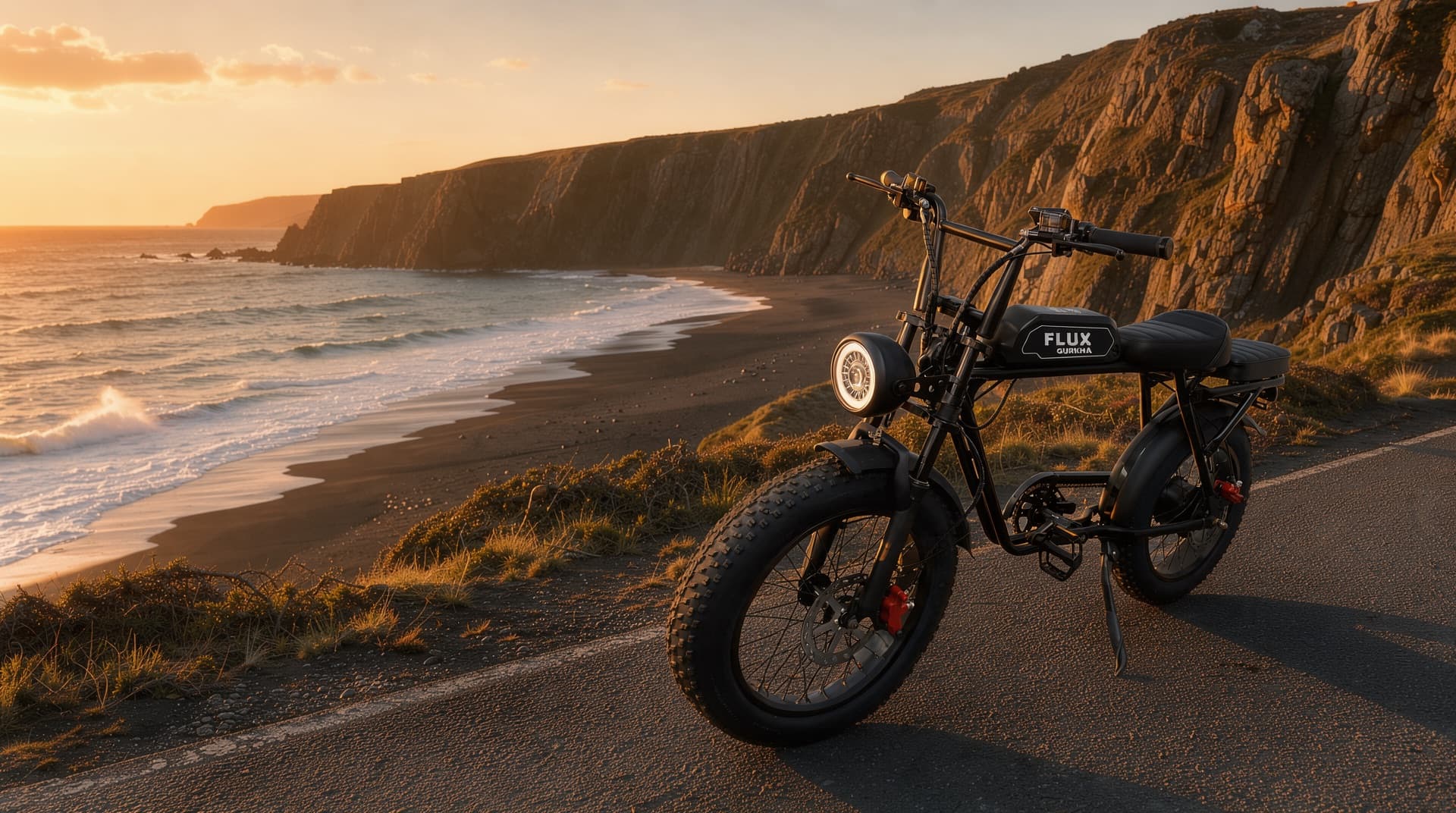
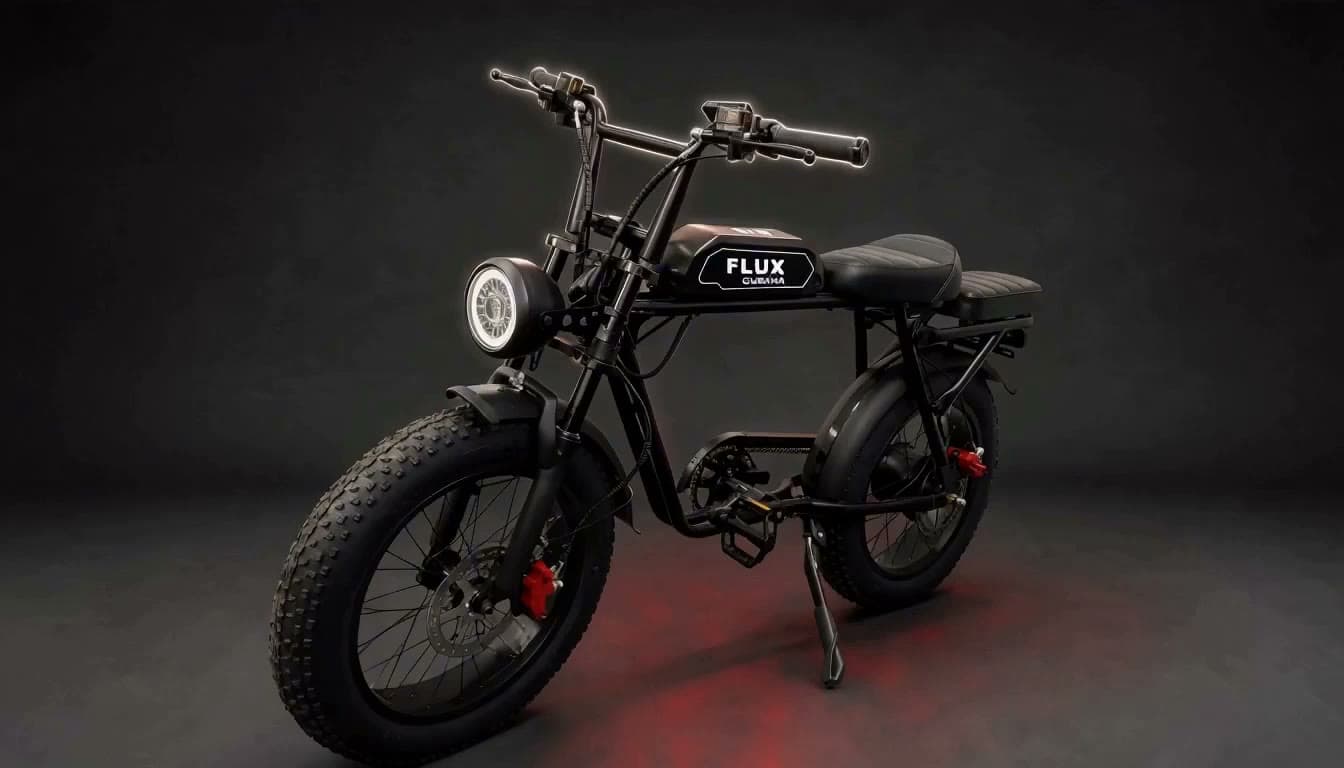
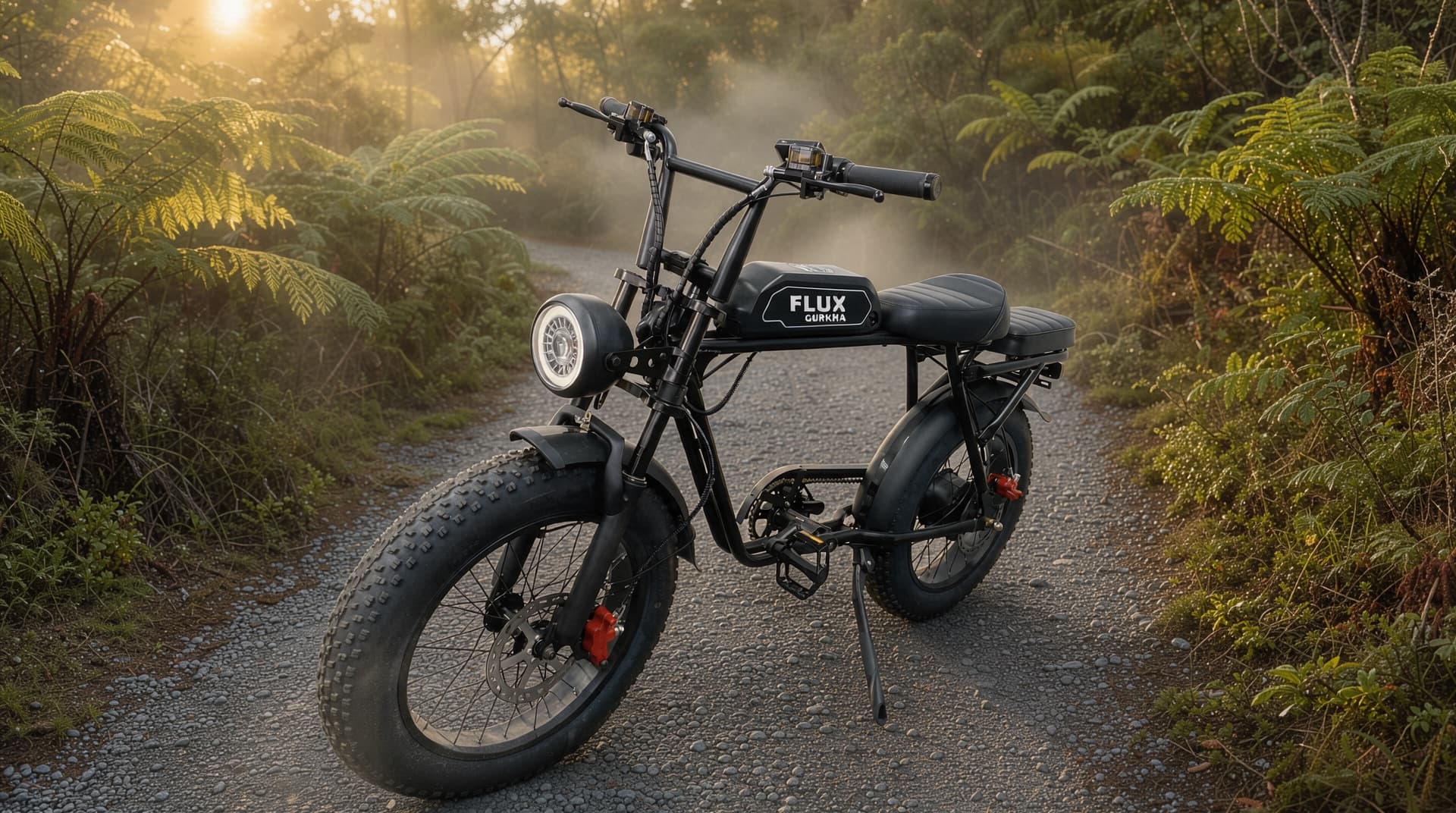
An e bike fat tire setup, or fat tyre as we say in New Zealand, is the single most visible thing about bikes like Gurkha. Those 4-inch-wide tyres change how a bike grips, rides and handles on sand, gravel and wet seal. They also bring trade-offs that most product pages skip over. This guide explains the sizes, gives you a starting tyre pressure for common NZ surfaces, and is honest about where fat tyres are not the best tool.
The short answer: fat tyres are usually 3.8 to 5 inches wide and run at much lower pressures than normal bike tyres. That gives more grip and comfort on loose or rough ground, such as beaches, gravel roads and grass. The cost is extra weight, more rolling resistance on smooth seal and a slightly heavier feel in the steering.
What makes a fat tyre e-bike different?
A standard road or commuter tyre is roughly 25 to 50 mm wide. A typical mountain bike tyre is around 2.2 to 2.6 inches. Fat tyres start at about 3.8 inches and go up to around 5 inches. That extra width does three things:
- Bigger contact patch. More rubber touches the ground, so you get more grip, especially when braking or turning on loose surfaces.
- Lower pressure. A large air volume lets you run single-digit or low-teen psi without the tyre folding, which lets it "float" over sand and soak up bumps.
- Built-in cushioning. The tyre acts as basic suspension. It is not a replacement for a suspension fork on rough singletrack, but it takes the sting out of potholes, tree roots and corrugated gravel.
20×4" vs 26×4" vs other fat tyre e-bike sizes
Tyre sizes are written as wheel diameter × tyre width, in inches. The diameter matters as much as the width.
| Size | Typical use | Strengths | Trade-offs |
|---|---|---|---|
| 20×4" | Moto-style and compact e-bikes, urban and beach riding | Low standover, nimble steering, strong wheels, easy to manoeuvre and store | Rolls over large obstacles less easily than bigger wheels |
| 24×4" | Smaller riders, some cruisers | Middle ground between 20" and 26" | Fewer tyre choices |
| 26×4" to 26×4.8" | Traditional fat bikes, snow and sand touring | Rolls over roots and rocks well, very stable | Taller, heavier, slower steering |
| 27.5×2.8" to 3" ("plus") | Trail e-bikes and some eMTBs | Lighter and faster rolling than full fat tyres | Less float on soft sand |
A 20×4" tyre has an overall diameter close to a much larger wheel with a skinny tyre, because the tall sidewall adds height. That is why a 20-inch fat tyre bike does not feel like a kid's bike. It also keeps the seat low, which suits a long bench-style seat and riders who like to put a foot down easily.
Gurkha uses 20×4-inch fat tyres for exactly those reasons: a planted, low-slung feel around town and confidence on beach tracks and gravel.
Fat tyre pressure guide for NZ conditions
Tyre pressure is the biggest single adjustment you can make on any e bike fat tire setup, and it costs nothing. Too high and you lose grip and comfort. Too low and you risk pinch flats, rim damage and a tyre that squirms in corners.
Use the table below as a starting point for a 4-inch tyre with an average-weight rider. Always stay inside the minimum and maximum printed on your tyre's sidewall, which override anything here.
| Surface | Starting pressure (psi) | Why |
|---|---|---|
| Soft, dry sand (above the tide line) | 5 to 8 | Maximum float so the tyre rides on top rather than digging in |
| Firm, wet sand near the waterline | 8 to 12 | Firm enough to roll efficiently, soft enough to stay stable |
| Loose gravel roads and forestry tracks | 12 to 16 | Grip on loose stones and comfort on corrugations |
| Grass, farm tracks and easy trails | 10 to 15 | Traction on damp ground and roots |
| Wet seal and painted road markings | 15 to 20 | Stable cornering, less tyre squirm, decent grip |
| Dry seal, daily commuting | 18 to 25 | Lower rolling resistance and more efficient use of the battery |
Adjusting for you and your load
- Heavier rider or carrying gear: add 2 to 4 psi to reduce the risk of pinch flats and rim strikes.
- Lighter rider: you can usually drop 1 to 3 psi for more grip.
- Front vs rear: run the front 1 to 2 psi lower than the rear for steering grip, since most of your weight sits over the back wheel.
- Use a low-pressure gauge. Many pump gauges are inaccurate below 15 psi. A small digital gauge is cheap and makes a real difference.
- Check weekly. Big tyres lose a few psi over a week, and at low pressures a couple of psi changes the ride noticeably.
Grip and comfort: where fat tyres shine
Beaches
Fat tyres are the reason many people consider a fat tyre e-bike at all. On firm sand near the waterline a 4-inch tyre at low pressure rolls surprisingly well. Soft dry sand is still hard work, even with assistance, so plan routes that use the firmer sand. Check local council bylaws and any signage before riding on a beach, because rules about where bikes are allowed vary by district and can change with the season or for nesting birds.
Gravel and forestry roads
New Zealand has a lot of unsealed road. Fat tyres smooth out corrugations and hold a line on loose stones far better than narrow tyres. Drop the pressure into the low to mid teens and you will feel the difference immediately.
Wet roads
A wider tyre does not make you immune to slipping, but a bigger contact patch at a sensible pressure gives more margin on wet seal, leaves and painted lines. Pair that with good brakes, such as the hydraulic discs front and rear on Gurkha, and you have a confident wet-weather commuter. Still, slow down for road paint, metal covers and the first rain after a dry spell, when oil lifts to the surface.
The trade-offs: what fat tyres cost you
Fat tyres are not free. Be realistic about these before you buy:
- Weight. Fat tyres, tubes and wide rims add noticeable weight compared with standard wheels. That matters if you need to lift the bike onto a rack or up stairs.
- Rolling resistance on seal. On smooth tarmac, a fat tyre at low pressure uses more energy than a narrow, high-pressure tyre. With an e-bike, the motor covers some of that, but it can reduce how far you get per charge. Raising the pressure on road days helps.
- Self-steer. Wide tyres at low pressure can feel like they want to follow ruts or pull slightly when you lean. Most riders adjust within a few rides.
- Tyre noise. Aggressive fat tread hums on the road. Smoother, semi-slick fat tyres are quieter if you mostly commute.
- Replacement cost and choice. Fat tyres and tubes cost more than standard ones and not every shop stocks every size. Ask your local bike shop what they carry before you need it.
- Car racks and storage. Many standard bike racks will not fit 4-inch tyres. Look for a rack with fat-bike trays or straps.
Looking after fat tyres in NZ conditions
- After the beach: rinse the bike with fresh water at low pressure to get salt and sand off the rims, brakes and drivetrain. Our e-bike off road guide has a full post-ride routine for sand, mud and salt.
- Puncture protection: consider sealant, or tubeless if your rims and tyres support it, to cope with gorse, thorns and glass.
- Inspect sidewalls: low pressures flex the sidewall more, so look for cuts and cracking every few weeks.
- Store away from sun: UV degrades rubber. Keep the bike under cover when you can.
Is a fat tyre e-bike right for you?
An e bike fat tire setup makes most sense if your riding mixes town streets with gravel, grass, beach tracks or rough paths, or if you simply value comfort and stability over outright speed. If you ride mainly smooth seal and want the lightest, quickest bike, a commuter with narrower tyres may suit better. See our electric commuter bike guide for that comparison. If technical singletrack is your thing, a full-suspension eMTB is the right tool, and our electric mountain bike NZ guide explains the difference.
Whatever bike you choose, check how it is classified before you ride on trails. In New Zealand an e-bike is defined by its motor power and whether it is mainly pedalled, not by its tyres. The power-assisted cycle definition caps motor output at 300 watts, and trail networks such as the Great Rides apply that in their e-bike policy. Our e-bike laws NZ explainer covers the details.
Gurkha pairs 20×4-inch fat tyres with a long bench seat, a bright LED headlight and a 624Wh battery, designed in Aotearoa for exactly this kind of mixed riding. Flux will confirm full specifications before launch. Join the waitlist to be first to hear when it is ready.
Frequently asked questions
What tyre pressure should I run on a fat tyre e-bike?
As a starting point for a 4-inch tyre, try 5 to 8 psi on soft sand, 12 to 16 psi on gravel and 18 to 25 psi on dry seal. Adjust for your weight and load, and always stay within the range printed on the tyre sidewall.
Are fat tyre e-bikes good on the beach?
Yes, they are one of the best bike types for sand, especially firm sand near the waterline at low pressure. Rinse salt and sand off afterwards, and check local council rules before riding on any beach.
Is a 20x4 fat tyre too small?
Not for most riders. The tall 4-inch sidewall makes the overall wheel diameter much larger than 20 inches suggests. You get nimble handling and a low seat height, though bigger 26-inch fat wheels roll over large roots and rocks more easily.
Do fat tyres reduce e-bike range?
They can on smooth seal, because wide tyres at low pressure have more rolling resistance. Pumping them up towards the higher end of the sidewall range on road days reduces the effect.
Do fat tyres make an e-bike a motorbike?
No. In New Zealand, classification depends on motor power and whether the bike is mainly pedalled, not tyre width. A power-assisted cycle has a motor output of 300 watts or less.