E Bike Battery Guide: How It Works, Care, Safety and Recycling in NZ
What do watt-hours mean, how should you store an e-bike battery through a New Zealand winter, and where can you recycle one? A plain-spoken guide to battery care, lifespan, replacement, fire safety and NZ recycling options.
Flux Motors team8 min read
Your e bike battery is the most expensive single part on the bike, and the one that most affects how it rides day to day. Look after it well and it will give you years of reliable assistance. Treat it badly and it can lose capacity early or, in rare cases, become a fire risk. This guide explains how e-bike batteries work, what watt-hours mean, how to care for one through a New Zealand year, and how to recycle it safely at the end of its life.
The short answer: most e-bike batteries are lithium-ion packs measured in watt-hours (Wh). To make one last, avoid storing it full or flat for long periods, keep it out of heat and freezing cold, use only the charger that came with it and charge while you are home and awake. When it reaches the end of its life, take it to a battery recycling drop-off. Never put it in household rubbish or recycling bins.
How an e bike battery works
An e-bike battery is a pack of many small lithium-ion cells wired together, plus a battery management system (BMS). The BMS is a small circuit board that monitors cell voltages and temperature, balances the cells and cuts power if something goes outside safe limits.
Three numbers describe a battery:
- Voltage (V): the electrical "pressure" the pack supplies to the motor. Common e-bike packs are 36 V, 48 V or 52 V.
- Amp-hours (Ah): how much charge the pack holds.
- Watt-hours (Wh): the total energy stored. It is voltage multiplied by amp-hours.
Watt-hours explained, using Gurkha as an example
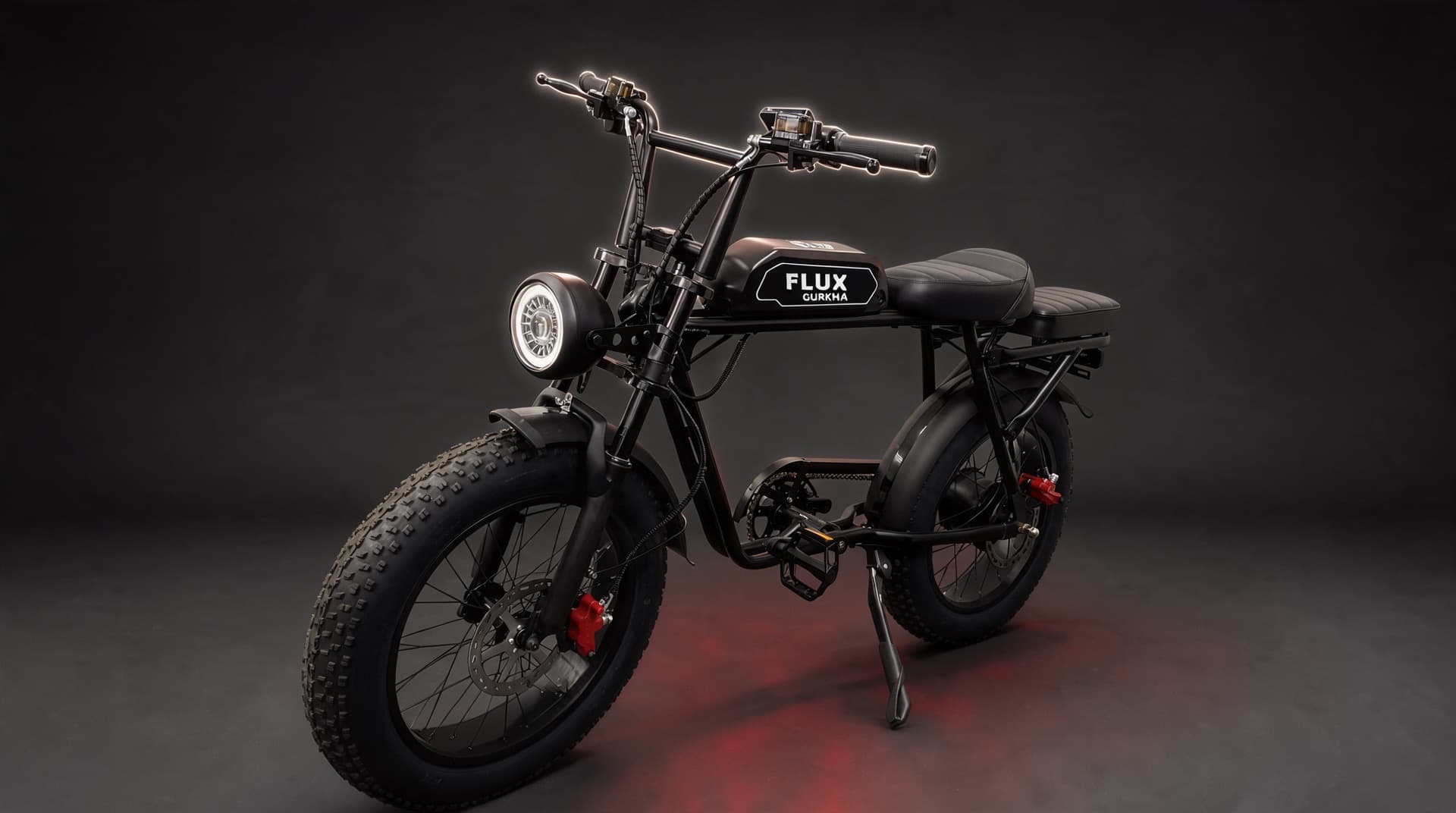
Watt-hours are the most useful number for comparing batteries, because they combine voltage and capacity. Gurkha has a 624Wh lithium-ion battery. In theory, 624Wh could supply 624 watts for one hour, or 312 watts for two hours, or 156 watts for four hours. As a maths example only, 48 V × 13 Ah also works out to 624Wh, but Flux has not published Gurkha's battery voltage or cell details.
What watt-hours do not tell you is range. How far a battery takes you depends on:
- Assist level, and how much you pedal
- Rider and cargo weight
- Hills, headwinds and stop-start riding
- Tyre type and pressure (fat tyres on seal use more energy; see our fat tyre e-bike guide)
- Temperature, because cold weather temporarily reduces usable capacity
- Battery age
That is why we do not quote a range figure for Gurkha. Flux will confirm full specifications before launch.
Seasonal battery care calendar for New Zealand
Lithium-ion batteries are happiest at moderate temperatures and at partial charge. New Zealand's seasons, from hot Northland summers to frosty Central Otago winters, each bring their own risks. Here is a simple calendar to follow.
| Season | Main risk | What to do |
|---|---|---|
| Summer (Dec to Feb) | Heat. Batteries age faster when hot. | Do not leave the battery in a parked car or in direct sun. Let it cool after a long ride before charging. Charge in a shaded, ventilated spot. |
| Autumn (Mar to May) | Changing temperatures, wet rides | Wipe and dry contacts after wet rides. Check the case for cracks or swelling. Clean the charging port. |
| Winter (Jun to Aug) | Cold. Capacity drops temporarily, and most manufacturers advise against charging below freezing. | Bring the battery to room temperature before charging. Expect less range on frosty mornings. If you are not riding, store it at partial charge and top up every month or two. |
| Spring (Sep to Nov) | Coming out of storage | Inspect the battery for damage, charge it fully, then do a short test ride before a big day out. Check the battery health reading if your bike or app offers one. |
Gurkha's Flux app lets you monitor the battery over Bluetooth, which makes it easier to keep an eye on charge levels through the year.
Everyday care tips
- Partial charge for storage. If you will not ride for a few weeks, leave the battery around half charged rather than full or empty. Check your manual for the exact level your manufacturer recommends.
- Do not run it completely flat often. Deep discharges stress the cells. Recharge when convenient.
- Avoid sitting at 100% for days. Charging to full before a ride is fine. Leaving it full for weeks is not ideal.
- Keep it dry. Follow your manual on washing. Do not water blast the battery or its contacts.
- Handle with care. A dropped battery can be damaged inside even if the case looks fine. If it has had a hard knock, get it checked.
- Use the original charger. See our e-bike charger guide for why this matters.
How long does a battery last?
Battery life is usually described in charge cycles, where one cycle is the equivalent of a full charge from empty. Manufacturers commonly quote several hundred to around 1,000 full cycles before capacity drops noticeably, though this varies with cell quality, temperature, charging habits and how deeply you discharge. In years, many riders get several seasons from a well-kept battery.
Batteries rarely stop working suddenly. Instead, they slowly hold less energy, so you notice less assistance per charge. A battery is generally considered worn when it holds noticeably less than its original capacity and no longer suits how you ride.
Replacing a battery
- Buy genuine or approved replacements. The battery, BMS, charger and motor controller are designed to work together.
- Be wary of cheap unbranded packs sold online. You often cannot verify the cells or the BMS.
- Ask about rebuilding. Some NZ specialists rebuild packs with new cells. Ask what cells they use and what warranty they give.
- Factor it into total cost. Replacement batteries are a significant expense. Our e-bike NZ price guide covers running costs.
Safety and fire risk
Lithium-ion batteries are safe when they are well made and properly looked after, but they store a lot of energy. Insurer AMI reported a 17% rise in lithium-ion battery fire claims in 2024, with over a fifth happening while a device was charging, according to NZ Autocar.
Fire and Emergency New Zealand's lithium-ion battery safety campaign and public advice come down to a few rules:
- Use only the charger supplied with your e-bike, or an approved replacement.
- Do not charge on or near flammable surfaces, such as beds, couches or piles of clothing.
- Do not leave batteries charging for long periods, and avoid charging overnight while you sleep.
- Consider charging larger devices such as e-bikes outside living areas, as Fire and Emergency has recommended, and never block an exit.
- Stop using a battery that is swollen, damaged, leaking, unusually hot or smelling odd.
- If a battery catches fire, do not try to put it out. Get out, close doors behind you if it is safe, and call 111.
Fit a working smoke alarm wherever you charge. It is a cheap, simple layer of protection.
Recycling in New Zealand
Never put a lithium-ion battery in your rubbish or recycling bin. Consumer NZ notes they can be crushed or punctured in a truck or at a landfill and catch fire.
Options for an e bike battery in NZ include:
- Return it to the retailer or brand that sold the bike. Many will take old batteries or know where to send them.
- Council drop-off points and transfer stations. Many accept lithium-ion batteries, though some limit the size they take. Wellington City Council, for example, asks people to tape terminals before dropping batteries off. Call ahead to check an e-bike pack is accepted.
- Specialist recyclers and drop-off networks. Consumer NZ lists options including Bunnings stores, Phoenix Metalman Recycling, Zero Waste Network hubs and WasteMINZ's map of facilities.
Before you drop it off, tape over the terminals. Keep damaged or swollen batteries separate and tell the facility about the damage.
Longer term, the Government has declared e-waste, including large batteries, a priority product for regulated product stewardship. The Battery Industry Group is developing a scheme for large batteries. Whether smaller e-bike packs will fall under it is not yet clear.
The bottom line
Understand the watt-hours, keep the battery cool, dry and partly charged when stored, use the right charger and charge while you are around. Recycle it properly when it is done. That gets you the most life and the least risk from any e-bike battery.
Gurkha's 624Wh battery is monitored through the Flux app, and Flux will confirm full battery and charging specifications before launch. Join the waitlist to be the first to know.
Frequently asked questions
How long does an e-bike battery last?
Manufacturers commonly quote several hundred to around 1,000 full charge cycles before capacity drops noticeably. In practice, a well-kept battery often lasts several seasons, depending on cell quality, temperature and charging habits.
What does Wh mean on an e-bike battery?
Wh stands for watt-hours, the total energy the battery stores. It equals voltage multiplied by amp-hours. A 624Wh battery stores more energy than a 500Wh one, but actual range depends on terrain, weight, assist level and temperature.
Is it safe to charge an e-bike battery overnight?
Fire and Emergency New Zealand advises against leaving lithium-ion batteries charging for long periods. Charge while you are home and awake, use the original charger, keep it away from flammable materials and fit a smoke alarm nearby.
How should I store my e-bike battery over winter?
Store it indoors at a moderate temperature, at partial charge, and top it up every month or two. Bring it to room temperature before charging, as most manufacturers advise against charging below freezing.
Where can I recycle an e-bike battery in NZ?
Ask the retailer or brand first, then check council drop-off points, transfer stations and recyclers listed by Consumer NZ. Tape the terminals and never put lithium-ion batteries in household rubbish or recycling bins.