E Bike NZ Price: What E-Bikes Really Cost to Buy and Run
What do e-bikes really cost in New Zealand? Price bands from under $2,000 to $10,000 plus, charging maths using MBIE's August 2026 power prices, servicing and insurance, and a five-year cost comparison against a petrol car.
Flux Motors team8 min read
The e bike NZ price you see on a shop tag is only the start. What you really pay over five years includes charging, servicing, tyres, a decent lock and possibly insurance. The good news: once you add it all up, an e-bike is still one of the cheapest ways to get around a New Zealand town. Here are the real numbers, with sources.
Short answer: most new e-bikes from established brands in New Zealand cost between about $2,500 and $6,000, with premium commuters and electric mountain bikes running past $10,000. Charging costs roughly 50 cents to $1 per 100 km at current average power prices, so servicing and depreciation, not electricity, make up most of the running cost.
E-bike prices in NZ: the main price bands
Consumer NZ reports that the average price of currently available e-bikes it has tested is $5,725, and that several models sit between $2,500 and $4,500. Retail listings at the time of writing match that picture: Avanti's Discovery-e Low was listed at $2,899.99, Murf's fat-tyre models at $4,299, and Specialized's electric mountain bikes at well over $10,000.
| Price band | What you typically get | Watch for |
|---|---|---|
| Under $2,000 | Basic hub-motor bikes, often sold online, smaller batteries, mechanical brakes | Battery certification, power claims over 300 W, parts and service support |
| $2,000 to $3,500 | Entry bikes from known brands, step-through and commuter designs | Battery size, weight, brake quality |
| $3,500 to $6,000 | Mainstream commuters, fat-tyre and moto-style bikes, hydraulic brakes, larger batteries, app features | Weight, fit, local servicing |
| $6,000 to $10,000 | Premium commuters, mid-drive systems, entry to mid-range eMTBs | Whether you will use the extra performance |
| $10,000 and up | High-end eMTBs, carbon frames, top suspension and motor systems | Running costs of premium parts |
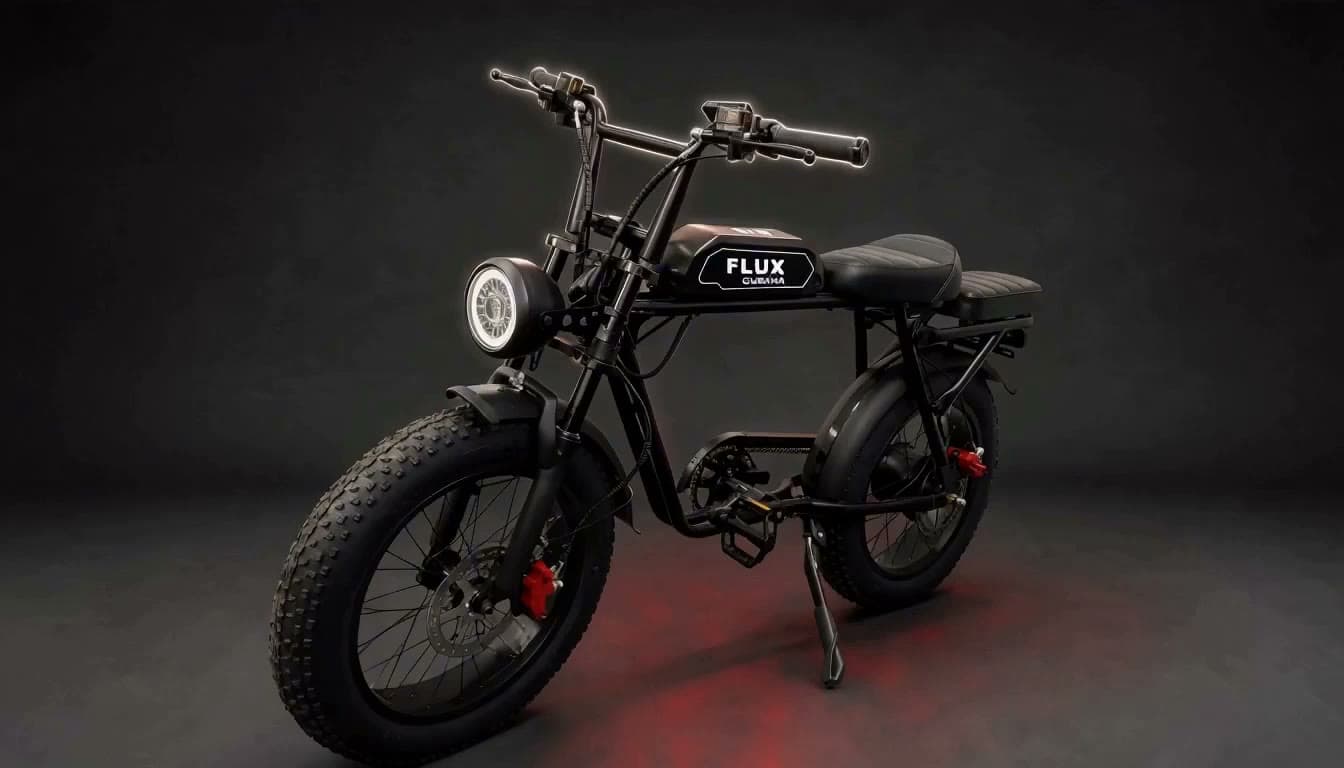
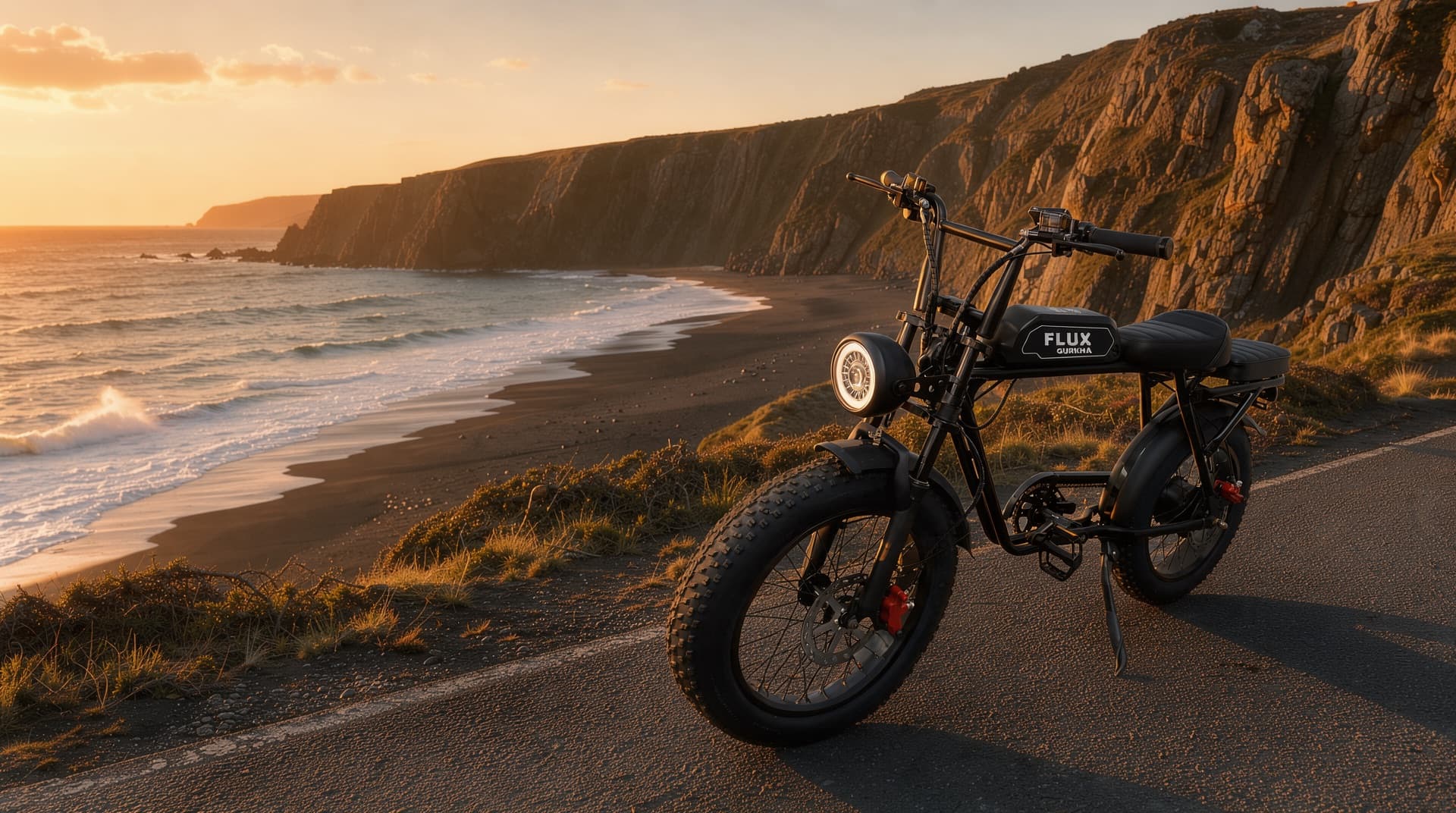
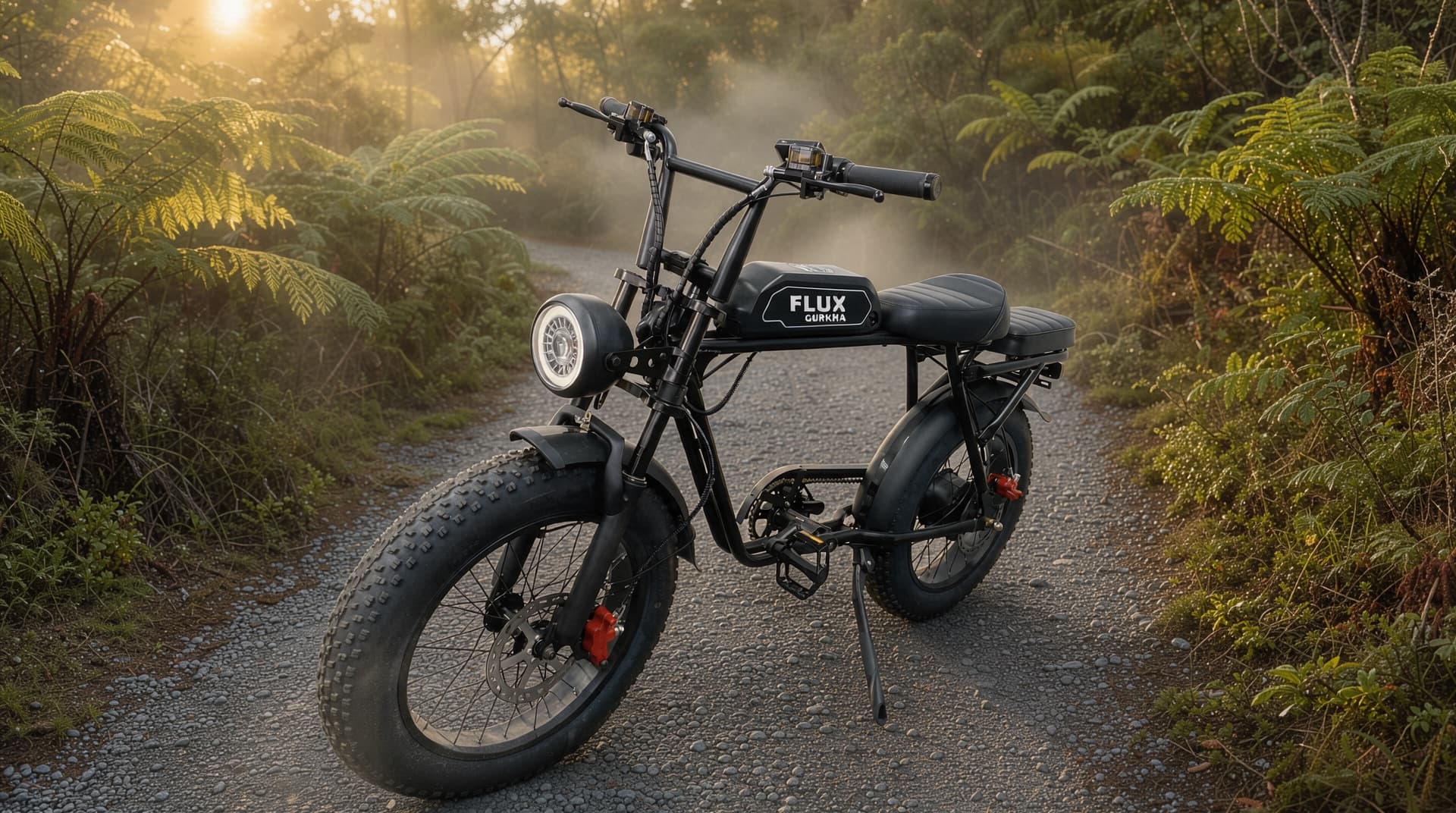
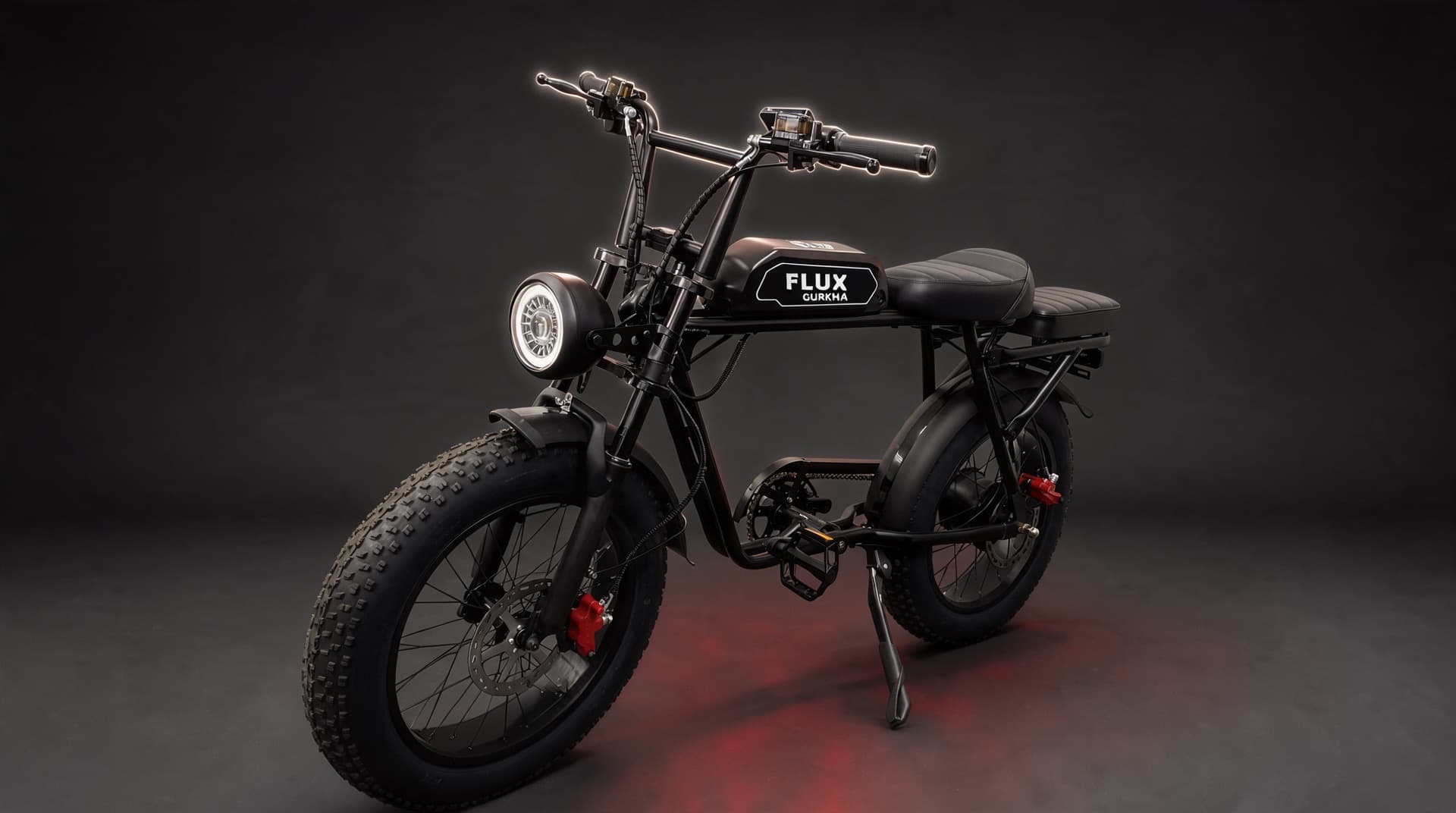
For context, the Flux Gurkha is a smart fat-tyre, moto-inspired e-bike priced from NZ$4,499, which puts it in the middle band. It is not on sale yet.
If you are shopping below $2,500, read our honest guide to cheap e-bikes in NZ first. There are good budget options, but also some real traps.
What does it cost to charge an e-bike in NZ?
This is where e-bikes shine. MBIE's Quarterly Survey of Domestic Electricity Prices put the national average at 42.1 cents per kWh (including GST) on 15 August 2026. Auckland Central was 41.30c, Christchurch 38.61c and Wellington City 37.20c.
How much energy does an e-bike use? Gen Less, the government's energy efficiency programme, uses the example of a 400Wh battery giving a boost for around 40 km. That works out to about 10 Wh per km. Heavier bikes, fat tyres, steep hills, headwinds and high assist levels use more, so we have used 10 to 20 Wh per km as a working range. We have also allowed for some energy lost in the charger; the exact loss varies by charger and we have not been able to confirm a single standard figure.
The maths
- Light use (10 Wh/km): 1 kWh per 100 km, about 1.15 kWh from the wall with charger losses. At 42.1c, that is roughly 48 cents per 100 km.
- Heavy use (20 Wh/km): 2 kWh per 100 km, about 2.3 kWh from the wall. That is roughly 97 cents per 100 km.
- A full charge of a 624Wh battery (the Gurkha's capacity) is about 26 cents of electricity at the national average, before charger losses.
You can check your own rate on your power bill and swap it into the sums. Our e-bike battery guide explains watt-hours and how to look after a battery so it lasts.
Servicing, parts and other running costs
Electricity is the smallest part of the bill. The bigger items are wear and tear:
- Servicing. E-bikes are heavier than regular bikes and wear brakes, chains and tyres faster. Most shops recommend regular check-ups. Prices vary by shop and by motor system, so ask your local workshop for their service menu before you buy.
- Tyres and tubes. Fat tyres and puncture-resistant tyres cost more than standard ones but are often worth it on rough NZ roads.
- Brake pads and rotors. Hydraulic disc pads are a regular wear item, especially if you live somewhere hilly.
- Chain and drivetrain. Hub motors are kinder to chains than mid-drives, but every drivetrain wears.
- Battery replacement. Lithium-ion batteries lose capacity over time. Ask the seller what a replacement costs and whether it is stocked in NZ.
- Security. A good lock is essential. E-bikes are attractive to thieves.
E-bike insurance in NZ
You do not need insurance to ride a power-assisted cycle legally, but you should think about it. Some home contents policies cover bikes away from home, some only up to a low limit, and some exclude e-bikes over a certain value. Check three things with your insurer: whether the bike is covered away from home, the maximum amount for a single item, and whether theft from a locked bike outside is covered. If the answers are not good enough, a specialist cycle policy may be worth the premium.
Total cost of ownership: e-bike vs car
To see whether the e bike NZ price stacks up, here is a worked example for a typical commute of 10 km each way, five days a week, 46 weeks a year. That is 4,600 km a year.
Our assumptions
- E-bike purchase price $4,000, written off over five years (about $800 a year). This is our assumption, not a resale guarantee.
- Servicing and wear parts budget of $300 to $500 a year. Again an assumption; your shop's prices will differ.
- Electricity at 42.1c per kWh, using 10 to 20 Wh per km plus charger losses.
- Car costs from IRD's kilometre rates for the 2025-26 income year: $1.20 per km for a petrol car (Tier 1, which includes fixed costs such as depreciation, insurance and registration) and $0.37 per km (Tier 2, running costs only). IRD rates are a tax tool, not a precise measure of your car, but they are an official, independent benchmark.
| Cost per year (4,600 km) | E-bike | Petrol car, running costs only | Petrol car, full cost |
|---|---|---|---|
| Energy | $22 to $45 | Included | Included |
| Servicing and wear | $300 to $500 | Included | Included |
| Depreciation | About $800 | Not included | Included |
| Total | About $1,120 to $1,345 | About $1,700 | About $5,520 |
The most useful comparison depends on your situation. If an e-bike lets you sell a second car, compare against the full cost. If you keep the car and just drive it less, compare against running costs only. Either way, the e-bike usually wins, and it does so while you get some exercise.
What about the bus?
Public transport fares vary a lot by region and change often, so we have not quoted them. To compare, multiply your usual one-way fare by the number of trips you make in a year (about 460 for this commute) and set it against the e-bike total above. Many riders end up using both: bike on good days, bus when the weather turns.
How to keep the price down
- Buy the category you need, not the most expensive one. An eMTB is wasted on a flat commute.
- Ask for a first service to be included in the price.
- Choose a bike your local shop can service, so you are not paying freight to fix it.
- Charge at home off-peak if your plan has cheaper night rates.
- Look after the battery: avoid storing it flat or fully charged for long periods, and keep it out of extreme heat.
For more on choosing well within your budget, see our guide to the best e-bike for you in NZ.
Thinking about a Gurkha?
The Gurkha is priced from NZ$4,499 and has a 624Wh battery, Bluetooth and the Flux app for tracking rides and monitoring the battery. Flux will confirm full specifications, including warranty details, before launch. Join the waitlist to be first to know when it is available.
Frequently asked questions
What is a typical e bike NZ price in 2026?
Most mainstream e-bikes from established brands sit between about $2,500 and $6,000, with premium commuters and eMTBs going well past $10,000. Consumer NZ reports the average price of the currently available e-bikes it has tested is $5,725.
How much does it cost to charge an e-bike in NZ?
At the MBIE national average of 42.1 cents per kWh (15 August 2026), riding 100 km on a typical pedal-assist e-bike costs roughly 50 cents to $1 in electricity, depending on how much assist you use, the terrain and charger losses.
Is an e-bike cheaper than running a car?
Usually by a wide margin. Using IRD's 2025-26 rates for a petrol car, a 4,600 km yearly commute costs about $1,700 in running costs alone, or about $5,500 including fixed costs. Our worked e-bike example comes in around $1,120 to $1,345 a year, including depreciation.
Do I need insurance for an e-bike?
It is not legally required for a power-assisted cycle, but theft and damage are real risks. Check whether your contents policy covers the bike away from home and up to its full value, or get a specialist policy.
How much is the Flux Gurkha?
The Gurkha is priced from NZ$4,499. It is not on sale yet, and the waitlist is open now.