Best E Bike NZ: How to Choose the Right One in 2026
There is no single best e-bike for every Kiwi. Compare the five main e-bike types, learn which specs matter, check the 300 W legal limit and use a 10-step checklist to choose the right bike for your riding.
Flux Motors team8 min read
If you are searching for the best e bike NZ has on offer, the honest answer is that it depends on how and where you ride. A Wellington hill commuter, a Canterbury farm rider and a retiree pootling along the Hauraki Rail Trail need very different bikes. This guide skips the made-up top-ten lists and gives you a way to choose for yourself.
Short answer: the best e-bike for you in New Zealand is the one that matches your main type of ride (commuting, trails, beach and gravel, or travel), fits your body, has a battery and motor system you can get serviced locally, and stays within the legal 300 W limit for a power-assisted cycle. Choose the category first, then compare specs within it.
Start with the law: what counts as an e-bike in NZ
Before you compare bikes, know what you are buying. In New Zealand, a power-assisted cycle is a cycle with one or more auxiliary motors with a combined maximum power output not exceeding 300 W. That definition comes from the NZ Transport Agency's Power-assisted Cycles (Declaration Not to be Motor Vehicles) Notice. A bike inside that limit is treated as a cycle, not a motor vehicle.
Anything more powerful is a motor vehicle, and moped or motorcycle rules can apply. That matters because a growing number of high-powered "e-bikes" sold online sit well beyond 300 W. Our guide to e-bike laws in NZ covers the detail, including helmets and where you can ride.
The five main types of e-bike in New Zealand
Most e-bikes sold in New Zealand fall into one of five groups. Each one solves a different problem.
1. Commuter and city e-bikes
Built for sealed roads and cycle lanes. Expect upright or slightly forward riding positions, mudguards, racks, lights and medium-width tyres. They are usually the lightest and most efficient choice for daily trips. If your trips are mostly short and sealed, start here.
2. Fat-tyre and moto-style e-bikes
Wide tyres (often 4 inches) give grip and cushioning on gravel, sand, grass and potholed streets. Many have a long seat and a relaxed, planted feel. The trade-off is weight and rolling resistance. Our fat-tyre e-bike explainer goes deeper.
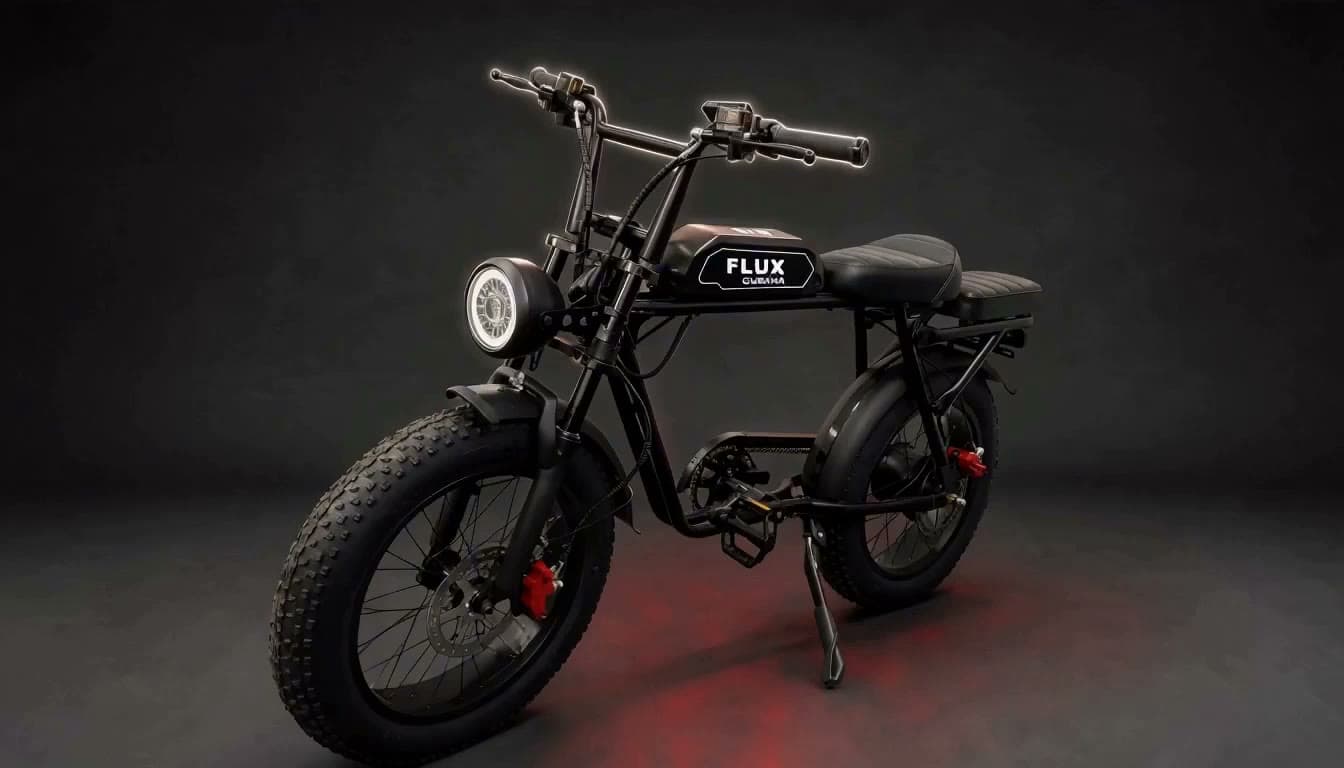
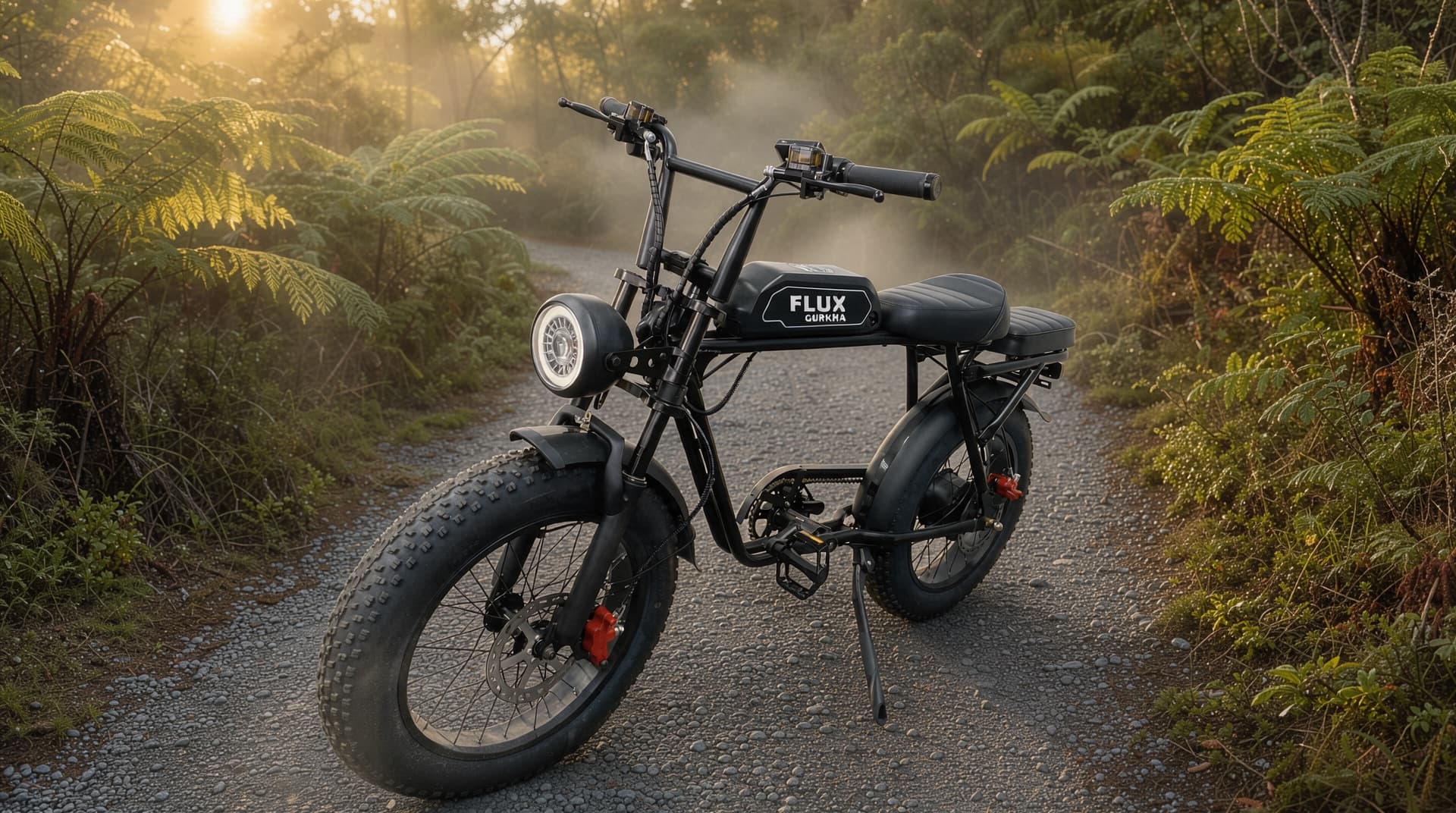
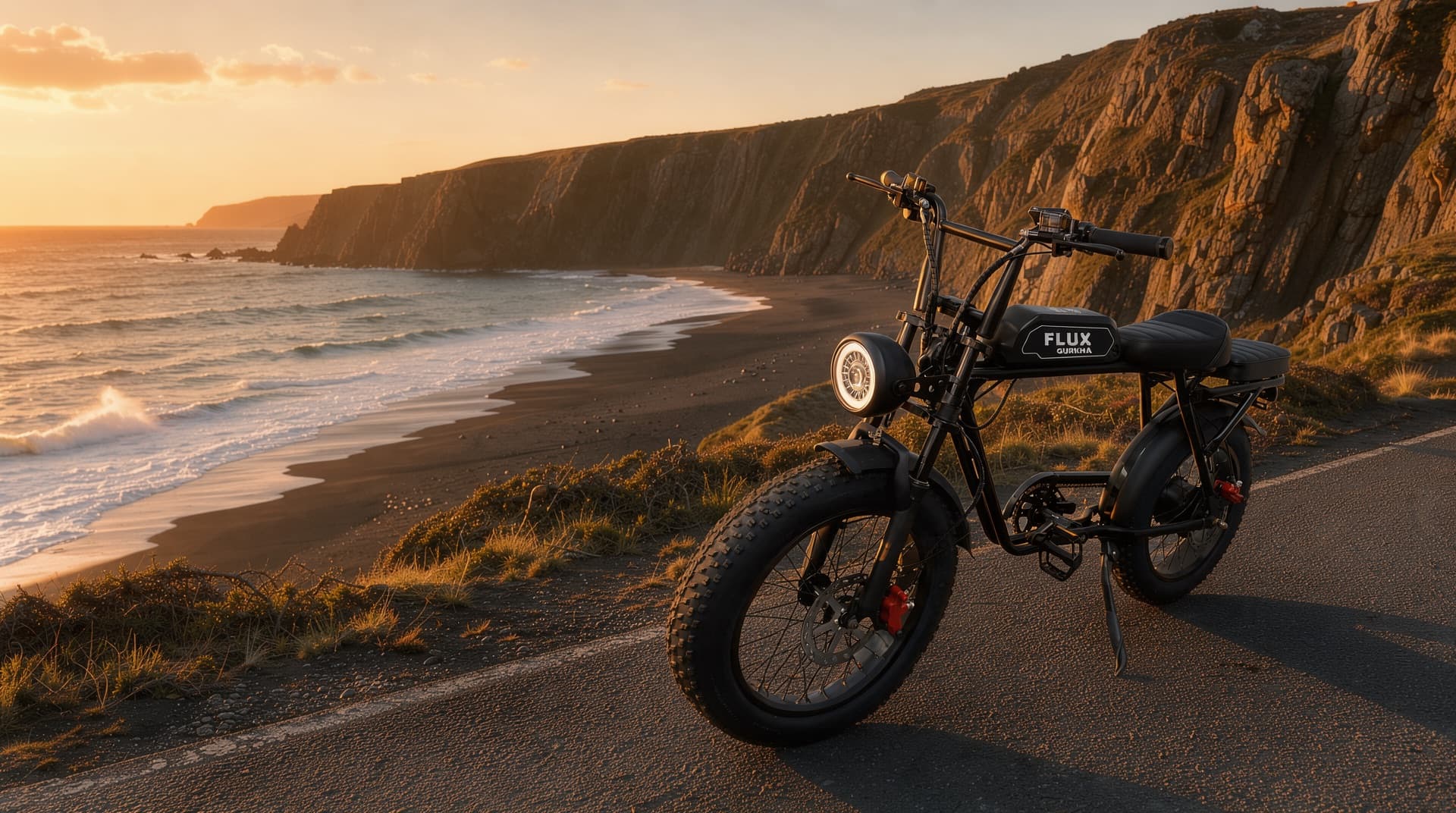
This is the category Flux Motors works in. The Flux Gurkha is a smart fat-tyre, moto-inspired e-bike designed in Aotearoa, with 20×4-inch tyres, a 624Wh lithium-ion battery, hydraulic disc brakes front and rear, a long bench seat and an assisted top speed of 25 km/h.
3. Electric mountain bikes (eMTBs)
Full or front suspension, aggressive tyres, trail geometry and usually a mid-drive motor. Brilliant for climbing and riding further on trails, but often the most expensive category. Read our electric mountain bike NZ guide before you spend.
4. Folding e-bikes
Small wheels and a hinged frame that packs into a car boot, campervan, boat or small apartment. Great for mixed trips with trains or ferries. Ride quality and range are usually more limited than full-size bikes.
5. Step-through e-bikes
A low or absent top tube so you can step through rather than swing a leg over. Ideal for riders with limited hip or knee mobility, people riding in everyday clothes, and anyone stopping and starting often. Step-through frames now appear across commuter, cruiser and even fat-tyre designs.
Which e-bike type suits which rider?
| Type | Best for | Strengths | Trade-offs |
|---|---|---|---|
| Commuter / city | Daily trips on sealed roads | Lighter, efficient, practical extras | Less comfortable on rough ground |
| Fat-tyre / moto-style | Gravel, beach access, rough streets, rural roads | Grip, comfort, confidence | Heavier, slower-rolling tyres |
| eMTB | Mountain bike trails and steep climbs | Suspension, traction, trail handling | Price, weight, maintenance |
| Folding | Small homes, travel, mixed transport | Packs down small | Smaller wheels, shorter rides |
| Step-through | Easy mounting, everyday clothes, returning riders | Accessible, confidence-building | Can be heavier, frame flex on some |
E-bike specs that actually matter
Spec sheets can be overwhelming. These are the numbers and features worth your attention.
- Battery capacity (Wh). Watt-hours tell you how much energy the battery stores. More watt-hours generally means more distance, but real range depends on rider weight, hills, wind, tyre choice and assist level. Treat any single "range" claim with caution.
- Motor type and placement. Hub motors (in the wheel) are simple and robust. Mid-drive motors (at the cranks) use the bike's gears and suit steep, technical riding. Both work well when matched to the job.
- Legal power. Check the motor's maximum power output, not just a headline peak figure, against the 300 W limit.
- Brakes. Hydraulic disc brakes give stronger, more consistent stopping than mechanical discs or rim brakes, which matters on a heavier bike.
- Tyres. Width changes everything: grip, comfort, rolling speed and where you can ride.
- Frame size and fit. A bike that fits beats a bike with better specs. Our guide to choosing an e-bike for adults explains how to check fit.
- Battery safety and certification. Ask which standards the battery and charging system have been tested to. Some brands cite UL 2849 for the whole electrical system; others cite European standards.
- Service and parts. Can a local shop work on the motor system? Are spare batteries and chargers available in NZ?
Real brands you will see in NZ
New Zealand riders can choose from global and local brands. Names you will find in Kiwi shops and on the first page of search results include Specialized, Trek, Giant, Liv, Cube, Merida, Avanti, Smartmotion, Aventon and Wattwheels, plus local fat-tyre and moto-style makers. We are not ranking them here, because a ranking without consistent independent testing would not be honest.
If you want independent test results, Consumer NZ tests e-bikes sold in New Zealand and publishes scores for members. It is one of the few sources that puts bikes through the same tests side by side.
Your e-bike decision checklist
Work through this list before you hand over money. It takes ten minutes and saves expensive mistakes.
- Name your main ride. Write down your most common trip: distance, surface and the biggest hill.
- Pick a category. Use the table above to choose one or two types.
- Set a total budget. Include a helmet, lock, lights if not built in, and a first service. Our e-bike NZ price guide breaks down the real costs.
- Check the legal power. Confirm the bike is a power-assisted cycle under 300 W if you plan to ride it as a bike on public roads and paths.
- Check fit. Can you put a foot down comfortably at a stop? Can you reach the bars without strain?
- Check weight. Can you lift it onto a car rack, up a step or into a lift if you need to?
- Ask about the battery. Capacity in Wh, testing standards, replacement price and availability.
- Ask about service. Who services it in your town, and what does a standard service cost?
- Test ride on a hill. Flat car parks hide a lot. Ride something steep and do an emergency stop.
- Read the warranty. Know what is covered for the frame, motor and battery, and for how long.
Where the Gurkha fits
The Gurkha is for riders who want the grip and presence of a fat-tyre, moto-inspired bike with smart features: Bluetooth and the Flux app let you adjust settings, track rides and keep an eye on the battery. It has a brushless rear hub motor, an aluminium alloy frame and a bright LED headlight. Pricing starts from NZ$4,499.
It is not a lightweight commuter or a trail-focused eMTB, and we would rather you buy the right bike than the wrong one from us. Flux will confirm full specifications before launch. You can see what we have published so far on the Gurkha page.
Ready to compare?
The best e bike NZ riders end up loving is rarely the one with the biggest numbers on paper. Use the checklist, test ride at least two categories, and take your time. If a smart fat-tyre e-bike designed in New Zealand sounds like your kind of ride, join the Gurkha waitlist to hear first when it is ready.
Frequently asked questions
What is the best e bike NZ riders can buy?
There is no single best e-bike for everyone. The right bike is the one that suits your main ride, fits your body, sits inside your budget and can be serviced near you. Pick the category first (commuter, fat-tyre, eMTB, folding or step-through), then compare bikes within it.
How much power can an e-bike have in New Zealand?
Under the NZ Transport Agency notice, a power-assisted cycle has auxiliary motors with a combined maximum power output of no more than 300 W. Bikes above that are treated as motor vehicles, which means registration and a licence may apply.
Do I need a helmet on an e-bike in NZ?
Yes. E-bikes that meet the power-assisted cycle definition are treated as cycles, and the Land Transport (Road User) Rule requires an approved, securely fastened helmet when riding a cycle on the road.
Is a fat-tyre e-bike a good choice for everyday riding?
It can be. Fat tyres add comfort and grip on gravel, sand and rough streets, but they are heavier and slower-rolling than skinny tyres. If most of your riding is smooth commuting, a lighter commuter may suit you better.
When will the Flux Gurkha be available?
The Gurkha is not on sale yet. The waitlist is open, and Flux will confirm full specifications before launch.