E Bike for Adults: How to Choose the Right Fit and Frame
Fit matters more than motors. How adults, including returning and larger riders, can choose an e-bike with the right frame, weight capacity and riding position, plus NZ rules and a test-ride checklist.
Flux Motors team7 min read
Choosing an e bike for adults is less about motors and more about you: your height, your confidence, your joints and the riding you want to do. Whether you are a daily commuter, someone getting back on a bike after 20 years, or a bigger rider who has never found a bike that felt solid, this guide walks through fit, frame shape, weight limits and riding position for New Zealand conditions.
Short answer: the right e-bike for an adult is one where you can put a foot down comfortably at a stop, reach the bars without straining, mount and dismount easily, and stay inside the bike's maximum weight rating with your gear. Get the fit right first, then choose the motor, battery and features.
Step 1: get the fit right
A bike that fits will feel safer, more comfortable and easier to control, especially on a heavier e-bike. Check these at the shop or during a test ride.
- Standover. Stand over the frame with both feet flat. You should clear the top tube (if it has one) comfortably.
- Seat height. For efficient pedalling, your leg should be almost straight at the bottom of the stroke. Newer or returning riders often prefer a slightly lower seat so they can touch the ground with the balls of both feet. You can raise it as you gain confidence.
- Reach. Sitting on the seat, you should reach the handlebars with a slight bend in your elbows and no stretch through your lower back.
- Handlebar height. Higher bars mean a more upright position and less pressure on wrists and neck.
- Frame size. Many brands sell frames in sizes such as small, medium and large. Size charts are a starting point, not the final word. Always sit on it.
Step 2: pick a frame shape
Frame shape decides how easy the bike is to get on and off, and how it handles.
| Frame style | Who it suits | Things to know |
|---|---|---|
| Step-through (low) | Returning riders, limited hip or knee movement, riding in everyday clothes, frequent stops | Easiest to mount; check the frame feels stiff with a heavy battery |
| Mid-step | Riders who want easier mounting with a slightly sportier feel | A good middle ground for many adults |
| High-step (diamond) | Confident riders, trail and sport use | Stiffest frame; you need to swing a leg over |
| Moto-style with long seat | Riders who want a planted, relaxed feel and room to shift position | Often paired with fat tyres; heavier than a commuter |
| Folding | Small homes, travel, campervans | Small wheels feel twitchier; check the hinge quality |
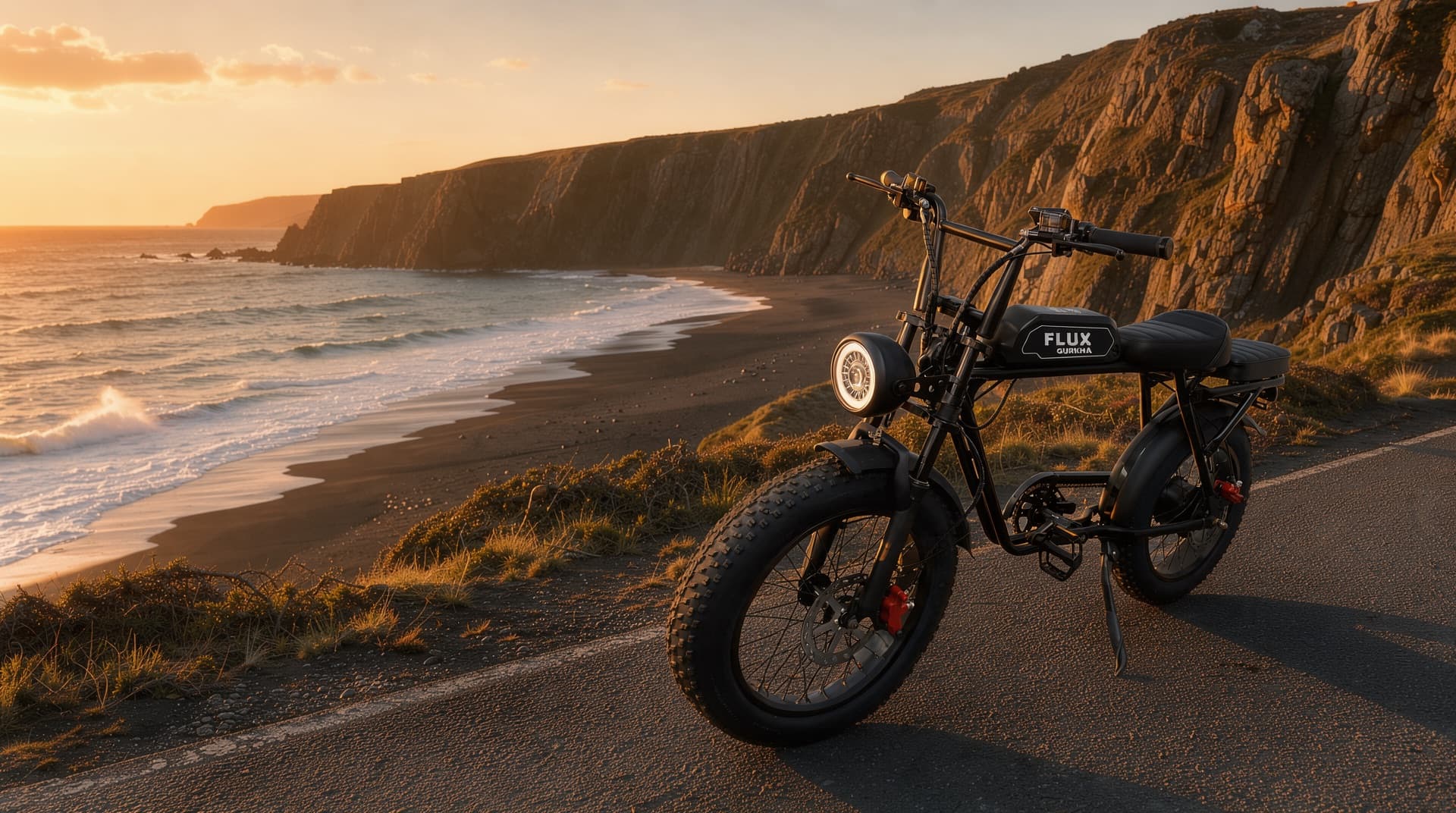
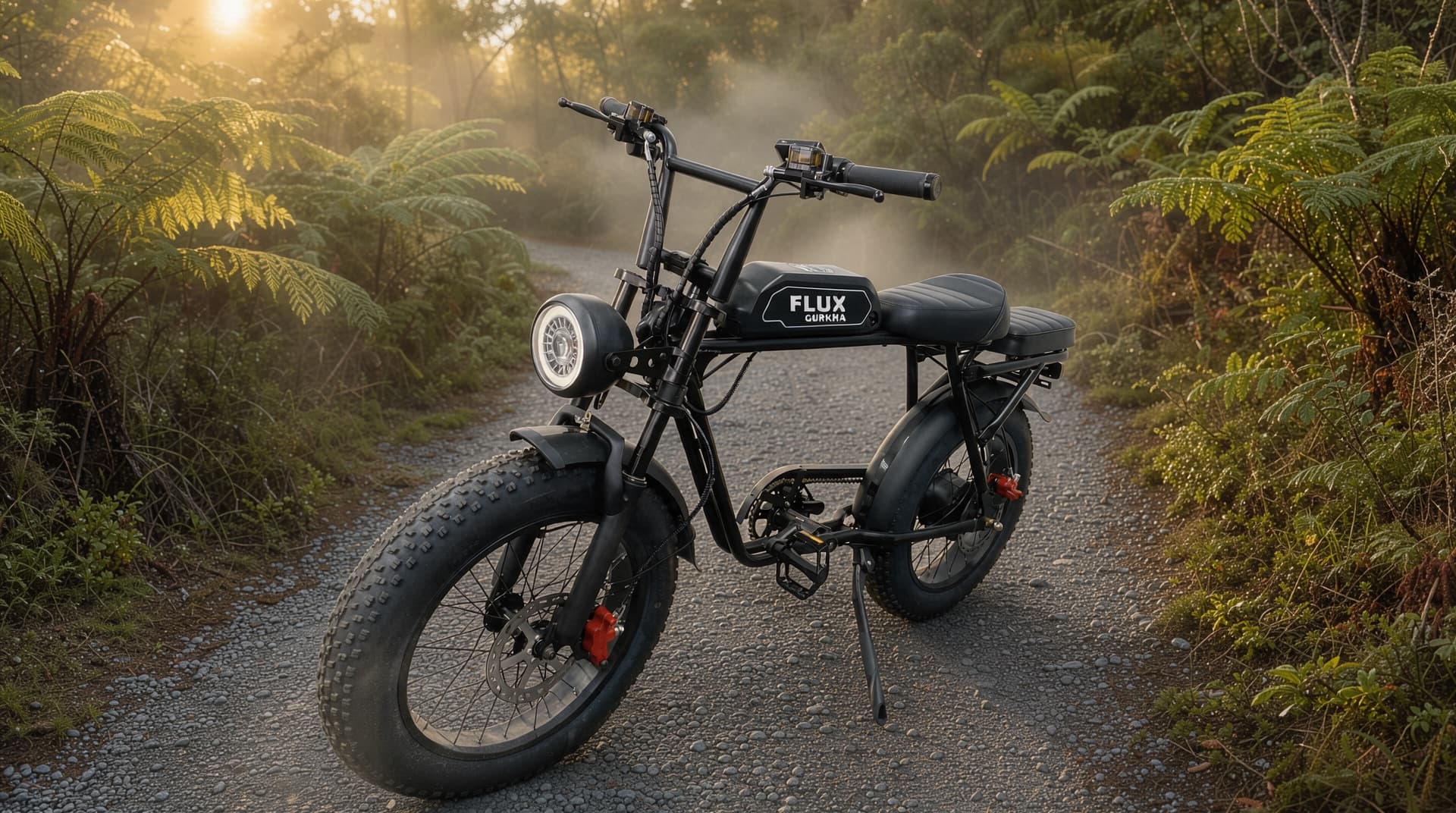
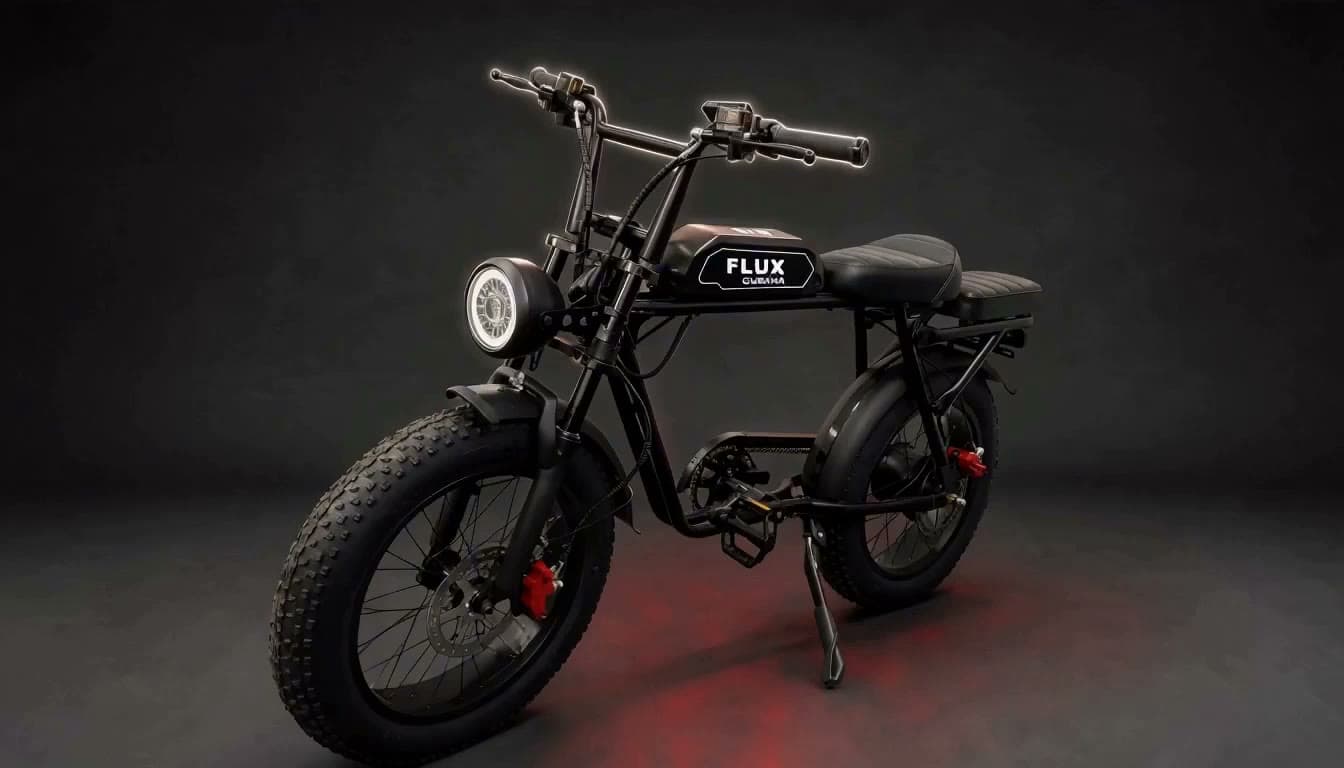
The Flux Gurkha falls into the moto-style group. It has a long bench seat, an aluminium alloy frame and 20×4-inch fat tyres, which give a lot of grip and cushioning on rough surfaces. Our fat-tyre e-bike guide explains the pros and cons of wide tyres.
Step 3: check the weight capacity
Every e-bike has a limit on how much weight it is designed to carry. It is often listed as "maximum permissible weight", "maximum system weight" or "maximum rider weight". These are not always the same thing:
- Maximum rider weight usually means the person only.
- Maximum system or permissible weight usually means rider plus luggage, and sometimes the bike too.
Read the manual or ask the shop exactly what is included. Then add your weight, a loaded backpack or panniers, and anything on a rear rack. Leave a margin. Riding over the limit can stress wheels, frames and brakes, and may affect your warranty.
Larger riders should also look for strong wheels with more spokes, wider tyres that can run sensible pressures, and hydraulic disc brakes. A sturdy kickstand helps too.
Step 4: choose a riding position
- Upright. Back straight, hands high. Best for comfort, visibility in traffic and sore backs or wrists.
- Relaxed forward. A slight lean. A good mix of comfort and efficiency for longer commutes.
- Sporty. More weight on the hands, common on eMTBs and road-style e-bikes. Efficient but harder on necks and wrists.
- Moto-style. Seated on a long, flat seat with wide bars. Planted and confident, with room to move around.
If you have a back, neck or shoulder issue, prioritise an upright position and adjustable bars. A good shop can fit a different stem or bar to change your position.
Confidence tips for returning adult riders
E-bikes are a brilliant way back into cycling, because the motor takes the sting out of hills and headwinds. A few habits make the first weeks easier.
- Start in the lowest assist level. The motor's push can surprise you. Build up gradually.
- Practise somewhere quiet. An empty car park or a quiet street is ideal for practising starts, stops and tight turns.
- Learn your brakes. Hydraulic discs are powerful. Practise smooth, progressive stops and an emergency stop.
- Pedal off from a low gear. Changing down before you stop makes it easier to get going again.
- Walk the bike. Practise wheeling it, turning it around and parking it. An e-bike is heavier than you remember a bike being.
- Plan easy routes. Cycle lanes, shared paths and rail trails are good places to build confidence. Councils and community groups around NZ run adult cycle skills sessions, so it is worth checking with yours.
- Ride with a friend for the first few longer trips.
NZ rules every adult e-bike rider should know
- Power limit. A power-assisted cycle in New Zealand has motors with a combined maximum power output of no more than 300 W, under the NZ Transport Agency's declaration notice. Within that limit, your e-bike is treated as a cycle.
- Helmets. Under rule 11.8 of the Land Transport (Road User) Rule, you must wear a securely fastened helmet of an approved standard when riding a cycle on the road.
- Over 300 W? More powerful bikes are motor vehicles, and the NZTA moped rules or motorcycle rules may apply. Our e-bike laws in NZ guide has the detail.
Your adult e-bike test-ride checklist
- Can I touch the ground comfortably when stopped?
- Can I get on and off without a struggle?
- Does my back, neck or wrist hurt after ten minutes?
- Can I stop smoothly and quickly with one or two fingers on the levers?
- Does the assist come in gently on the lowest setting?
- Can I wheel, turn and park the bike easily?
- Can I lift it where I need to (rack, step, storage)?
- Am I well inside the maximum weight rating with my usual gear?
- Is the display easy to read and the controls easy to use with gloves on?
If you tick every box, you have probably found a good e bike for adults like you. For help choosing between categories, see our guide to the best e-bike for you in NZ, and if you are mostly riding to work, our electric commuter bike guide.
Where the Gurkha fits
The Gurkha is for adults who want a confident, planted ride: fat tyres for grip, hydraulic disc brakes front and rear, a long bench seat, a bright LED headlight and an assisted top speed of 25 km/h. The Flux app lets you adjust settings, track rides and check the battery. Flux has not yet published a maximum rider weight or bike weight, and will confirm full specifications before launch.
If that sounds like your kind of ride, join the waitlist and we will let you know when the Gurkha is ready to test.
Frequently asked questions
What is the best e bike for adults returning to cycling?
Usually an upright, step-through or mid-step frame with hydraulic disc brakes, a smooth low-assist setting and a seat height that lets you touch the ground at a stop. Comfort and confidence matter more than top-end specs.
How do I know if an e-bike can carry my weight?
Look for the maximum permissible weight or maximum system weight in the manual. It usually covers you, your gear and sometimes the bike. Subtract the bike's weight if needed, and leave a margin for a backpack or shopping.
Do adults need a helmet on an e-bike in New Zealand?
Yes. E-bikes that meet the 300 W power-assisted cycle definition are treated as cycles, and the Land Transport (Road User) Rule requires an approved, securely fastened helmet when riding on the road.
Are e-bikes heavy to handle?
They are heavier than regular bikes because of the motor and battery. That is fine while riding, but think about lifting it onto a rack, up steps or into storage, and practise walking it before you buy.
Does the Flux Gurkha have a maximum rider weight?
Flux has not published a maximum rider weight yet. Flux will confirm full specifications before launch, so join the waitlist if you want to hear when they are released.