Electric Mountain Bike NZ Guide: eMTB vs Fat-Tyre E-Bike and Where You Can Ride
Full-suspension eMTB or fat-tyre e-bike? Here is an honest comparison for NZ riders, a table of trail access rules across DOC land, Great Rides, regional parks and bike parks, and a checklist of what to look for before you buy.
Flux Motors team7 min read
Shopping for an electric mountain bike NZ-style usually starts with a simple question: what bike do I need for the trails I actually ride? For some people that is a full-suspension eMTB built for steep, rooty singletrack. For others, a fat-tyre e-bike that handles gravel, forestry roads, beaches and easy trails is the better fit. This guide compares the two honestly, explains where e-bikes are allowed on NZ trails, and lists what to look for before you buy.
The short answer: choose a full-suspension eMTB if you ride technical grade 3 to 5 mountain bike trails. Choose a fat-tyre e-bike if you mostly ride grade 1 to 2 trails, gravel and beach tracks and want comfort and versatility. Either way, in New Zealand most trail networks only admit pedal-assist e-bikes of 300 watts or less, so check the rules before you ride.
eMTB vs fat-tyre e-bike: what is the real difference?
| Feature | Full-suspension eMTB | Fat-tyre e-bike |
|---|---|---|
| Best terrain | Technical singletrack, steep climbs, drops, bike parks | Gravel, forestry roads, grass, beach, easy trails, town |
| Suspension | Front fork and rear shock, often 140 to 170 mm travel | Tyres provide cushioning; some have a suspension fork |
| Tyres | 27.5" or 29", around 2.4 to 2.6" wide | Around 4" wide, run at low pressure |
| Motor | Usually mid-drive, working through the gears | Often rear hub drive, some mid-drive |
| Riding position | Aggressive, built for descending and climbing | Upright and relaxed |
| Typical NZ price | Often NZ$8,000 to NZ$12,000+ at NZ retailers | Wide range, generally less than a premium eMTB |
| Maintenance | Suspension servicing, pivots, drivetrain wear | Simpler, fewer moving parts to service |
Neither is "better". They are different tools. A full-suspension eMTB on a beach is awkward and you will be cleaning sand out of pivots for days. A fat-tyre e-bike on a grade 4 descent in Rotorua is out of its depth.
Where Gurkha fits
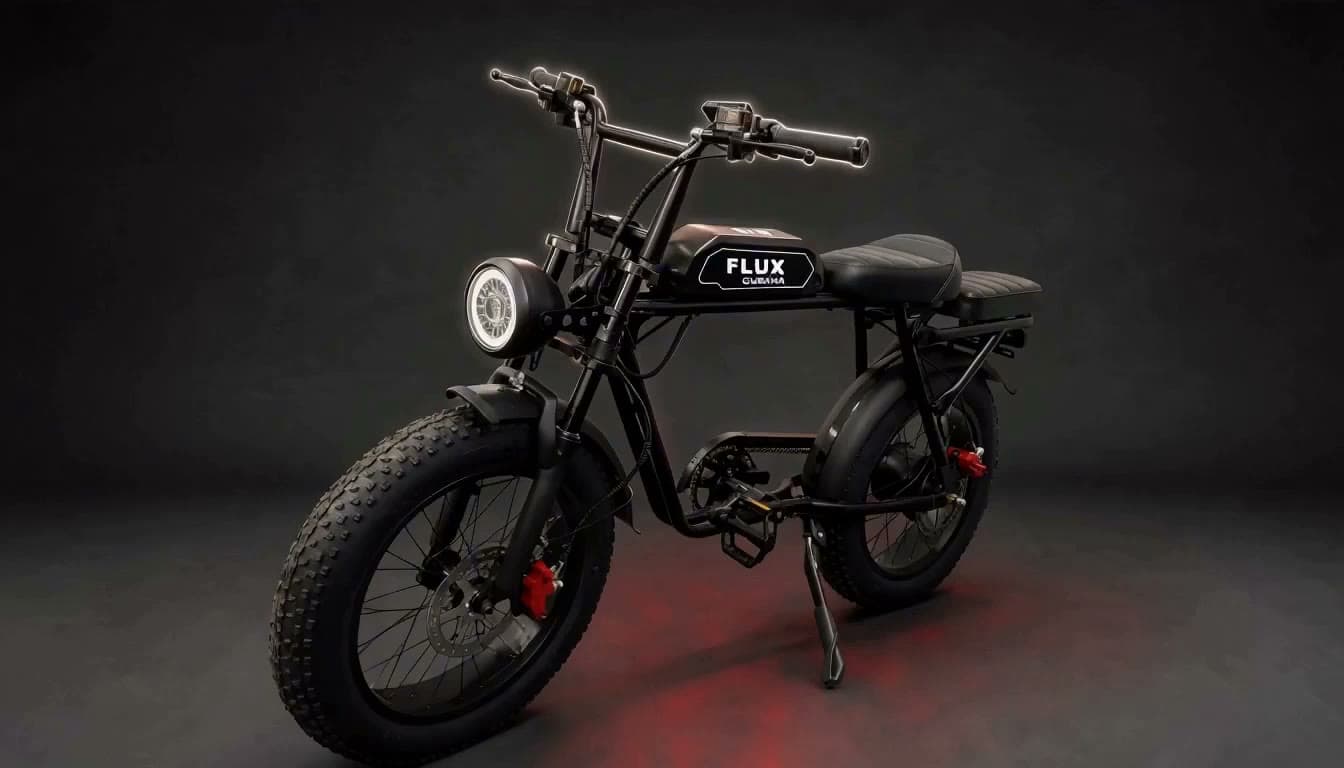
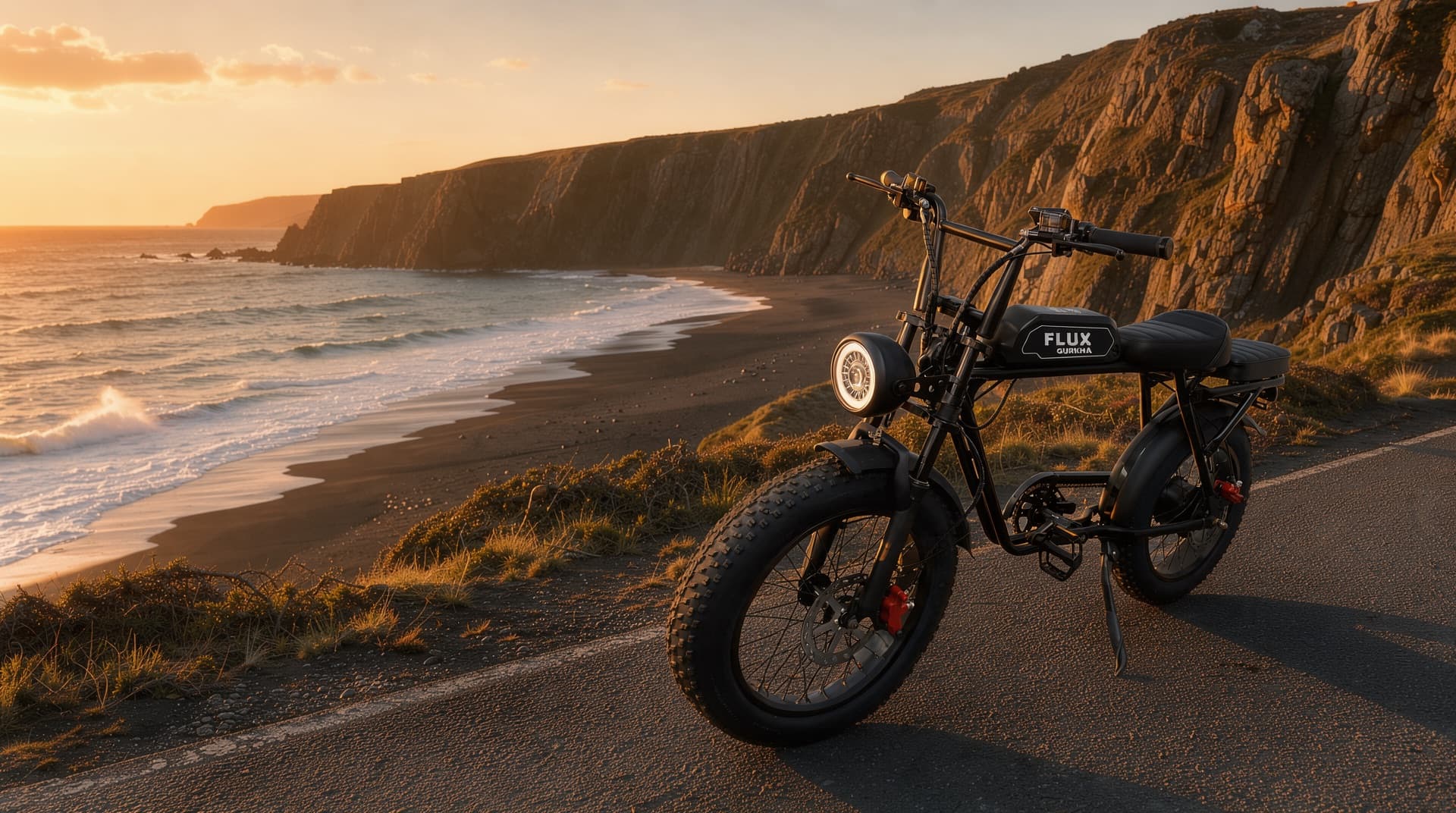
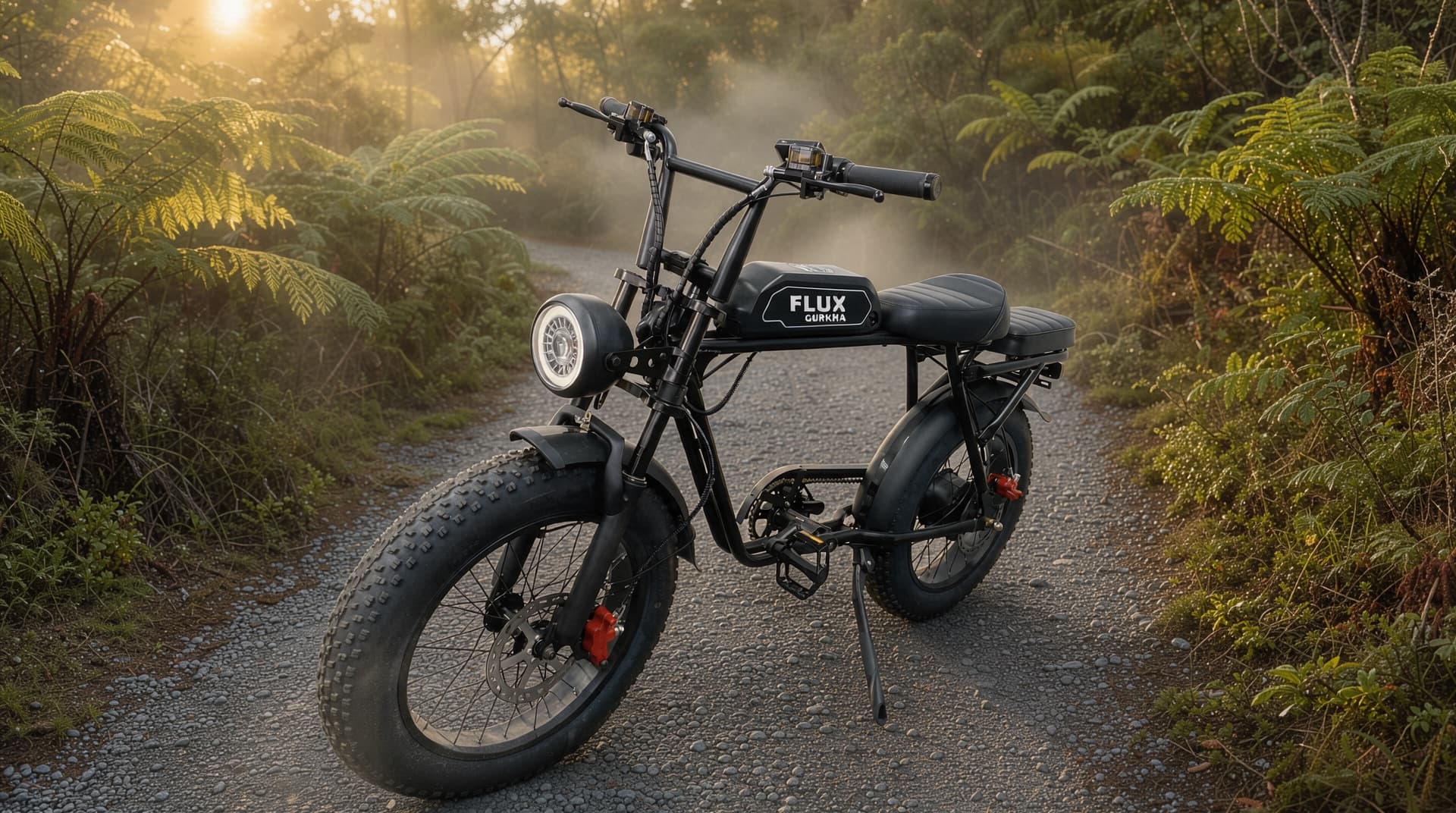
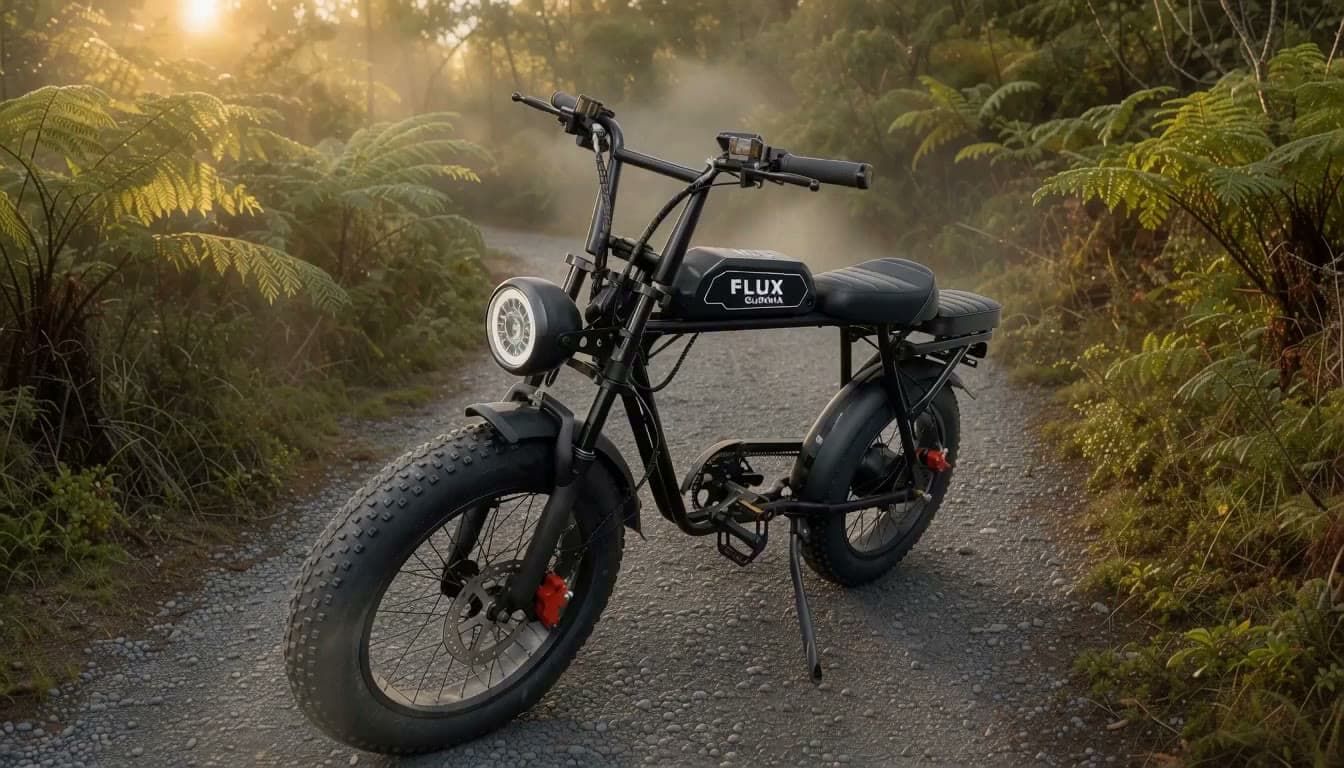
We should be clear here: Gurkha is not a full-suspension eMTB. It is a smart fat-tyre, moto-inspired e-bike with 20×4-inch tyres, hydraulic disc brakes front and rear, a brushless rear hub motor and a 624Wh battery. It is designed for mixed riding: town, gravel, beach tracks and easier trails. If your weekends are about technical singletrack, buy a proper eMTB. If they are about exploring back roads and coastal tracks in comfort, a fat-tyre e-bike makes a lot of sense. Our fat tyre e-bike guide goes deeper.
Where can you ride an electric mountain bike in NZ?
This is the part most buying guides skip. In New Zealand, an e-bike is a power-assisted cycle only if its motor output is 300 watts or less and it is mainly pedal-driven. Above that, it is legally a motor vehicle and is only allowed where motor vehicles are allowed. Many powerful eMTBs and almost all electric dirt bikes fall into that category.
Below is a summary of the access rules we could verify at the time of writing. Rules change, so always check signage and the land manager's website before you go.
| Where | Land manager | E-bike access (300 W or less, pedal-assist) | Notes |
|---|---|---|---|
| Great Rides (Ngā Haerenga network) | Ngā Haerenga New Zealand Cycle Trails and trail trusts | Allowed on all Great Rides under the national e-bike policy | Throttle-operated cycles and bikes over 300 W are treated as mopeds or motorbikes and are not allowed. The policy is guidance, and underlying land rules can differ. |
| Public conservation land | Department of Conservation (DOC) | Depends on the local conservation management strategy | DOC's 2015 guideline aims to enable e-bikes of 300 W or less on lower-graded tracks. The Timber Trail in Pureora is a known exception where e-bikes are technically not allowed. A Conservation Act reform is expected to revisit this. |
| Queenstown Lakes trails | Queenstown Lakes District Council | Pedal-assist e-bikes of 300 W or less allowed on walking and biking trails | The council states that e-motorbikes are not permitted on trails or in bike parks. |
| Mākara Peak, Wellington | Wellington City Council and Mākara Peak Supporters | Allowed on designated tracks | A 2016 council trial opened selected tracks to e-bikes and kept others closed. Check the council's park page for the current track list. |
| Whakarewarewa Forest, Rotorua | Rotorua Lakes Council and forest owners | E-bikes widely used; hire operators run e-bike fleets there | We could not find an official published e-bike policy. Check the forest's access and closure notices before riding. |
| Auckland regional parks | Auckland Council | Not clearly stated | Mountain biking is only allowed on designated tracks. We could not find an explicit regional-park e-bike rule, so check with the council or park ranger. |
| Commercial bike parks | Private operators | Varies by park | Many welcome eMTBs, some limit uplift or certain tracks. Check the operator's website. |
For more on where you can ride and how to ride well, see our e-bike off road guide, and our e-bike laws NZ explainer for the legal background.
What to look for in an electric mountain bike
Before you commit to any electric mountain bike NZ shops have on the floor, work through these seven points. They matter more than paint colour or brand name.
1. Motor type and power
Mid-drive motors sit at the cranks and use the bike's gears, which helps on steep, technical climbs. Hub motors sit in the wheel, are simpler and are common on fat-tyre and commuter e-bikes. Whatever the type, ask for the rated maximum power output in writing. It decides whether the bike counts as an e-bike in NZ and where you can ride it.
2. Battery capacity
Capacity is measured in watt-hours (Wh). More Wh generally means more assistance before you need to recharge, but range depends heavily on terrain, rider weight, assist level and temperature. Our e-bike battery guide explains how to read the numbers.
3. Suspension and geometry
For technical trails, look at suspension travel, head angle and how the bike handles descending. For gravel and easier trails, a comfortable upright position and good tyres matter more than travel.
4. Tyres
Trail eMTBs usually run 2.4 to 2.6-inch tyres. Fat-tyre e-bikes run around 4-inch tyres for float and comfort. Pick tyres for the ground you ride most.
5. Brakes
E-bikes are heavier than standard bikes, so strong brakes matter. Hydraulic disc brakes with decent rotor sizes are the baseline for trail riding.
6. Weight and handling
A heavier bike is more stable but harder to lift, load and manhandle. Ngā Haerenga's policy notes that e-bikes are heavier and handle differently, and encourages new riders to get some training.
7. Service and parts support in NZ
Ask who services the motor and battery locally, how long parts take to arrive and what the warranty covers. A bike you cannot get fixed is not a bargain.
Buying checklist
- Which trails, grades and surfaces will I ride most?
- Is the motor 300 W or less, and is the bike mainly pedal-driven?
- Does it have a throttle, and does that affect where I can ride it?
- Can I test ride it on terrain like mine?
- Who services it in my region?
- Will it fit my car rack, garage and budget?
If you are still comparing options, our best e-bike NZ guide covers the wider market.
The bottom line
The right electric mountain bike NZ riders should buy depends on the trails in front of them. Steep, technical singletrack calls for a full-suspension eMTB. Gravel roads, beach tracks and easy trails suit a fat-tyre e-bike that is comfortable and simple to own. Whichever you choose, keep the motor within the e-bike definition, ride where e-bikes are welcome and check the rules before every new trail.
Prefer gravel, coast and easy trails to gnarly singletrack? Join the Gurkha waitlist and we will let you know when Flux confirms full specifications and opens orders.
Frequently asked questions
Are e-bikes allowed on DOC tracks in New Zealand?
Sometimes. It depends on the conservation management strategy for each area. DOC's guideline aims to allow pedal-assist e-bikes of 300 watts or less on lower-graded tracks, but some trails, such as the Timber Trail in Pureora, are exceptions. Check the DOC page for the track before you ride.
Can I ride an e-bike on the Great Rides?
Ngā Haerenga New Zealand Cycle Trails allows power-assisted cycles of 300 watts or less on all Great Rides. Throttle-operated cycles and bikes over 300 watts are treated as mopeds or motorbikes and are not allowed.
Is a fat-tyre e-bike good for mountain biking?
It is good for gravel, forestry roads, beaches and easier grade 1 to 2 trails. For technical singletrack with drops and steep descents, a full-suspension eMTB is the better tool.
How much does an electric mountain bike cost in NZ?
Full-suspension eMTBs at NZ retailers commonly sit between about NZ$8,000 and NZ$12,000 or more. Hardtail eMTBs and fat-tyre e-bikes are generally cheaper.
Is Gurkha an eMTB?
No. Gurkha is a smart fat-tyre, moto-inspired e-bike designed in New Zealand for town, gravel, beach and easier trail riding. It is not a full-suspension mountain bike.