E bike Auckland guide: cycleways, trains, ferries and hills in Tāmaki Makaurau
A practical guide to riding an e-bike in Tāmaki Makaurau: the key cycleways and shared paths, Auckland Transport's current rules for e-bikes on trains, ferries and buses, how to handle the hills, and keeping your bike secure.
Flux Motors team8 min read
If you're weighing up an e bike Auckland commute or weekend ride, the city is far easier on two wheels than its reputation suggests. Tāmaki Makaurau now has a growing spine of separated cycleways and shared paths. E-bikes travel free on trains and most ferries, with a few rules, and a motor takes the sting out of the volcanic cones and gully climbs that put many people off.
The short answer
In Auckland you can take an e-bike on trains free of charge when there's space, and on most ferries free with a paid fare, but e-bikes must ride on the ferry's back deck. Full-size bikes and e-bikes can't go on buses, except NX1 buses fitted with bike racks during Auckland Transport's trial. The core off-road routes are the Northwestern Cycleway, Te Ara I Whiti (the Lightpath), Grafton Gully, the Waterview Shared Path and the Glen Innes to Tāmaki Drive shared path.
Key Auckland cycleways and shared paths
These are the routes most e-bike riders in central Auckland end up using. Each figure below comes from the agency that built the route or from official project material. Where we couldn't confirm a figure, we've left it out.
| Route | Where it goes | Length | Surface and setting | Notes |
|---|---|---|---|---|
| Northwestern Cycleway | City centre to Westgate, alongside SH16 | About 12 km | Mostly off-road path | Auckland's oldest commuter spine; links to Waterview and the Lightpath |
| Te Ara I Whiti / Lightpath | Old Nelson Street motorway off-ramp into the city centre | Not confirmed | Separated path on a repurposed off-ramp | Part of the Nelson Street cycleway; connects with the Canada Street Bridge |
| Grafton Gully Cycleway | Through Grafton Gully on the eastern edge of the city centre | Not confirmed | Separated path beside the motorway | Completed 2014; one of the links that joins Northwestern and the city |
| Waterview Shared Path | Through Te Auaunga / Oakley Creek, Waterview to Mt Albert area | More than 3 km | Shared path with bridges and boardwalks | Final stage opened October 2017 |
| Te Ara ki Uta ki Tai (Glen Innes to Tāmaki Drive) | Merton Road near Glen Innes Station to Tāmaki Drive | 7 km | Shared path, generally 4 m wide | Final Hobson Bay boardwalk section was under construction, with AT targeting the end of 2026 |
Sources: Northwestern Cycleway, NZTA on Te Ara I Whiti, NZTA on Grafton Gully, Auckland Council on the Waterview Shared Path, and Auckland Transport on the Glen Innes to Tāmaki Drive path and its construction fact sheet. Check AT's project page before relying on the last section of Te Ara ki Uta ki Tai.
How they join up
A typical west-to-city commute uses the Northwestern Cycleway, then connects to Te Ara I Whiti or Grafton Gully to reach the central city. From the east, Te Ara ki Uta ki Tai takes you along the rail corridor and Ōrākei Basin towards Tāmaki Drive and the waterfront. The Waterview Shared Path connects the Northwestern with the southern and inner-west suburbs through the Te Auaunga valley.
Shared paths are shared with people walking, running and pushing prams. Ride at a speed that lets you stop for a toddler or a dog, use your bell early, and pass wide.
Taking your e-bike on Auckland public transport
Here are Auckland Transport's rules for bikes on public transport, as published in November 2026.
Trains
- Bikes ride free when there's enough space. When trains are busy, on-board staff decide.
- AT asks you to avoid peak times with a bike.
- Board the middle carriage of a three-car train, or the second and fifth carriages of a six-car train. Green platform markings show where to stand.
- Folding bikes can travel at any time if they're folded and stored under a seat.
Ferries
- Bikes and scooters travel free with any fare-paying passenger on most services, subject to space.
- E-bikes and e-scooters must be stored on the back deck, not inside the cabin, because of their lithium batteries.
- Bikes aren't allowed on the Harbour Cruise or on services to the Department of Conservation islands: Rangitoto, Rotoroa, Tiritiri Matangi, Motutapu and Motuihe.
- Use the bike racks or hooks on board. If there's no storage, hold your bike out of the way or ask the crew.
Buses
- Full-size bikes and e-bikes can't go on buses, with one exception. AT is trialling bike racks on NX1 buses, and bikes must be shorter than 1.9 m. NX1 buses with racks have green cyclist icons on the front and side and show in the AT Mobile app.
- Compact folding bikes are allowed if folded. They can be no larger than 82 cm long, 69 cm high and 39 cm wide, with rims no bigger than 51 cm (about 20 inches).
The NX1 trial matters because you can't ride across the Auckland Harbour Bridge. For North Shore trips, your options are the NX1 rack trial or a ferry.
Flux hasn't published whether Gurkha folds, so plan on trains and ferries rather than buses for now. Flux will confirm full specifications before launch.
Handling Auckland's hills
Every e bike Auckland rider learns the hills quickly: they're short, steep and frequent. You'll meet them climbing out of the city on Queen Street, Wellesley Street or College Hill, and on the ridgelines through Ponsonby, Mt Eden and Remuera. Pedal assist turns them from a sweat into a non-event, but a few habits help:
- Shift down before the climb, not halfway up. Your drivetrain and motor both work better under steady load.
- Use a higher assist level for the steep bits, then drop back on the flat to save battery.
- Plan descents. Wet seal and painted crossings are slippery, so brake early and progressively. Good hydraulic disc brakes make a real difference here.
- Use the quieter parallel street. Ridgeline arterials are busy, and a block over is often calmer with the same gradient.
Security in Auckland
Security is the other thing to plan for on an e bike Auckland commute. Bike theft is a real issue in the central city and at transport hubs. Auckland Transport's bike parking page lists parking options at stations and terminals. At work, ask for secure, covered bike parking. Lock the frame, not just a wheel, to something fixed. Use a second lock if you're leaving the bike for a full workday, and don't leave it on the street overnight. Keep a record of your frame number and photos of the bike.
Rules and etiquette
In New Zealand you must wear an approved helmet on a bike, including an e-bike. The motor-power rules and where you're allowed to ride are covered in our guide to NZ e-bike laws. On shared paths, keep left, slow down around people, and give a friendly ring before you pass.
Charging costs in Auckland
MBIE's August 2026 electricity price survey puts Auckland Central at 41.30 cents per kWh for its modelled household. Filling a 624Wh battery from empty works out at about 26 cents of energy, or about 30 cents if you allow roughly 15% for charging losses. For more on safe charging and real-world costs, read our e-bike charger guide. For commuting cost comparisons, see our electric commuter bike guide.
Gurkha in Auckland
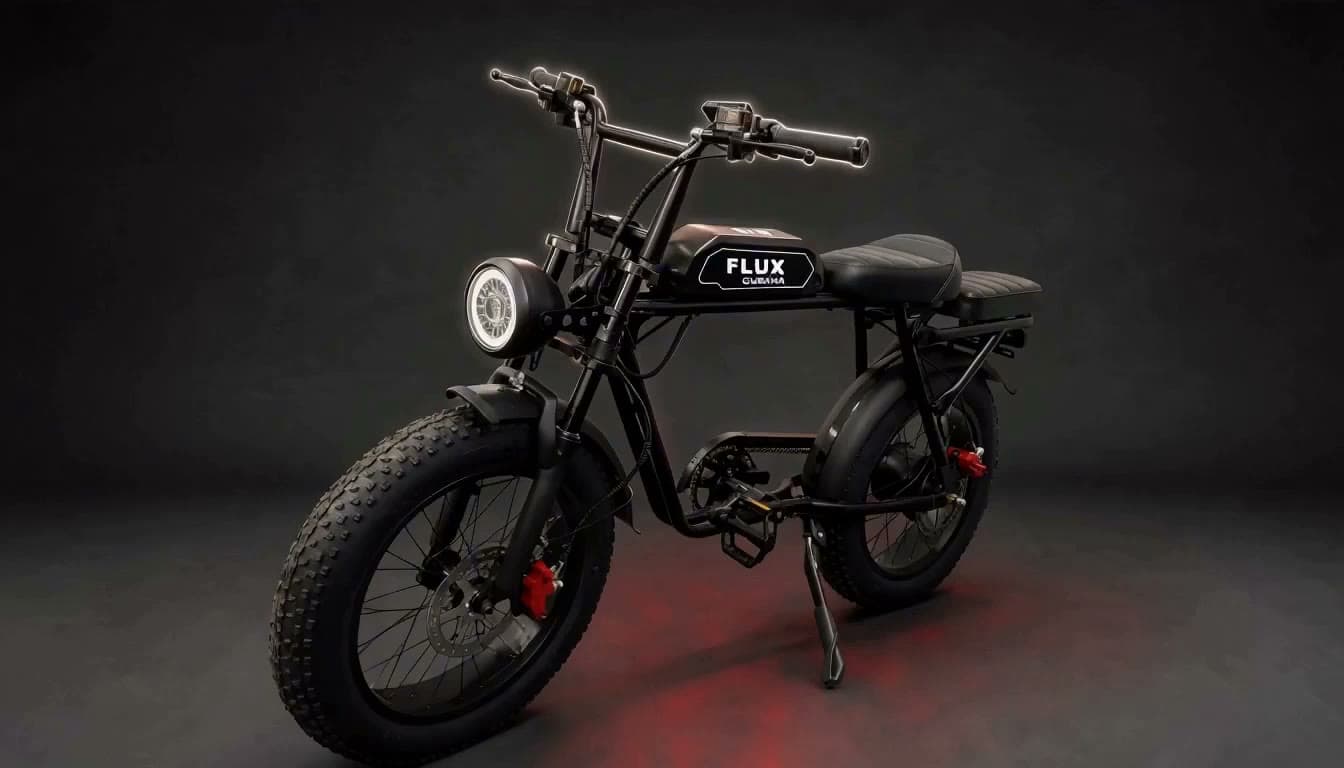
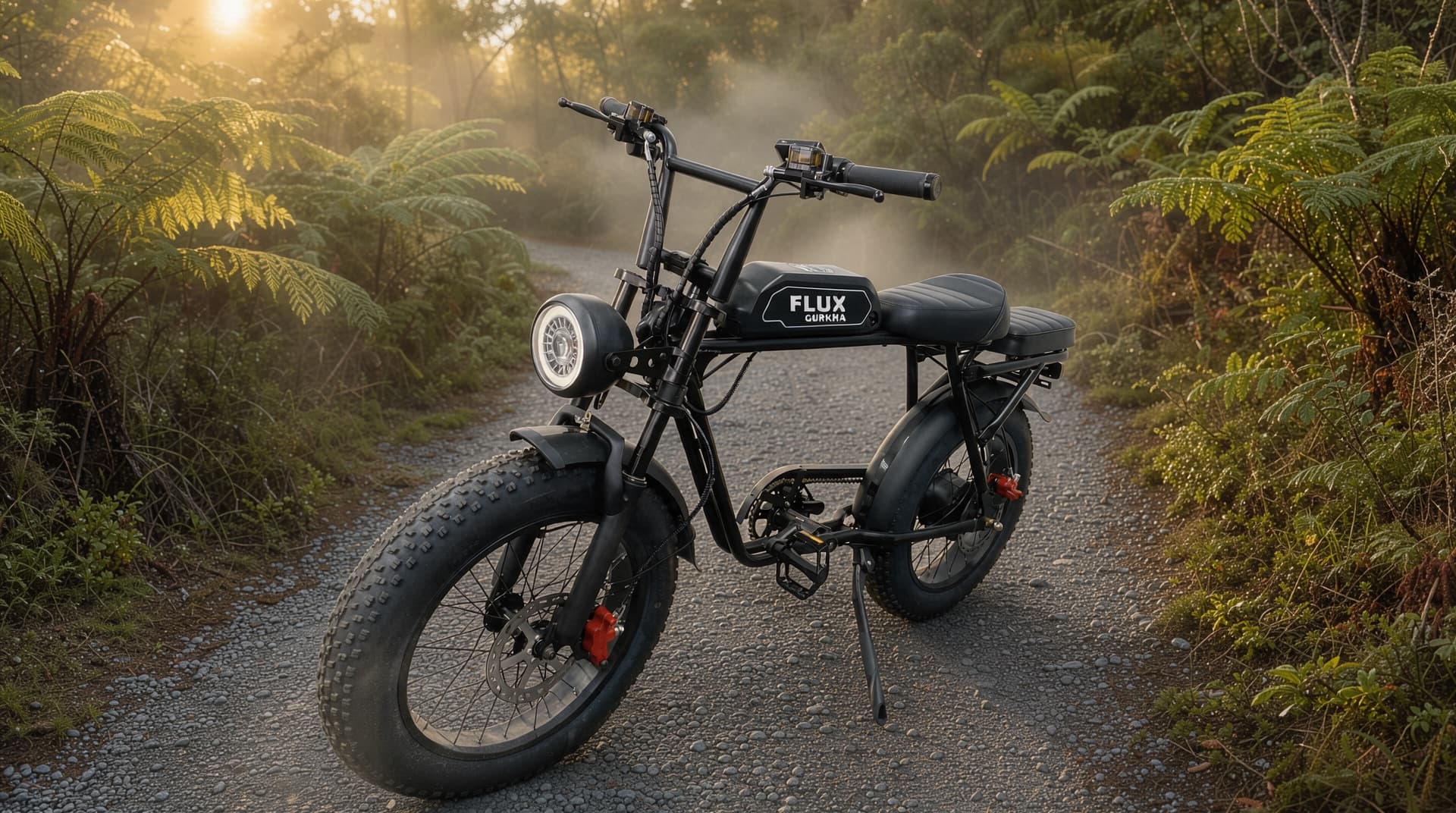
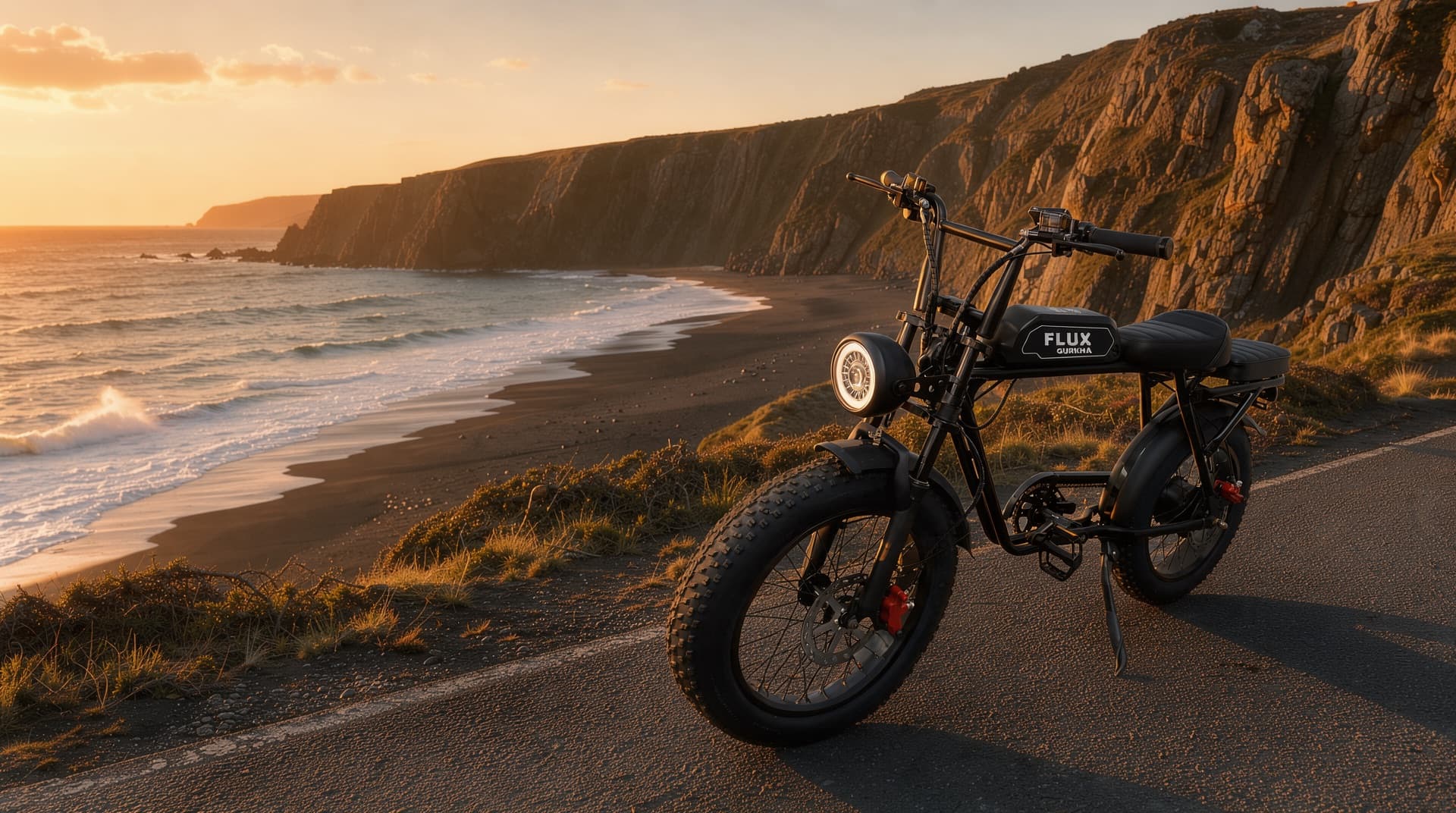
Gurkha's 20×4-inch fat tyres and hydraulic disc brakes front and rear suit Auckland's mix of shared paths, chip seal, gravel park tracks and steep, wet descents. Its bright LED headlight helps on winter commutes. It's a moto-inspired fat-tyre e-bike designed in Aotearoa New Zealand, with a 624Wh battery and Flux app connectivity. Flux has no showrooms yet. You can see the details on the Gurkha page, and if you're comparing options, our best e-bike NZ guide may help.
Gurkha isn't on sale yet, and pricing starts from NZ$4,499. Join the waitlist to hear first when it lands in Auckland and around the motu.
Frequently asked questions
Can I take an e-bike on Auckland trains?
Yes. Auckland Transport lets bikes, including e-bikes, travel free on trains when there's enough space, at the discretion of on-board staff when it's busy. AT asks you to avoid peak times and to board the middle carriage of three-car trains.
Are e-bikes allowed on Auckland ferries?
Yes, on most services, free with a fare-paying passenger. E-bikes must be stored on the back deck rather than in the cabin because of their lithium batteries. Bikes aren't allowed on the Harbour Cruise or services to DOC islands such as Rangitoto and Tiritiri Matangi.
Can I put my e-bike on an Auckland bus?
Generally no. Full-size bikes and e-bikes aren't allowed on buses except NX1 buses fitted with bike racks during AT's trial, and bikes must be under 1.9 m long. Compact folding bikes within AT's size limits can be carried if folded.
What is the best e-bike route into the Auckland city centre?
From the west, the Northwestern Cycleway joins Te Ara I Whiti (the Lightpath) and Grafton Gully into the city. From the east, Te Ara ki Uta ki Tai, the Glen Innes to Tāmaki Drive shared path, runs towards the waterfront. Ride each route once on a quiet weekend to learn it.
Can I ride an e-bike over the Auckland Harbour Bridge?
No, bikes aren't permitted on the bridge. Use a ferry or an NX1 bus fitted with a bike rack under AT's trial to cross the harbour.