E Bike Off Road in NZ: Where to Ride, Trail Etiquette, Technique and Care
Where can you take an e-bike off road in New Zealand, and how do you look after it afterwards? Here are the access rules, trail etiquette, gear, riding technique and a cleaning guide for mud, sand and salt.
Flux Motors team8 min read
Taking an e bike off road is one of the best ways to see Aotearoa. Gravel roads, forestry tracks, coastal trails and the Great Rides all open up when a motor helps you up the hills. But off-road riding on an e-bike comes with rules about where you can go, an etiquette that keeps trails open for everyone, and a maintenance routine that protects your bike from mud, sand and salt. This guide covers all three.
The short answer: in New Zealand you can ride a pedal-assist e-bike of 300 watts or less on most cycle trails and Great Rides, on many but not all DOC tracks, and in most bike parks. You cannot ride it on tracks closed to bikes. Bikes over 300 watts, and most e-motorbikes, are treated as motor vehicles and are only allowed where motor vehicles are.
Where can you ride an e bike off road in NZ?
The legal starting point is the definition of a power-assisted cycle: a bike with an auxiliary motor of no more than 300 watts, designed to be mainly pedalled. If your bike meets that, here is the general picture:
- Great Rides: Ngā Haerenga New Zealand Cycle Trails allows power-assisted cycles on all Great Rides. Throttle-operated cycles are treated as mopeds and are not allowed.
- DOC land: access depends on the local conservation management strategy. DOC's guideline supports e-bikes of 300 W or less on lower-graded tracks, but there are exceptions. RNZ reported that e-bikes are technically not allowed on the Timber Trail in Pureora, despite being widely used there.
- Council trails and parks: rules vary by council. Queenstown Lakes District Council bans e-motorbikes from trails and bike parks. Auckland Council only permits mountain biking on designated tracks in its parks.
- Forestry land: many plantation forests are private. Some allow bikes with a permit, some do not allow access at all, and many close during harvesting or high fire risk.
- Beaches: check council bylaws and signs. Some beaches restrict riding seasonally to protect nesting birds.
We have put together a more detailed trail access table in our electric mountain bike NZ guide. If you are unsure whether your bike meets the e-bike definition, read our e-bike laws NZ explainer first.
Off-road e-bike etiquette
E-bikes are now a big share of riders on many trails. On the Timber Trail, one estimate in the RNZ report put e-bike users at around 90% of riders. How e-bikers behave shapes how land managers write the rules. Ngā Haerenga's policy expects e-bike riders to follow the standard mountain bike code of conduct.
- Give way to walkers and horses. Slow down, call out early and pass wide and slowly. Ring a bell if you have one.
- Ride at a speed that matches the trail. E-bikes make it easy to arrive at a blind corner faster than you planned. Ease off on shared trails.
- Uphill riders usually have right of way on narrow singletrack. Pull over safely to let them pass.
- Stay on the track. Do not cut corners or ride around puddles, which widens trails.
- Do not ride wet, closed or muddy trails that the land manager has asked you to avoid. E-bikes are heavier and can rut soft ground.
- Respect biosecurity. In kauri areas, use cleaning stations to clean your tyres and shoes. Stay on marked tracks.
- Leave gates as you find them on farmland and forestry roads.
- Take your rubbish home, including food scraps.
Gear for riding an e-bike off road
- Helmet: required by law on a bike in NZ. For trail riding, a mountain bike helmet with more rear coverage is a good idea.
- Gloves and eye protection: for grip, branches, gorse and grit.
- Knee pads: worth it on anything beyond grade 2.
- Repair kit: pump or CO2, a spare tube that fits your tyre size, tyre levers, a multitool with a chain breaker and a quick link.
- Phone and a way to call for help: many trails have no mobile coverage. For remote rides, carry a personal locator beacon.
- Water, food and a warm layer: NZ weather turns fast, especially in the high country.
- Lights: if there is any chance of finishing late.
Technique: riding an e-bike off road
Climbing
Use a lower assist level than you think and a lower gear. Too much power on a loose climb spins the rear wheel. Stay seated to keep weight on the back tyre, and keep your pedalling smooth.
Descending
Drop your heels, bend your elbows and knees, and shift your weight back slightly. Look ahead, not at your front wheel. E-bikes are heavier than standard bikes, so start braking earlier.
Braking
Use both brakes, mostly the front for power and the rear for control. Avoid skidding, which damages trails and reduces control. Hydraulic disc brakes, like the ones front and rear on Gurkha, give strong, predictable stopping in wet and dusty conditions.
Sand and gravel
Momentum is your friend. Keep a steady speed, stay loose on the bars and avoid sudden steering. Lower tyre pressures help a lot; our fat tyre e-bike guide has a pressure chart by surface.
Manage your battery
Off-road riding uses more energy than riding on seal. Plan your route around the assistance you have left, and use lower modes on flat sections. Our e-bike battery guide explains watt-hours and why range varies so much.
Cleaning after mud, sand and salt
Off-road riding is hard on bikes. A good after-ride routine is the difference between a bike that lasts and one that needs costly repairs. Always follow your manufacturer's manual first, especially for anything involving the battery and electrics.
| Contaminant | What it damages | What to do after the ride |
|---|---|---|
| Mud | Chain, cassette, brake pads, bearings | Let thick mud dry slightly, brush off, then rinse gently. Degrease and re-lube the chain. Check brake pads for wear. |
| Sand | Chain and drivetrain (acts like sandpaper), brake rotors, bearings | Rinse thoroughly at low pressure. Wipe the chain clean before lubing. Spin wheels to check bearings feel smooth. |
| Salt (beach rides, sea spray) | Bare metal, bolts, chain, electrical contacts | Rinse with fresh water the same day. Dry fully. Re-lube the chain. Wipe exposed metal with a light protectant, keeping it off brake rotors and pads. |
| Dust | Chain, fork stanchions, contacts | Wipe down, clean and lube the chain, wipe stanchions if you have suspension. |
Washing dos and don'ts
- Do use a gentle hose or bucket and soft brush.
- Do not use a water blaster on bearings, the motor, the display or battery connections. High pressure can push water past seals.
- Do check your manual on whether to remove the battery before washing, and keep contacts dry.
- Do dry the bike, then lube the chain once it is dry.
- Do not get chain lube or protectant on brake rotors or pads.
- Do store the bike somewhere dry and covered.
Flux will confirm full specifications for Gurkha before launch, including any water resistance information, so follow the official care guide when it is published.
A quick pre-ride checklist
- Battery charged, and enough for your route plus a margin.
- Tyre pressure set for the surface.
- Brakes firm, with no rubbing or squeal.
- Quick releases and thru-axles tight.
- Track open, and your bike permitted there.
- Someone knows your route and expected return time.
The bottom line
Riding an e bike off road in New Zealand is a brilliant way to get further into the outdoors. Keep your bike within the e-bike definition, ride where e-bikes are welcome, be courteous on shared trails and give the bike a proper clean after mud, sand and salt. Do that, and trails stay open and your bike keeps running well.
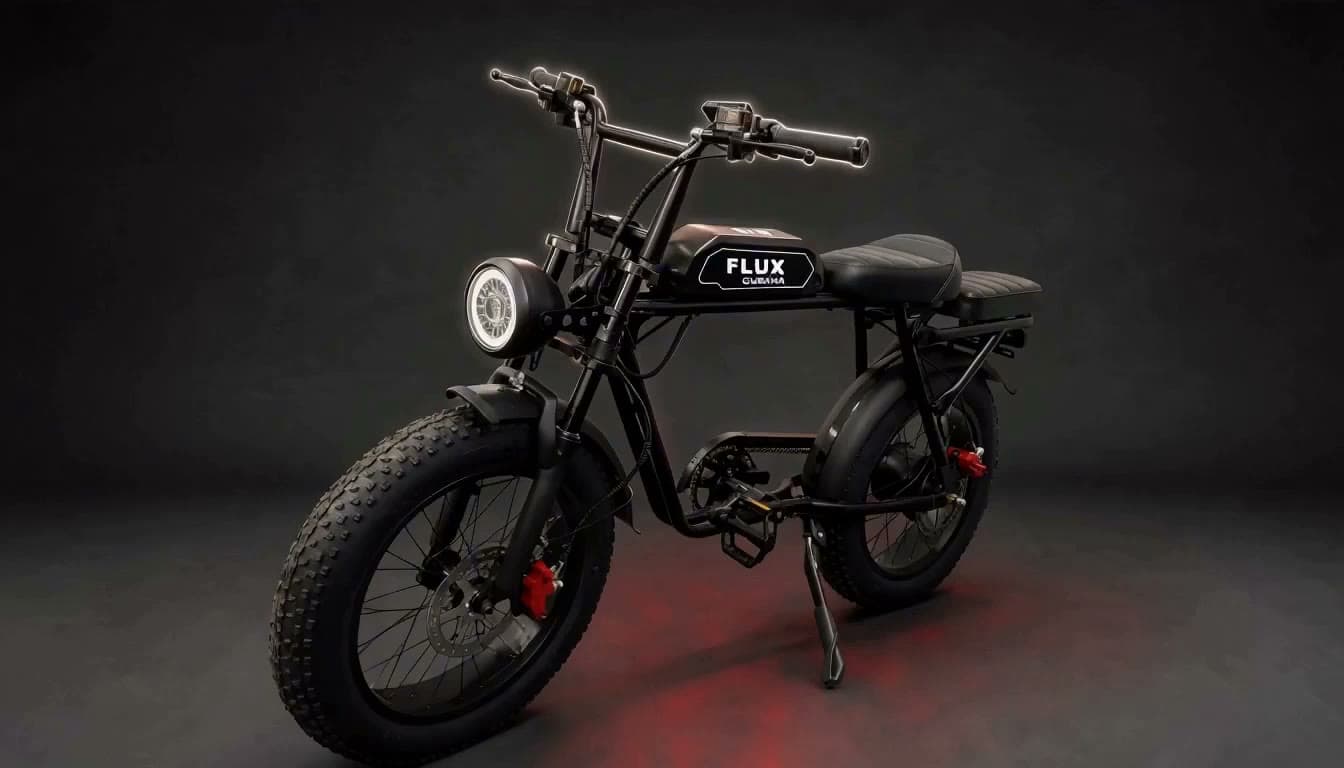
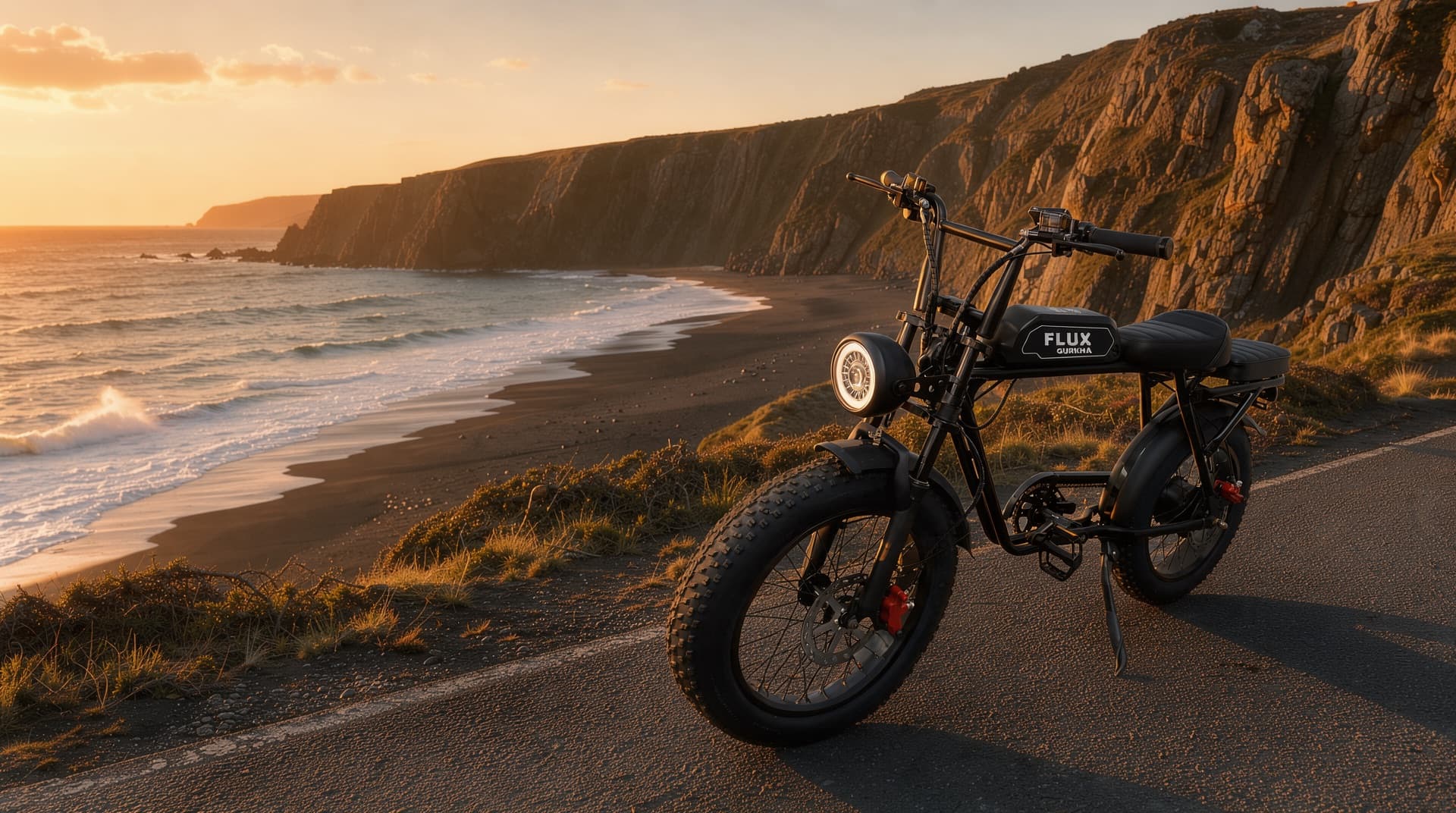
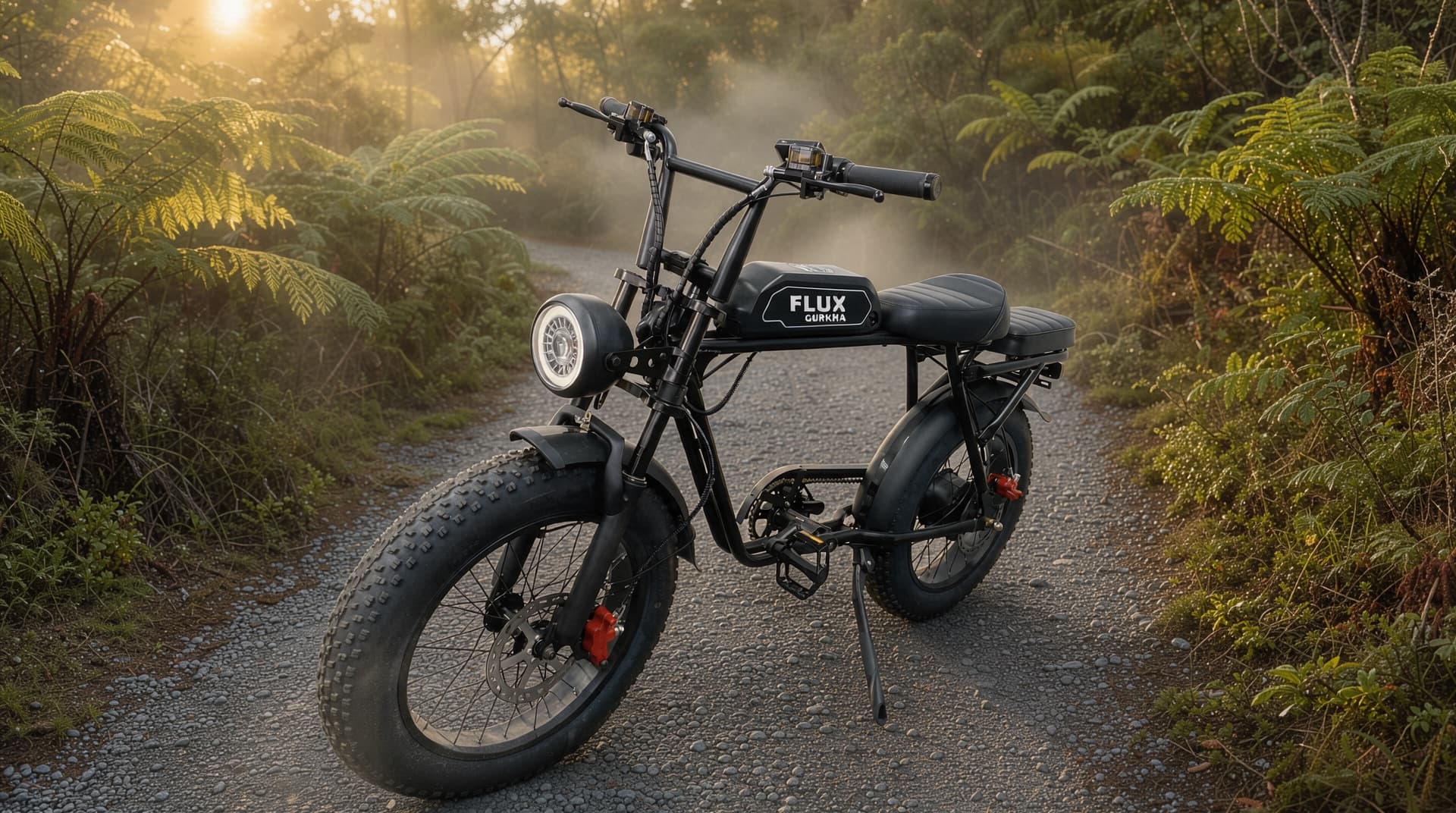
Gurkha is designed in Aotearoa for gravel, coast and easy trails, with 20×4-inch fat tyres and hydraulic disc brakes. Join the waitlist to hear first when orders open.
Frequently asked questions
Can I ride my e-bike on mountain bike trails in NZ?
Usually, if it is a pedal-assist e-bike of 300 watts or less and the trail is open to bikes. Rules vary by land manager, so check DOC, council or bike park rules for each trail. Bikes over 300 watts are treated as motor vehicles.
Are e-bikes allowed on the Great Rides?
Yes. Ngā Haerenga New Zealand Cycle Trails allows power-assisted cycles of 300 watts or less on all Great Rides. Throttle-operated cycles are treated as mopeds and are not allowed.
How do I clean my e-bike after riding on the beach?
Rinse it with fresh water the same day using a gentle hose, not a water blaster. Dry it fully, re-lube the chain and keep electrical contacts dry. Follow your manufacturer's manual on removing the battery.
Can I water blast my e-bike?
It is best not to. High-pressure water can force its way past seals into bearings, the motor and electrical connections. Use a low-pressure hose and a soft brush instead.
Is Gurkha an off-road e-bike?
Gurkha is a fat-tyre, moto-inspired e-bike designed for town, gravel, beach and easier trails. It is not a full-suspension mountain bike, so it is not built for technical singletrack.