Electric Moped vs E-Bike in NZ: Licence, Rego, WoF, Helmets and Costs
An electric moped is a motor vehicle in NZ; a 300 W e-bike is a cycle. Here's how licence, rego, WoF, helmets, riding access and running costs compare.
Flux Motors team7 min read
An electric moped and an e-bike can both get you across town quietly for a few cents of power. The difference is what comes with them. In New Zealand an electric moped is a motor vehicle: it needs registration, a driver licence and a motorcycle-standard helmet, and it rides on the road with traffic. A 300 W e-bike is legally a cycle, with none of that paperwork and access to cycle lanes and shared paths. This guide compares the two on licence, rego, WoF, helmets, where you can ride and what each really costs.
Electric moped vs e-bike at a glance
| Moped (electric) | E-bike (power-assisted cycle) | |
|---|---|---|
| Legal definition | Motor vehicle, 2 or 3 wheels, max speed 50 km/h, non-piston power source | Cycle with motors of 300 W or less combined, designed primarily to be pedalled |
| Driver licence | Yes. Any class of NZ licence, including a car learner licence | No |
| Registration (rego) | Yes, with a plate on the rear | No |
| Entry certification | Yes, before first registration | No |
| WoF | No regular WoF inspection, but must be kept roadworthy | No |
| Helmet | Approved motorcycle-standard helmet | Approved cycle helmet |
| Cycle lanes and shared paths | No | Yes |
| Great Rides | No | Yes, generally |
| Effort | None; twist and go | You pedal, the motor helps |
Sources: Land Transport Act 1998, s 2; Road User Rule 2004, cl 1.6, 7.12 and 11.8; NZTA information for moped riders; NZTA licence classes factsheet; Ngā Haerenga e-bike policy.
What counts as an electric moped in NZ?
The Land Transport Act 1998 defines a moped as a motor vehicle (other than a power-assisted pedal cycle) with two or three wheels, a maximum speed not exceeding 50 km/h, and either an engine of 50 cc or less or a power source other than a piston engine. Seated, scooter-style electric mopeds usually fall here. If it can go faster than 50 km/h, it's a motorcycle, with tougher licensing.
The dividing line from an e-bike is the power-assisted cycle definition: a cycle designed mainly to be pedalled, with 300 W or less of combined motor output. Anything above that, or anything designed to be ridden on the motor, defaults to motor vehicle status. NZTA's 2013 Gazette notice notes that the District Court has held low-powered electric scooters to be mopeds rather than power-assisted cycles.
Licence: can you ride an electric moped on a car licence?
Yes. According to NZTA, you can ride a moped on any class of New Zealand driver licence, and its licence classes factsheet lists mopeds under the class 1 learner and restricted licences. Learner and restricted conditions still apply, so check them before you ride, especially for passengers and night riding.
An e-bike needs no licence at all, which matters for under-16s and for anyone without a licence.
Rego and WoF
A moped must be entry certified, then registered and licensed for road use, with the plate displayed at the rear (NZTA). NZTA says mopeds are not inspected for a WoF, but the owner must keep the moped's equipment compliant and safe. Rego fees vary by vehicle type and length of licence, so get a current quote from NZTA's rego page before you budget.
An e-bike needs neither rego nor a WoF, but it's on you to keep the brakes, lights and tyres in good order.
Helmets
This is the one people get wrong. On a moped, clause 7.12 of the Road User Rule requires a securely fastened helmet that meets an approved motorcycle standard, such as UN ECE 22, AS 1698 or NZ 5430. A bicycle helmet is not enough. On an e-bike, you need a helmet that meets a cycle standard such as AS/NZS 2063 or EN 1078 (clause 11.8).
Where each can ride
- Roads: both. A moped mixes with motor traffic and follows the same rules as other motor vehicles.
- Cycle lanes: e-bikes yes; mopeds no, because cycle lanes are reserved for cycles and e-scooters.
- Shared paths and cycleways: e-bikes yes; mopeds no.
- Footpaths: mopeds no, except authorised mail delivery. E-bikes no, except riders 12 and under, people accompanying them, and mail delivery (since 1 October 2026).
- Great Rides: e-bikes of 300 W or less yes; mopeds no.
For every e-bike rule with its source, see our ebike laws NZ guide.
What does each cost to own?
Purchase prices overlap, so the real difference is ongoing costs. Here is a simple framework you can fill in with your own quotes.
| Cost | Moped | E-bike |
|---|---|---|
| Rego (including ACC levy) | Yes, annually or by period | None |
| Licence | Learner licence costs if you don't already have one | None |
| Helmet | Motorcycle-standard helmet | Cycle helmet |
| Protective gear | Jacket and gloves strongly advised at 50 km/h | Optional |
| Insurance | Third-party at least is sensible | Theft cover worth considering |
| Electricity per full charge | Depends on battery size | Usually under 30 cents |
| Servicing | Moped workshop | Bike shop |
Charging cost, worked through
Charging cost is battery size times your power price. At an assumed household rate of 35 cents per kWh:
- A 624 Wh e-bike battery (the size in our Gurkha) costs roughly 20 to 25 cents to fill from empty, allowing for charger losses.
- A hypothetical 2 kWh moped battery would cost roughly 70 to 80 cents.
Either way, power is cheap. The fixed costs (rego, insurance and gear) are what make a moped dearer to own year after year.
Which should you choose?
Pick a moped if
- you want zero pedalling effort, every trip;
- your route is mostly roads with no useful cycleways;
- you already hold a driver licence and are happy to ride in traffic at up to 50 km/h; and
- you're comfortable budgeting for rego, insurance and motorcycle gear.
Pick an e-bike if
- you want access to cycle lanes, shared paths and trails;
- you don't want rego, a licence or WoF-style paperwork;
- you'd like some exercise built into your commute; or
- the rider is under 16 or doesn't hold a licence.
Commuters should read our electric commuter bike guide, and if you're tempted by something faster, electric motorbikes in NZ and electric dirt bikes in NZ explain the step up. Not sure whether a throttle crosses the line? See e-bike with throttle: what NZ rules say.
Where the Gurkha sits
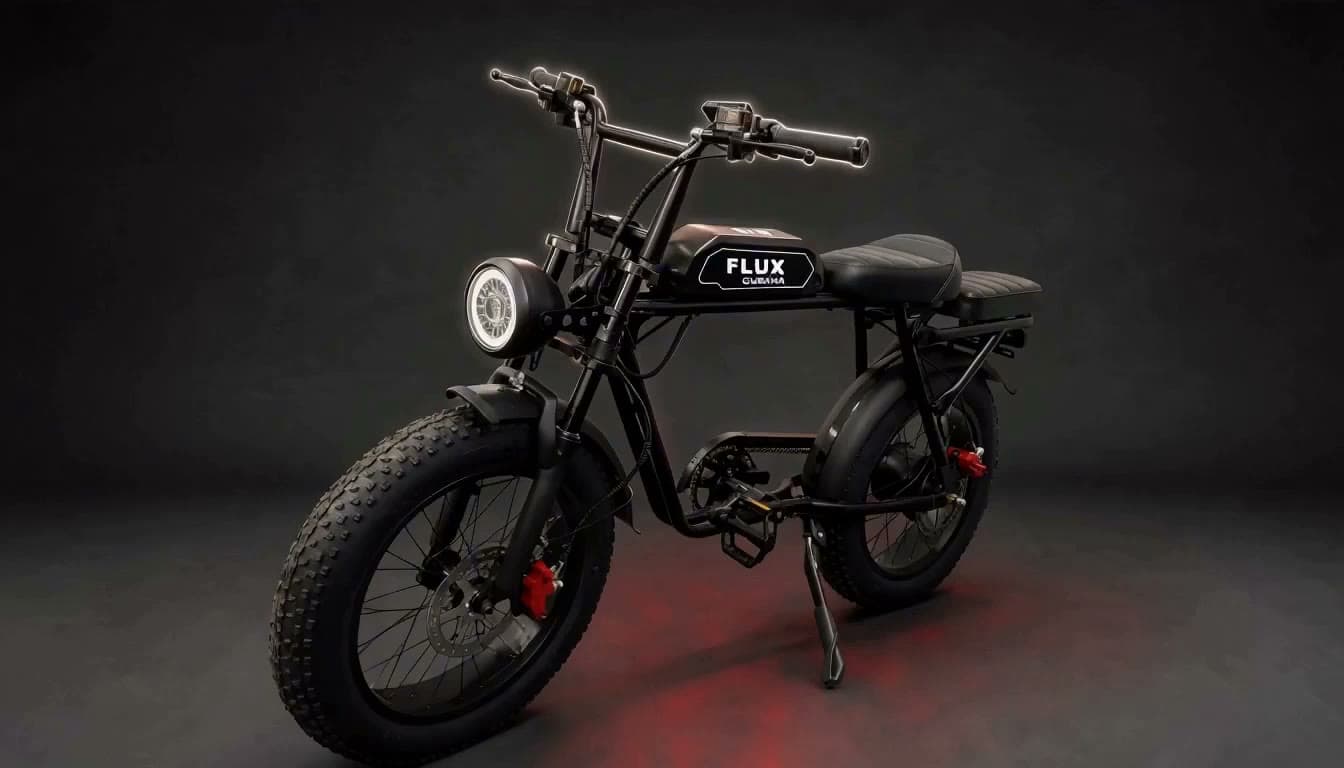
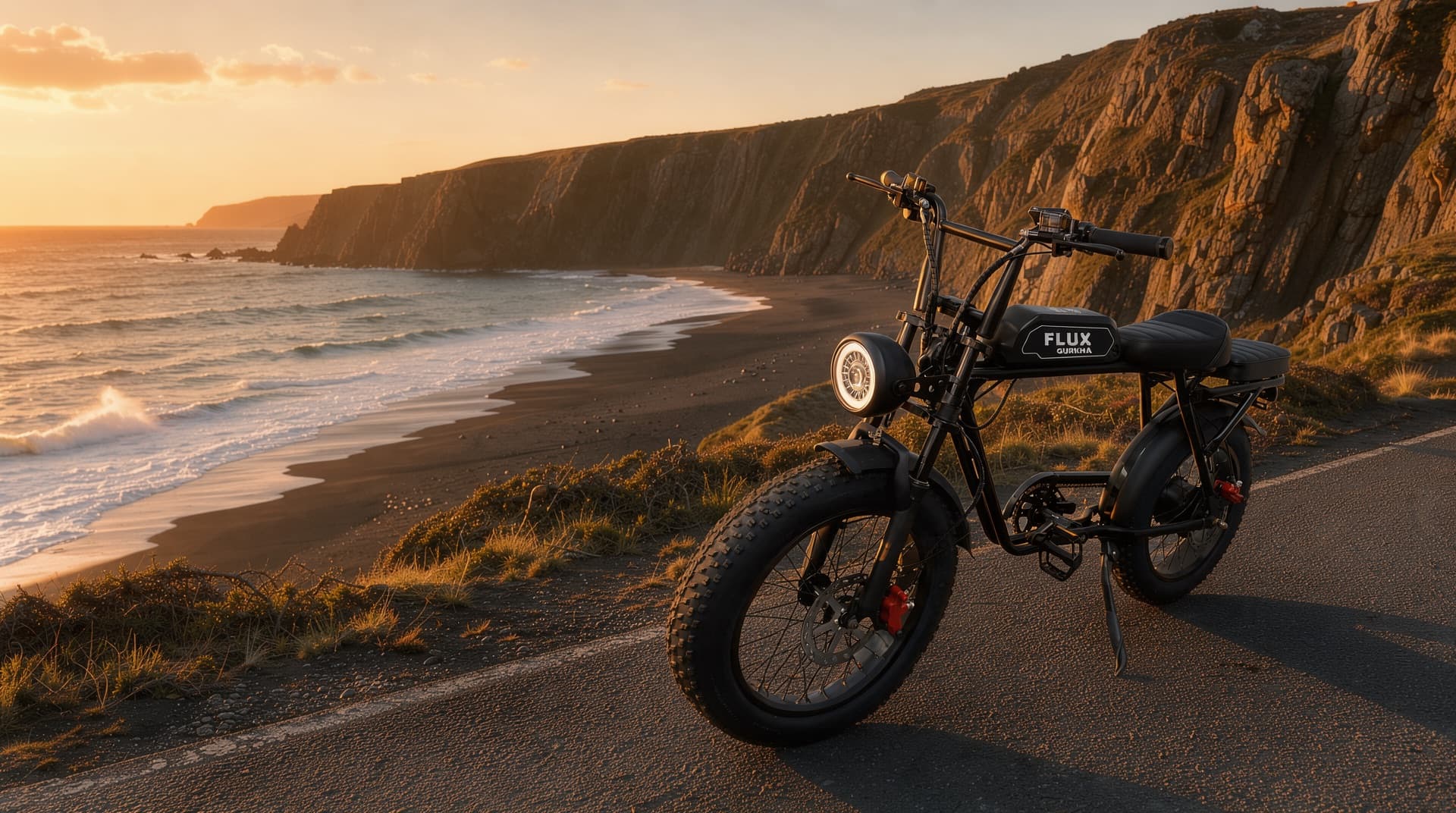
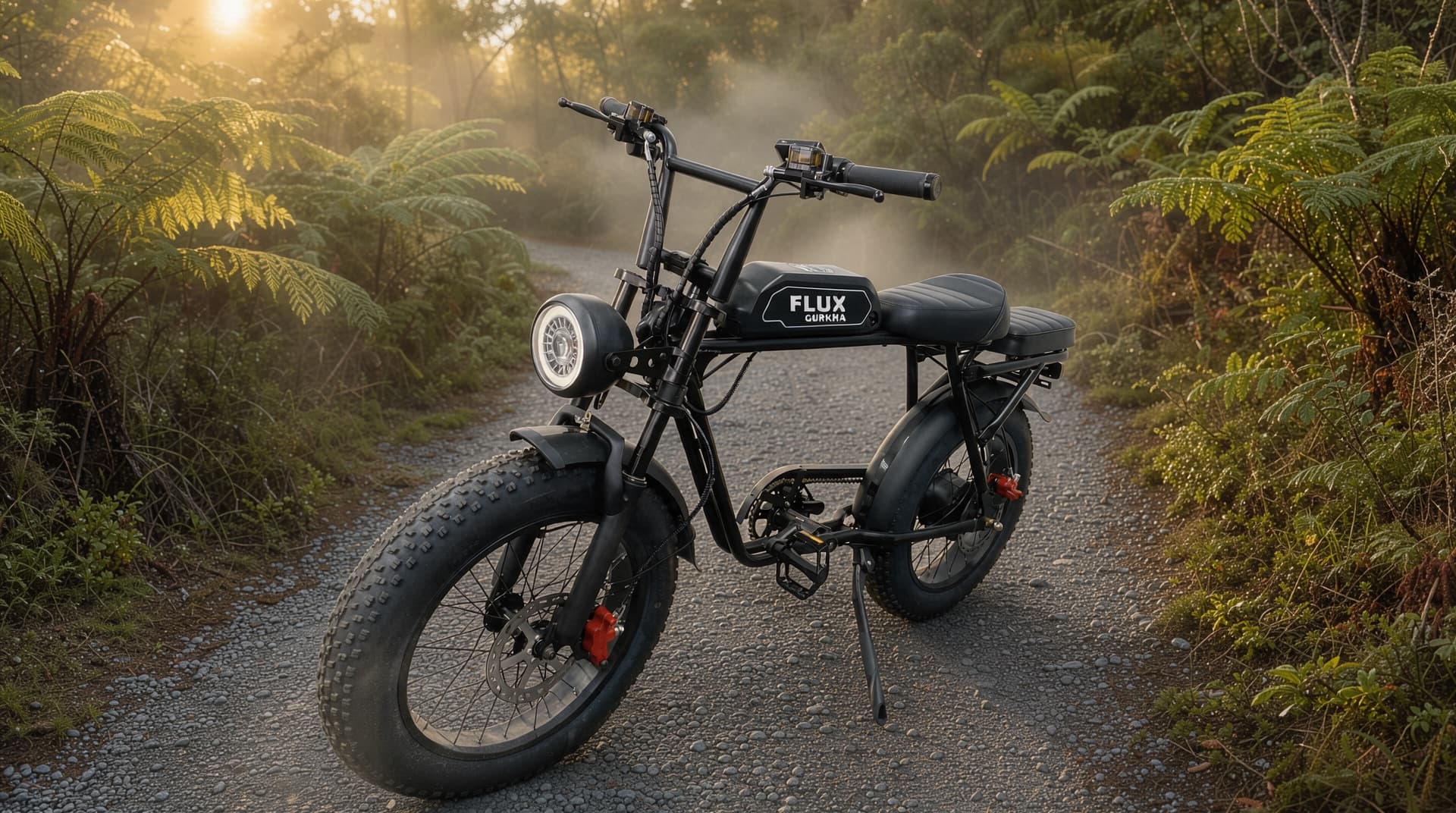
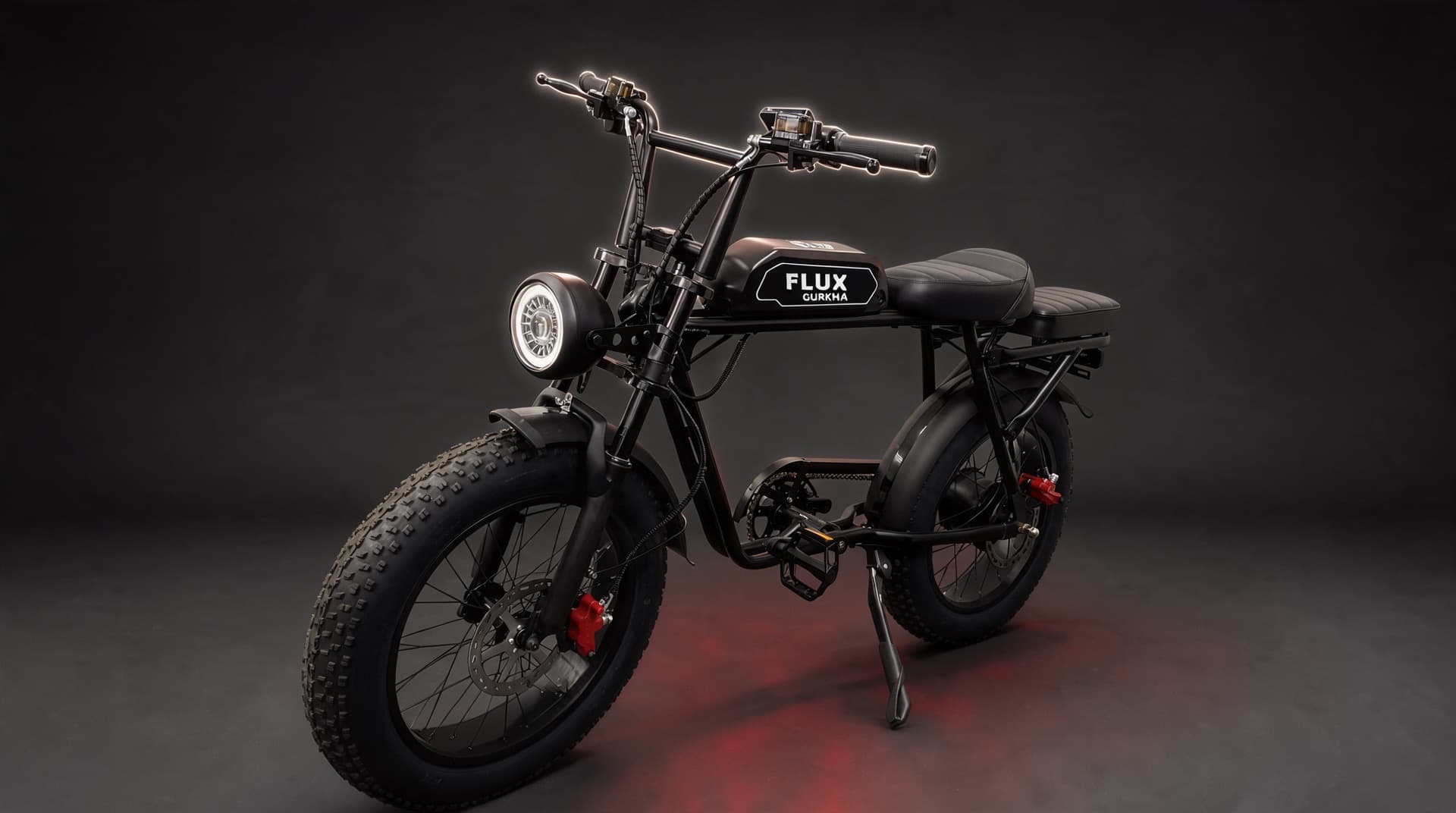
Some riders look at mopeds because they want a relaxed, upright, seat-first riding position. The Gurkha is our answer to that within the e-bike world: a moto-inspired fat-tyre e-bike with a long bench seat, 20×4-inch tyres, hydraulic disc brakes, a brushless rear hub motor and an assisted top speed of 25 km/h, from NZ$4,499. Flux will confirm full specifications, including the details that matter for legal classification, before launch.
Be first to know
If a seat-first e-bike sounds more your style than a moped, join the Gurkha waitlist for confirmed specs, pricing and delivery dates.
Frequently asked questions
Do you need a licence for an electric moped in NZ?
Yes. NZTA says you can ride a moped on any class of NZ driver licence, and mopeds are listed under the class 1 learner and restricted licences. Licence conditions still apply.
Does an electric moped need a WoF in NZ?
NZTA says mopeds are not inspected for a WoF, but they must be entry certified, registered and licensed, and kept in safe working order.
What helmet do I need on a moped?
A securely fastened helmet meeting an approved motorcycle standard, such as UN ECE 22, AS 1698 or NZ 5430. A bicycle helmet does not meet the rule for mopeds.
Can mopeds use cycle lanes?
No. Cycle lanes are reserved for cycles and e-scooters. Mopeds are motor vehicles and ride on the road with other traffic.
Is an e-bike cheaper to own than a moped?
Usually. Charging costs are small for both, but a moped adds rego, a motorcycle-standard helmet, protective gear and usually insurance. A 300 W e-bike needs no rego or licence.