Electric Motorbikes NZ: How They Compare With Moto-Style E-Bikes
Electric motorbikes and moto-style e-bikes can look alike, but NZ law treats them very differently. Here is how licensing, rego, WoF, ACC levies and running costs compare, and who each one suits.
Flux Motors team8 min read
Electric motorbikes NZ buyers are spoilt for choice right now, from Kiwi-designed utility bikes to full-size road machines. But there is a second category that looks a lot like a motorbike and is often lumped in with them: the moto-style e-bike. The two can look similar in a photo, yet the law treats them very differently. One needs a licence, registration and an ACC levy. The other, if it meets the e-bike definition, needs a helmet and not much else.
The short answer: in New Zealand, a bike with pedals and an electric motor of no more than 300 watts, designed to be mainly pedalled, is a power-assisted cycle. Anything more powerful, or anything that is not mainly pedal-driven, is a moped or motorcycle. That means registration, a driver or motorcycle licence and, for motorcycles, a warrant of fitness.
This guide sets the three categories side by side so you can work out which one actually fits how you ride.
What counts as an electric motorbike in New Zealand?
The dividing line comes from the definition of a power-assisted cycle. A New Zealand Gazette notice restates it from the Land Transport (Road User) Rule: a cycle with one or more auxiliary propulsion motors with a combined maximum power output not exceeding 300 watts. Ngā Haerenga New Zealand Cycle Trails adds the practical test in its e-bike policy: is the bike designed to be primarily propelled by the rider's muscles?
Once you step outside that definition, you are into motor vehicle territory:
- Electric moped: a two-wheeler with a non-piston power source and a maximum speed of no more than 50 km/h, according to the NZTA moped entry certification bulletin.
- Electric motorcycle: anything that goes faster than 50 km/h. These are registered and licensed as motorcycles, just like a petrol bike.
Plenty of popular electric dirt bikes and "e-motos" sit well above 300 watts. The Bay of Plenty Times reported police and council warnings in late 2025 that these need registration, a licence and a WoF to be ridden on the road. Queenstown Lakes District Council goes further and states plainly that e-motorbikes are not permitted on walking tracks, shared trails or bike parks.
Electric motorbike vs moped vs e-bike: the NZ comparison
Here is how electric motorbikes NZ sellers offer compare with mopeds and e-bikes on the things that cost you time and money.
| Requirement | E-bike (300 W or less, pedal-assist) | Electric moped (50 km/h max) | Electric motorcycle |
|---|---|---|---|
| Licence | None | A driver licence of any class | Class 6 motorcycle licence (learner, restricted, full) |
| Registration (rego) | No | Yes | Yes |
| Warrant of fitness | No | Check current NZTA rules | Yes |
| ACC levy | None on the bike | Paid through rego | Paid through rego (higher for motorcycles) |
| Helmet | Approved cycle helmet | Approved motorcycle helmet | Approved motorcycle helmet |
| Cycle lanes and shared paths | Yes, where cycling is allowed | No | No |
| Great Rides and most bike trails | Generally yes | No | No |
A note on WoFs: the inspection rules for light vehicles have been changing through 2025 and 2026, and older sources disagree on mopeds. Check NZTA before you buy rather than relying on a dealer's summary.
Licensing for electric motorcycles
An electric motorcycle needs the same Class 6 licence as a petrol bike. Under NZTA's graduated licensing system, learner and restricted riders can only ride a LAMS-approved motorcycle, a moped or an ATV. Full licence holders can ride any legal, registered motorcycle. Getting to a full licence takes time and costs money in test and licence fees, and that is before you count rider training.
ACC levies and registration
This is where electric motorbikes can surprise people. Petrol vehicles pay part of their ACC levy at the pump. ACC confirms that electric vehicles pay the whole levy through the vehicle licence instead. Motorcycle levies have also been under review, with ACC moving to engine-capacity bands from 1 July 2026. Electric motorcycles do not have an engine capacity in the usual sense, and we could not find published guidance on which band they fall into. Ask ACC or use the NZTA rego calculator with the exact model before you commit.
E-bikes that meet the power-assisted cycle definition carry no rego and no levy on the bike itself. Riders are still covered by ACC's no-fault scheme if they are injured, like everyone else in New Zealand.
What do electric motorbikes cost to own in NZ?
When you compare electric motorbikes NZ-wide with e-bikes, purchase price is only the start. Here is a rough way to think about the total cost of each option.
- Purchase: NZ-designed electric motorcycles and mopeds are listed by NZ sellers from around NZ$9,000 at the time of writing, and full-size road motorcycles cost considerably more. E-bikes span a much wider range, from budget commuters to premium mountain bikes well into five figures. Our guide to e-bike prices in NZ breaks this down.
- Annual rego and ACC: an ongoing cost for mopeds and motorcycles. None for an e-bike.
- Licence and training: motorcycle licensing and training add up. Nothing to pay for an e-bike.
- WoF and servicing: motorcycles need regular inspections. E-bikes need normal bike servicing: brakes, chain, tyres and a battery check.
- Insurance: worth having for any of them. Theft is the big risk for e-bikes in cities.
- Charging: small for all three compared with petrol, though bigger batteries cost more to fill.
Who suits an electric motorcycle, and who suits a moto-style e-bike?
An electric motorcycle makes sense if you:
- Regularly ride on open roads at 80 to 100 km/h, such as a rural commute or a motorway run.
- Already hold, or are happy to work towards, a Class 6 licence.
- Want to carry a passenger legally on the road.
- Accept rego, ACC levies and WoF costs as part of ownership.
A moto-style e-bike makes sense if you:
- Mostly ride around town, to work, to the beach or on gravel roads and easy trails.
- Want the look and riding position of a motorbike without the paperwork.
- Want to use cycle lanes, shared paths and cycle trails.
- Are happy with assisted speeds that top out where the law intends, and with doing some of the work yourself.
If you are drawn to electric dirt bikes in particular, read our electric dirt bike NZ guide and our breakdown of the Surron e-bike question, which covers why many of these bikes are legally motorcycles.
Where moto-style e-bikes like Gurkha fit
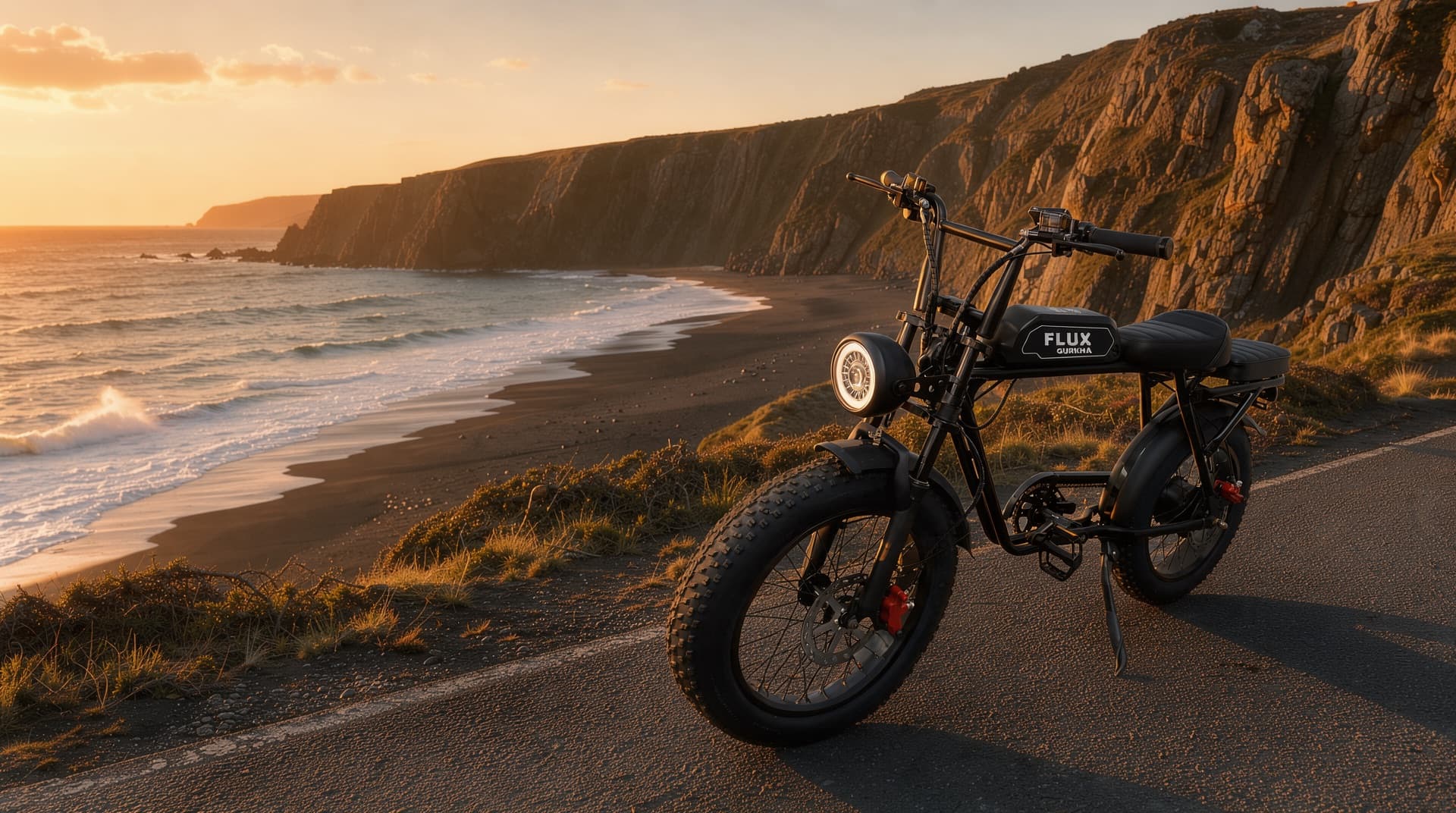
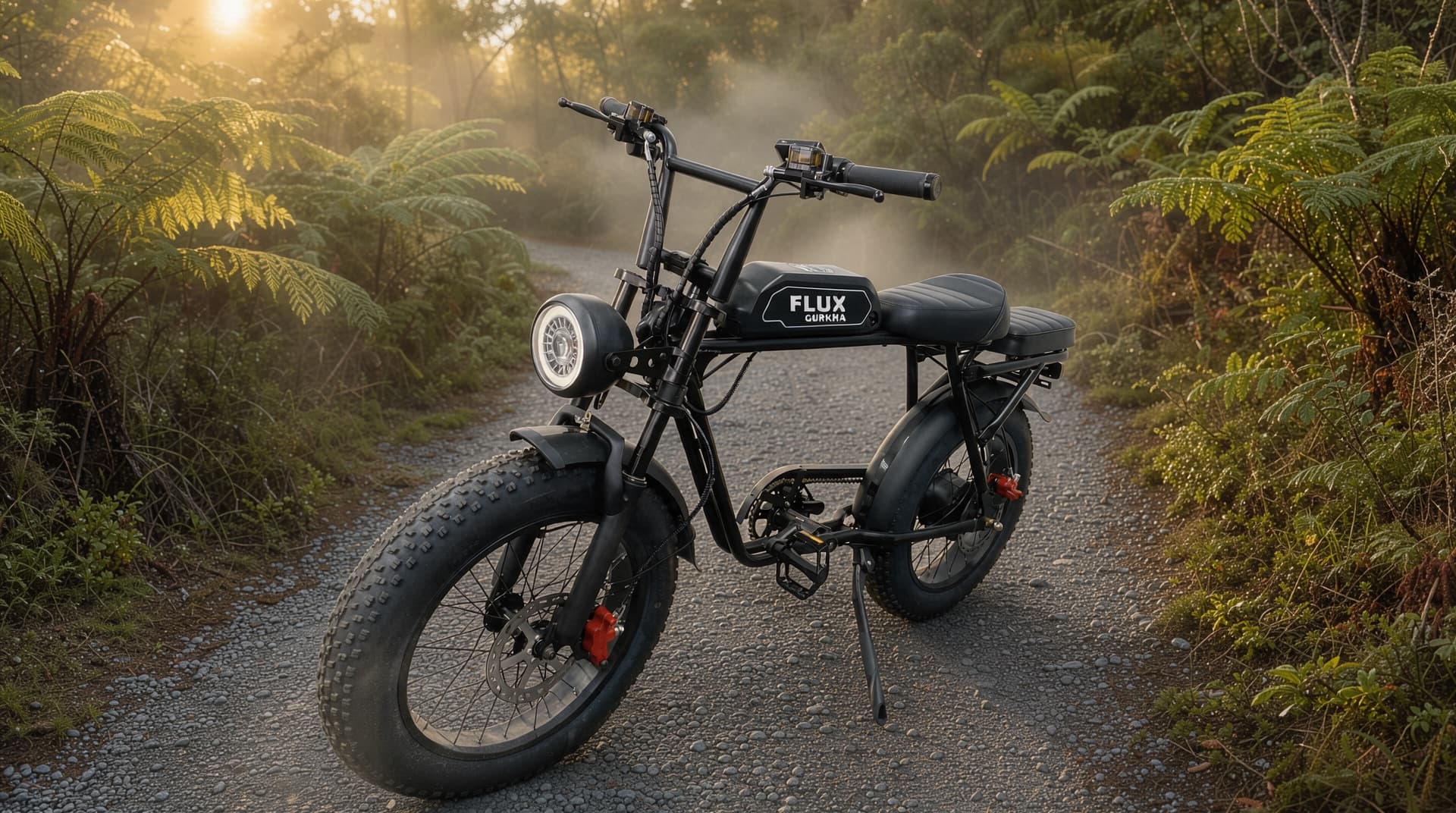
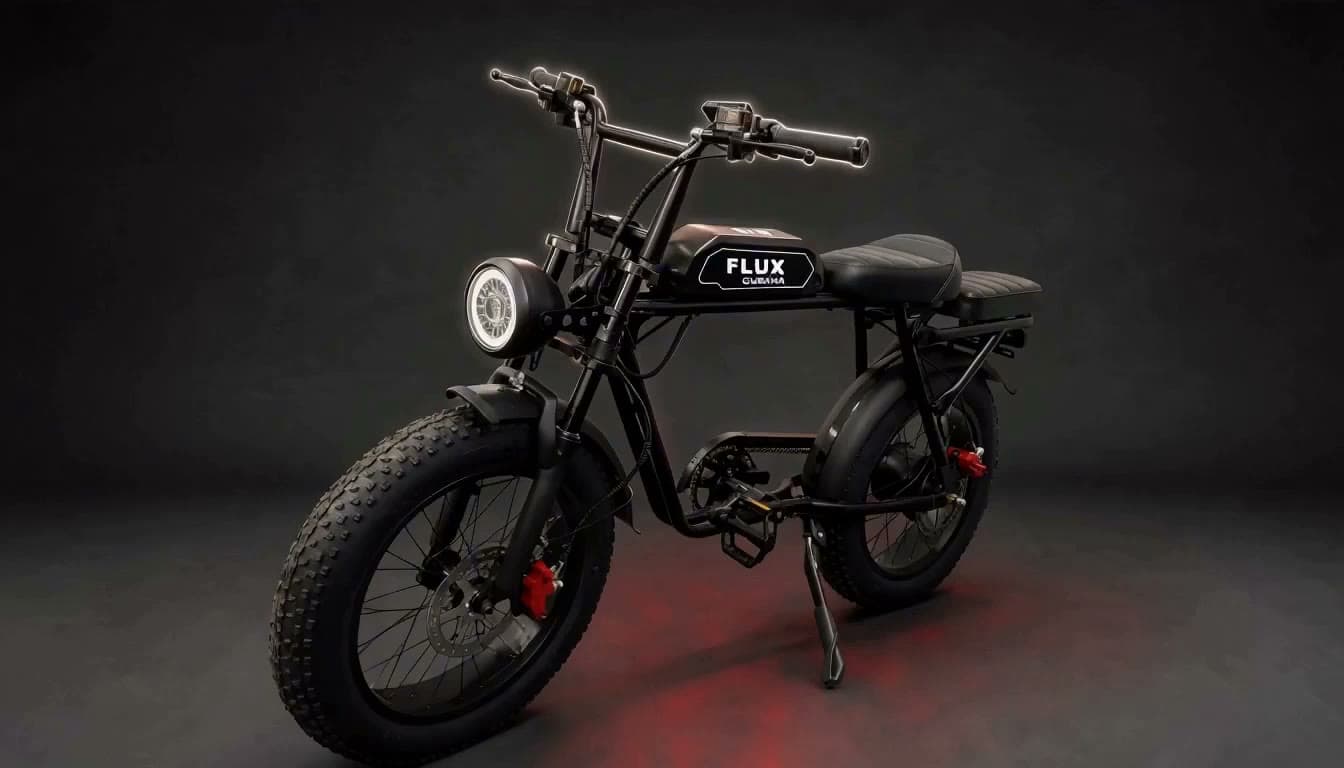
Moto-style e-bikes borrow the look of a motorbike: a long seat, chunky tyres, a strong headlight and a more upright, relaxed stance. Underneath, the goal is to be a bicycle with electric assistance, not a motorcycle with pedals.
That is the space Gurkha is designed for. It is a smart fat-tyre, moto-inspired e-bike designed in Aotearoa New Zealand, with 20×4-inch fat tyres, a long bench seat, hydraulic disc brakes front and rear, a brushless rear hub motor, a 624Wh lithium-ion battery and an assisted top speed of 25 km/h. The Flux app connects over Bluetooth so you can adjust settings, track rides and monitor the battery. Pricing starts from NZ$4,499.
To be straight about what we have and have not published: Flux will confirm full specifications before launch, including motor power and how Gurkha is classified under NZ rules. Gurkha is not on sale yet.
Questions to ask before you buy any electric two-wheeler
- What is the motor's maximum power output? Ask for the number in writing. "Peak" and "nominal" figures can differ, and some sellers quote whichever looks better.
- Does it have pedals that actually propel it? Pedals that are only footrests do not make a bike an e-bike.
- How fast can it go under power? Over 50 km/h is a motorcycle.
- Does it have a throttle? Ngā Haerenga's policy treats throttle-operated cycles as mopeds for its trails. Our e-bike with throttle explainer covers the nuance.
- Where do you actually want to ride? Roads, cycleways, trails and beaches each come with their own rules.
For the full legal picture, see our e-bike laws NZ guide.
The bottom line
The electric motorbikes NZ dealers sell today are a great choice for riders who need open-road speed and are happy with licensing and rego. For most local trips, a well-built e-bike does the job with far less cost and paperwork. A moto-style e-bike gives you much of the feel of a motorbike while keeping you in the bicycle world. Whatever you choose, check the motor power, the top speed and the paperwork before you hand over any money.
Like the look of a motorbike but want the freedom of an e-bike? Join the Gurkha waitlist to hear first when Flux confirms full specifications and opens orders.
Frequently asked questions
Do you need a licence for an electric motorbike in NZ?
Yes. An electric motorcycle needs a Class 6 motorcycle licence, and learner or restricted riders are limited to LAMS-approved bikes and mopeds. An electric moped capped at 50 km/h needs a driver licence. An e-bike that meets the 300 watt power-assisted cycle definition needs no licence.
Is an e-bike over 300 watts legal in New Zealand?
It can be legal, but not as an e-bike. A cycle with more than 300 watts of motor power is treated as a motor vehicle, so it needs to be registered and ridden with the right licence, and it cannot use cycle lanes, shared paths or most bike trails.
Do electric motorbikes pay ACC levies in NZ?
Yes. ACC says electric vehicles pay their whole levy through the vehicle licence (rego), because they do not pay a levy at the pump. E-bikes that meet the power-assisted cycle definition have no rego and no levy on the bike.
Is a moto-style e-bike the same as an electric motorbike?
No. A moto-style e-bike borrows the look of a motorbike but is designed to be a pedal-assisted bicycle. Whether a specific model counts as an e-bike depends on its motor power and whether it is mainly pedalled, so always check the published specifications.
Is Gurkha an electric motorbike?
Gurkha is a smart fat-tyre, moto-inspired e-bike designed in New Zealand, with a 25 km/h assisted top speed. Flux will confirm full specifications, including motor power and classification, before launch.