E Bike with Throttle vs Pedal Assist: What NZ Riders Need to Know
How throttles and pedal assist really differ, where a throttle helps, and why NZ's 'designed primarily to be pedalled' test and trail policies matter before you buy.
Flux Motors team7 min read
An e bike with throttle lets you move off without pedalling: twist a grip or press a thumb lever and the motor does the work. Pedal assist only adds power while you turn the cranks. Both have fans, and both are on sale in New Zealand, but they don't sit in the same place legally or on the trail. This guide explains how each system works, where throttles genuinely help, and what NZ rules and trail operators say about them.
The short answer
New Zealand law doesn't ban throttles by name. It defines an e-bike as a cycle designed primarily to be propelled by the rider's muscular energy, with motors of no more than 300 W combined maximum output (Road User Rule 2004, cl 1.6). A throttle that turns a bike into something mainly ridden on the motor puts it at risk of being treated as a moped. Some trail networks go further: Ngā Haerenga New Zealand Cycle Trails lists "cycles fitted and operated by a throttle" as mopeds that are not allowed on Great Rides.
How pedal assist works
A pedal-assist system (often called PAS or "pedelec") reads a sensor and adds motor power in proportion to what you're doing. There are two main sensor types:
- Cadence sensors detect that the cranks are turning and switch assistance on. They are simple and affordable, but can feel on-off, especially at low speed.
- Torque sensors measure how hard you press the pedals and match the assist to your effort. They feel smoother and more like a "bionic" version of normal riding.
You choose an assist level, from eco to high, and the motor tops up your effort. Stop pedalling and the motor stops.
How a throttle works
A throttle is a direct control: a twist grip, half-twist or thumb lever on the bars. Press it and the controller sends power to the motor whether or not you are pedalling. Some bikes limit the throttle to a low "walk assist" speed for pushing the bike up a ramp; others allow it at full assisted speed.
Throttle vs pedal assist compared
| Pedal assist | Throttle | |
|---|---|---|
| Feel | Like riding a bike, with a tailwind | More like a scooter |
| Fitness benefit | Higher; you are always contributing | Lower if used constantly |
| Battery use | More efficient; your legs share the load | Drains faster when used without pedalling |
| Hill starts and traffic lights | Fine with the right gear and assist level | Very easy |
| Riders with joint or mobility limits | May be hard on bad days | Can be genuinely helpful |
| NZ legal risk | Low, if the motor is 300 W or less | Higher, if the bike is really ridden on the motor |
| Great Rides access | Allowed (300 W or less) | Excluded under the Ngā Haerenga policy |
What NZ rules actually say about throttles
Here is how the pieces fit together, with primary sources.
1. The definition
A cycle must be designed primarily to be propelled by the rider's muscles through a crank, and a power-assisted cycle is a cycle with auxiliary motors of 300 W or less combined (Road User Rule). The word "auxiliary" and the "designed primarily" test are why throttle-only machines with decorative pedals don't qualify.
2. The declaration
NZTA's 2013 Gazette declaration says these 300 W power-assisted cycles are not motor vehicles. It doesn't mention throttles specifically, and we could not find any NZ rule that bans a throttle outright on a 300 W bike.
3. Trail and landowner rules
Access to off-road trails is set by landowners and trail managers. The Ngā Haerenga policy (updated June 2024) treats throttle-operated cycles as mopeds. The policy itself notes it can't be legally enforced, but trail managers use it to set expectations. Councils can also act: Waitaki District Council describes an e-motorbike as throttle-driven and over 300 W, and says it isn't permitted on its parks, reserves or the Alps 2 Ocean.
4. The grey area
A 300 W bike that is mostly pedalled but has a throttle for occasional take-offs sits in a grey zone. The law doesn't settle it explicitly, and we haven't found an NZTA ruling on that exact setup. If you buy one, use the throttle as a helper rather than your main way of riding, and expect some trails to say no.
For the full rules on helmets, footpaths and paths, read our guide to ebike laws in NZ.
When an e bike with throttle genuinely helps
- Hill starts. Getting going on a steep Wellington or Dunedin street with a loaded bike is the classic case.
- Busy intersections. A quick, predictable launch can help you clear a junction.
- Cargo and kids. Heavy loads make the first few pedal strokes hard.
- Health and mobility. Some riders with knee, hip or heart conditions use a throttle on bad days to keep riding at all.
- Walking the bike. A low-speed walk assist makes pushing a heavy fat-tyre bike up a ramp far easier.
When pedal assist is the better choice
- You want fitness and to feel like you're riding a bike.
- You plan to ride Great Rides, DOC tracks or council trails.
- You want the most range from each charge.
- You prefer the clearest legal position.
Three NZ riding scenarios
The hilly commuter
Eight kilometres each way with two steep climbs. A torque-sensing pedal-assist bike with good low gearing will handle this well. A throttle is nice-to-have for the lights at the bottom of the hill, not essential. Our electric commuter bike guide covers what else to look for.
The rail trail holiday
Planning the Otago Central Rail Trail or a North Island Great Ride? Choose a 300 W pedal-assist bike. A throttle-operated bike risks being turned away under the Ngā Haerenga policy.
The beach-and-gravel rider
Soft sand and loose gravel make pedal starts tricky. Wide tyres help more than a throttle does. See fat-tyre e-bikes explained for why tyre volume matters so much.
Buying an e bike with throttle: a checklist
- Ask what the throttle does exactly: walk assist only, or full assisted speed?
- Confirm the motor's rated maximum power output in writing.
- Check whether the throttle can be disabled in the display or app.
- Be wary of "off-road" or "unlocked" modes; they can take a bike outside the legal definition.
- Check where you plan to ride, and whether those trails accept throttles.
If what you really want is a motor-first machine, you are shopping for a moped or motorbike, not an e-bike. Our guides to electric mopeds vs e-bikes and whether a Sur-Ron counts as an e-bike explain the licence and rego that come with that.
What about the Flux Gurkha?
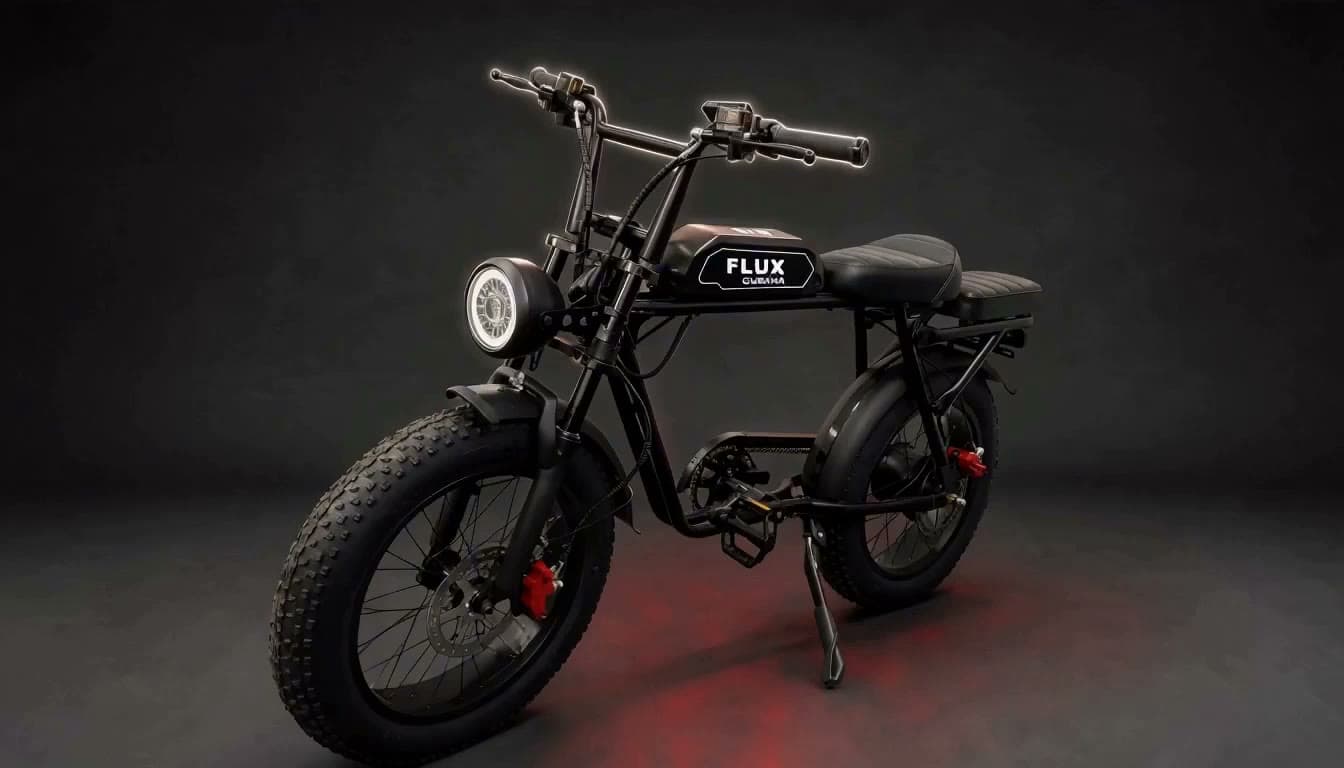
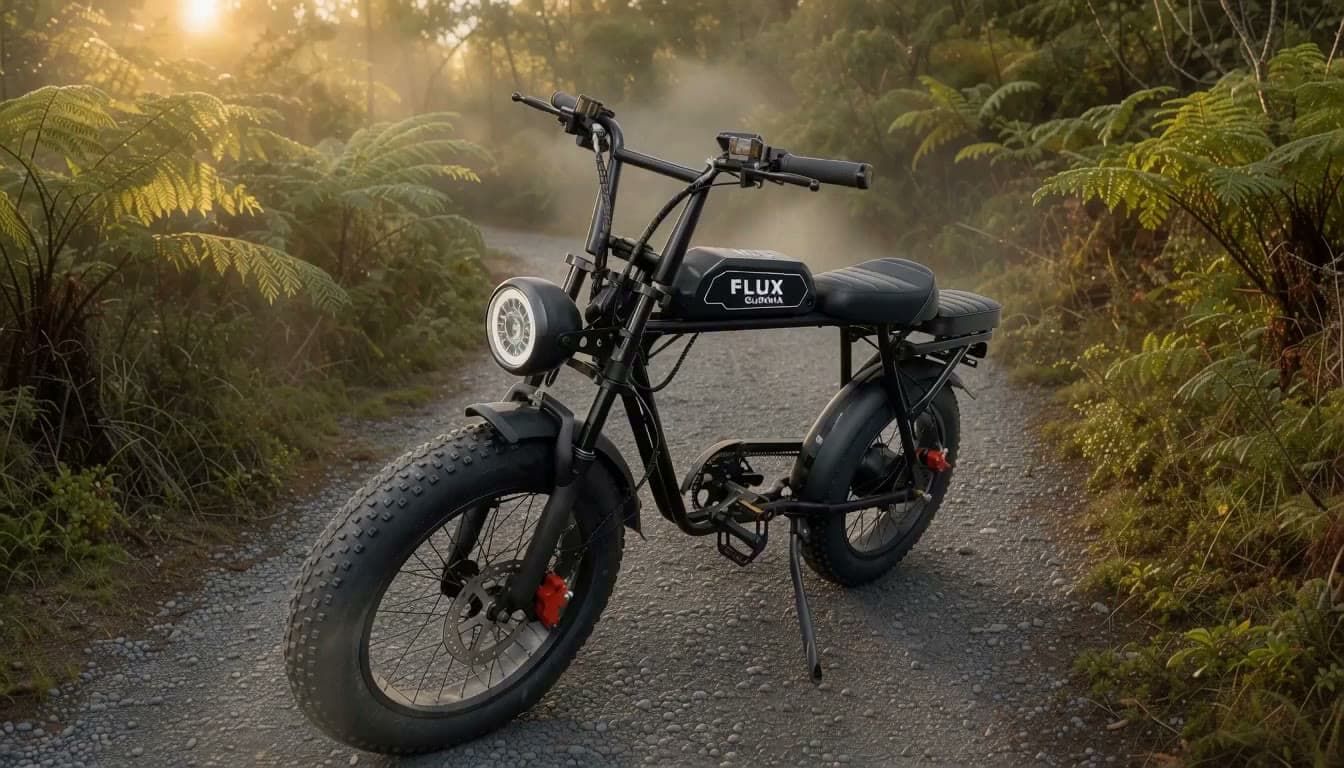
If you came here looking for an e bike with throttle from a local brand, here is where we stand. The Gurkha is a fat-tyre, moto-inspired e-bike with a brushless rear hub motor, a 624 Wh battery and an assisted top speed of 25 km/h. Flux hasn't published whether it has a throttle, and Flux will confirm full specifications before launch. We'd rather give you the right answer than a fast one.
Get the details first
Want to know how the Gurkha handles assist and controls before anyone else? Join the waitlist and we'll send you the confirmed specs as soon as they're final.
Frequently asked questions
Are throttles legal on e-bikes in New Zealand?
No NZ rule we found bans a throttle by name. But an e-bike must be designed primarily to be pedalled and have 300 W or less combined motor output. A bike mainly ridden on its throttle risks being treated as a moped.
Can I ride a throttle e-bike on the Great Rides?
The Ngā Haerenga New Zealand Cycle Trails e-bike policy lists cycles fitted and operated by a throttle as mopeds that are not allowed on Great Rides. The policy says it cannot be legally enforced, but trail managers use it.
Is pedal assist or throttle better for hills?
Pedal assist with a torque sensor and low gearing handles most NZ hills well. A throttle mainly helps with hill starts, heavy loads or riders with mobility limits.
Does a throttle drain the battery faster?
Generally yes. Riding on the throttle without pedalling puts the whole load on the motor, so range drops compared with pedal assist.
Does the Flux Gurkha have a throttle?
Flux has not published that detail. Flux will confirm full specifications before launch, and waitlist members will hear first.