E bike Wellington guide: hills, wind, harbour paths and Metlink rules
Riding an e-bike in Te Whanganui-a-Tara: the new Great Harbour Way links to the Hutt, what happened to Let's Get Wellington Moving, Metlink's current rules for e-bikes on trains, buses and the Days Bay ferry, and how to handle steep streets and southerlies.
Flux Motors team7 min read
An e bike Wellington commute solves the capital's two big problems at once: the hills and the wind. Te Whanganui-a-Tara has some of the steepest streets in the country and a southerly that can stop you dead. With pedal assist, the climb to Kelburn, Brooklyn or Northland becomes routine, and a new coastal path now links the city to the Hutt Valley without a single car lane.
The short answer
E-bikes ride free on most Metlink trains on a first-come, first-served basis, up to three bikes per two-car set, and you don't need to remove the battery. Some peak Hutt Valley and Kāpiti services don't take bikes. Bus racks take bikes up to 25 kg with tyres no wider than 75 mm, so fat-tyre bikes won't fit. Te Ara Tupua, the Ngā Ūranga to Pito-One path, opened in May 2026 and gives you a separated harbour-edge route between Wellington and Lower Hutt.
The Great Harbour Way / Te Aranui o Pōneke
The Great Harbour Way is a planned 70 km walking and cycling route around Wellington Harbour, from Ōrua-pouanui / Baring Head in the east to Te Rimurapa / Sinclair Head in the west. In 2026 several big pieces came together:
| Section | Where | Length | Status |
|---|---|---|---|
| Te Ara Tupua: Ngā Ūranga ki Pito-One | Ngā Ūranga (Ngauranga) to Pito-One (Petone), along the harbour edge beside SH2 and the rail line | About 4.5 km | Opened May 2026 |
| Tupua Horo Nuku | Eastern Bays shared path, Hutt side of the harbour | 4.4 km | Opened April 2026 |
| Ākau Tangi Evans Bay | Evans Bay, city side | Not confirmed | Described as due for completion "in the coming months" in April 2026; check current status |
Sources: Great Harbour Way release, April 2026, Waatea News on the Te Ara Tupua opening and the NZTA Te Ara Tupua project. Te Ara Tupua was developed with mana whenua Taranaki Whānui and Ngāti Toa Rangatira.
Hutt Valley connections
From Pito-One, Hutt City's cycle trails include routes along Te Awa Kairangi / Hutt River. Combine Te Ara Tupua with the train on the Hutt Valley Line and you can ride one way and train the other. That's handy when a northerly is blowing down the harbour.
What happened to Let's Get Wellington Moving?
Let's Get Wellington Moving (LGWM) was the joint transport programme of the Government, Wellington City Council and Greater Wellington. In December 2023 the three partners agreed to end the programme, with Wellington City Council taking on projects such as the Golden Mile. See the Ministry of Transport's LGWM page for the official record. The inner-city cycleways LGWM was going to deliver now sit with the council.
The council's Paneke Pōneke bike network plan, adopted in 2022, sets out a much bigger connected bike network across the city. The council publishes progress reports, and the most recent one we found is from November 2025. Routes and timelines have changed with budgets, so check the council's transport projects site before you rely on a route that's still in planning.
Taking your e-bike on Metlink
These are Metlink's current bike and scooter rules, checked in November 2026.
Trains
- Bikes ride free on most trains, first come, first served. Up to three bikes fit in each two-car set, in the carriage marked with a bike symbol.
- You don't need to remove the battery from an e-bike on trains.
- Some peak Hutt Valley and Kāpiti Line services don't allow bikes. Check the timetable, or look for the bike symbol on the departure screens at Wellington Station.
- Bikes can't be carried on services to and from special events.
- Wairarapa Line trains carry bikes in the luggage car. For safe loading, bikes and luggage should be under 30 kg, and bikes must be under 180 cm long. Large cargo bikes can't go.
Buses
- All buses on regular Metlink services have a bike rack, but buses replacing trains may not.
- Racks take wheels from 16 to 29 inches, with a maximum tyre width of 75 mm (3 inches) and a maximum weight of 25 kg. Some e-bikes will need the battery removed to get under the weight limit.
- Cargo bikes and fat-tyre bikes don't fit the racks.
- Full-size bikes can't go inside the bus. Compact folding bikes within Metlink's size limits can, if folded.
Days Bay ferry
East by West now requires bike bookings between Queens Wharf and Days Bay for sailings between 10am and 3:30pm on weekdays, and all day on weekends and public holidays. Booking is free.
Gurkha's 20×4-inch fat tyres are wider than the 75 mm rack limit, so it can't use Metlink bus racks. Flux hasn't published whether Gurkha folds, and will confirm full specifications before launch.
Tips for Wellington's steep streets
Every e bike Wellington commuter meets a few streets with gradients that stall a bike if you get your gears wrong. On an e-bike:
- Change down before the climb. Starting a steep pitch in a high gear strains the drivetrain and the motor.
- Use assist smoothly. Pick a higher assist level for the climb and keep a steady cadence rather than surging.
- Start on a hill properly. Angle the bike slightly across the slope, get a pedal at the top of its stroke, then push off. Assist will do the rest.
- Brake early on descents. Wet streets with painted markings, metal covers and leaves are slippery. Hydraulic disc brakes give the control you need.
- Find the zig-zag. Local knowledge helps. A slightly longer route can often avoid the very steepest block.
Riding in the wind
Wellington's wind changes how you ride:
- Expect side gusts at gaps between buildings, on exposed bridges and along the coast. Keep a relaxed grip and a little extra space from the kerb and parked cars.
- Use assist into a headwind. A strong northerly along the harbour or a southerly around the south coast can drain battery faster than hills do. Plan charging with that in mind.
- Keep bags low. Panniers are more stable than a tall backpack in a crosswind.
- Know when not to ride. On the wildest days, the train is a sensible plan B, and you can take your e-bike with you.
Charging costs in Wellington
MBIE's August 2026 electricity survey puts Wellington City at 37.20 cents per kWh for its modelled household, lower than Auckland or Christchurch. A full 624Wh charge costs about 23 cents of energy, or about 27 cents allowing roughly 15% for charging losses. See our e-bike charger guide for safe charging habits, and our electric commuter bike guide for the full commute cost comparison.
Gurkha in the capital
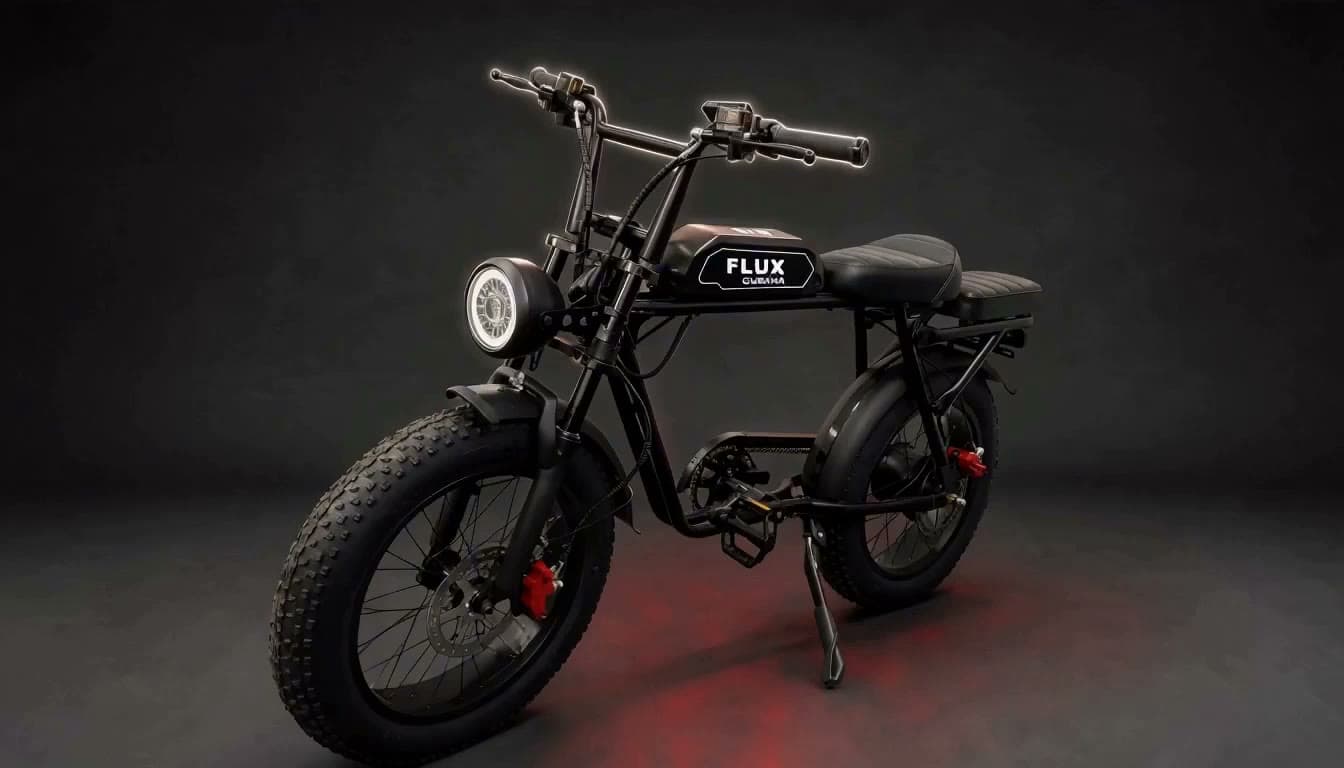
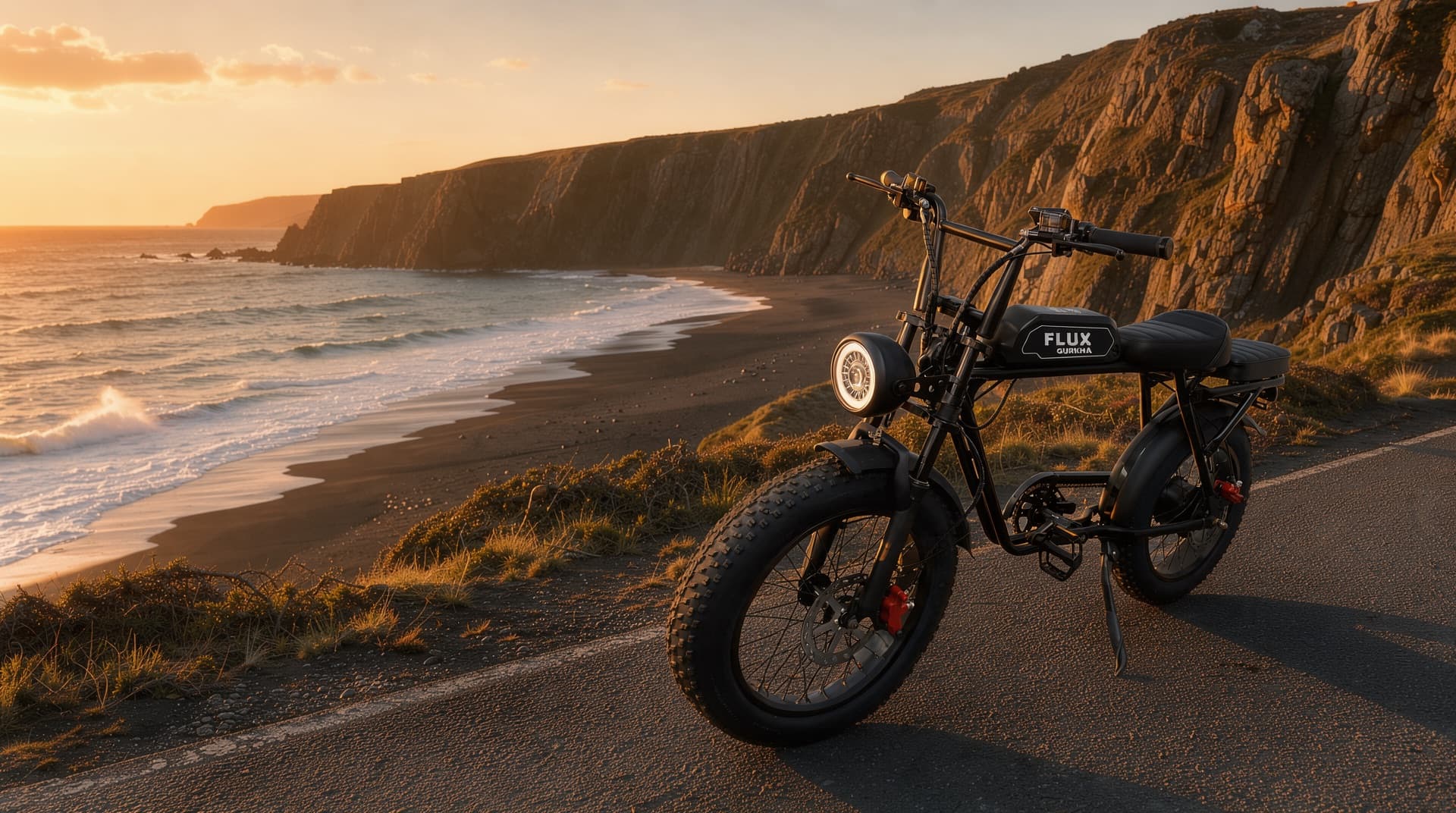
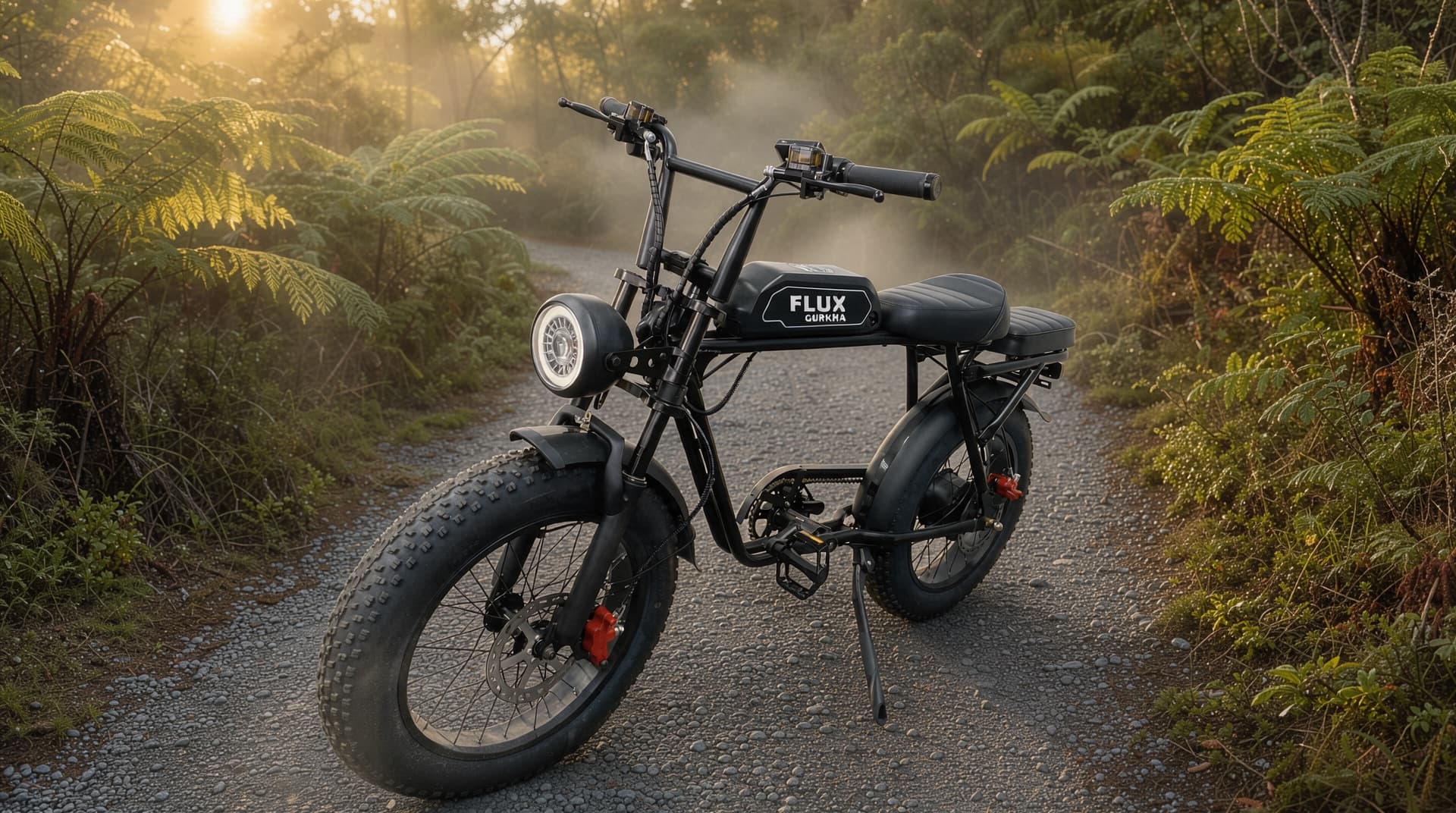
Gurkha is a smart fat-tyre, moto-inspired e-bike designed in Aotearoa New Zealand. For an e bike Wellington rider, the useful parts are hydraulic disc brakes front and rear for steep wet descents, a bright LED headlight for dark winter commutes, and 20×4-inch fat tyres for grip. You can monitor its 624Wh battery in the Flux app. See the Gurkha page for current details, and if you're thinking about trails around the region, read our fat-tyre e-bike guide. Rules on helmets and power are in our NZ e-bike laws guide.
Gurkha isn't on sale yet, and pricing starts from NZ$4,499. Join the waitlist to hear first when it's available in Te Whanganui-a-Tara.
Frequently asked questions
Can I take an e-bike on Wellington trains?
Yes. Metlink carries bikes free on most trains, first come, first served, with up to three bikes per two-car set, and you don't need to remove e-bike batteries. Some peak Hutt Valley and Kāpiti services and special-event services don't take bikes.
Will my e-bike fit on a Metlink bus rack?
Only if it weighs 25 kg or less (with the battery removed if needed), has wheels between 16 and 29 inches and tyres no wider than 75 mm. Fat-tyre and cargo bikes don't fit.
Is there a cycle path from Wellington to Lower Hutt?
Yes. Te Ara Tupua, the Ngā Ūranga ki Pito-One shared path, opened in May 2026. It gives a separated route of about 4.5 km along the harbour edge between Ngauranga and Petone.
What happened to Let's Get Wellington Moving?
The Government, Wellington City Council and Greater Wellington agreed in December 2023 to end the programme. The city council took on projects including the Golden Mile and continues cycleway work through its Paneke Pōneke bike network plan.
Is an e-bike worth it in Wellington?
For most people, yes. Assist removes the worst of the hills and headwinds, and train carriage gives you a backup on the wildest days. Electricity in Wellington City costs about 37 cents per kWh, so a full charge costs well under a dollar.